
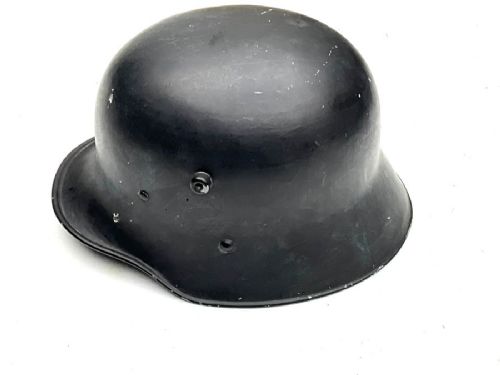
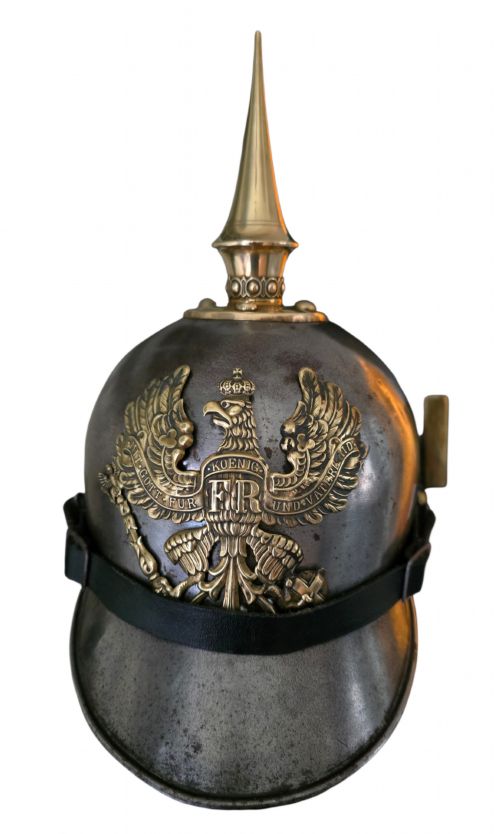


Ww1 Military Helmet
A ww1 military helmet carries the heavy weight of early twentieth century history through its steel and brass fittings.
Ww1 Military Helmet
A ww1 military helmet encompasses distinct headgear forms originating from the late nineteenth century through the early twentieth century. Collectors searching for a ww1 military helmet encounter primarily Imperial German examples, including standard infantry items and specialised pionier pieces.
The material record on this page points directly toward military headgear dominated by steel, brass, and boiled leather. These objects trace the evolution of military styling from nineteenth century parade and campaign dress into active first world war equipment.
Most items link to the Kaiserreich period, featuring specific national eagle plates and regimental markers. The structural forms combine rigid metal shells with softer internal elements to present authentic martial gear.
Materials and construction methods
Makers utilised robust metals like steel and brass to form the primary protective shells and decorative front plates of these helmets. These rigid components were frequently paired with boiled leather and standard leather to create durable military headgear.
Details such as paint finishes and horsehair additions complete the exterior presentation of the period pieces. Structural assembly relies on metal fittings secured directly to the leather or steel bodies.
Some helmets incorporate horsehair alongside steel and brass, proving that military fashion once required serious grooming.
Judging quality in military headgear
Quality rests upon the preservation of original components, from the metal fittings to the underlying leather and steel. Pieces that retain their distinct brass plates and structural integrity demonstrate superior historical survival.
The complexity of the helmet influences its standing, with officers' variants and specific battalion pieces showing finer detailing than standard other ranks equipment. Original paintwork and untouched metal surfaces elevate the overall physical character of the object.
The Ww1 Military Helmet Glossary
- Kaiserreich
- The German Empire period spanning from 1871 to 1918. Items from this era often bear imperial insignia and specific regimental plates.
- Boiled leather
- Leather that has been immersed in hot water or wax to make it stiff and hard. This technique provided lightweight durability for nineteenth and early twentieth century headgear.
- Pionier
- A military engineering unit designation found on specialised German equipment. Pionier regiments maintained distinct badges and structural variations on their uniforms and helmets.
Ww1 Military Helmet: Frequently Asked Questions
What periods do these helmets date from?
The available pieces span the late nineteenth century up through the first world war years. They capture the transition of military styling from the 1870s into the early twentieth century.
Dates cluster around the Kaiserreich period and the 1910 decade, reflecting standard issue and officers' equipment from the German military.
What materials make up a ww1 military helmet?
Construction relies heavily on steel, brass, and leather, including boiled leather variants. Additional elements like paint and horsehair appear on specific examples.
Metal fittings secure the front plates and spikes to the main bodies, combining rigid protection with traditional leather shaping.
How do officers' helmets differ from soldiers' items?
Officers' helmets display finer detailing and distinct insignia that separate them from standard other ranks equipment. The quality of the brass fittings and metal components generally marks this distinction.
Specific unit markings and regimental plates further identify the rank and branch associated with each piece of headgear.
How should I display a military helmet?
Display requires stable conditions away from direct sunlight and excessive moisture to protect the original leather and metal surfaces. Keeping the environment consistent preserves the organic and metallic components.
Mounts should support the weight of the helmet evenly without placing undue strain on the internal leather structure.