


Impasto River Oil Painting
An impasto river oil painting brings textured water and lively brushwork into a room, capturing movement and light.
Impasto River Oil Painting
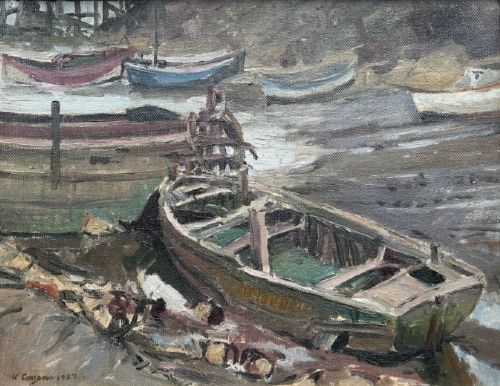
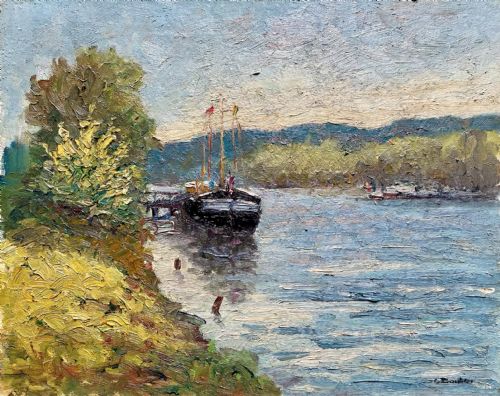
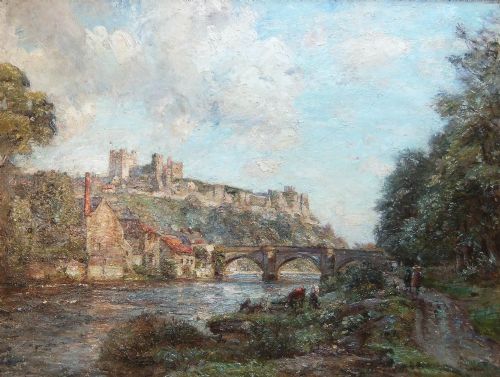
An impasto river oil painting captures waterways, barges and bridges using thick layers of pigment that sit proud of the surface. These works range from late nineteenth-century depictions to mid-century modern and impressionist interpretations.
The most common examples on this page date from the twentieth century, particularly the 1940s and 1960s. They show British and continental scenes, including rivers, canals and urban waterways.
Buyers will find works executed on canvas, board and wood panels. Many retain their period framing, including gilt moulding.
Materials and construction
Artists built these compositions using oil paint applied thickly to canvas or wooden board. This medium allows the brushstrokes or knife marks to retain their three-dimensional shape as the paint dries.
Supports vary between stretched canvas and rigid boards or wood panels. These grounds receive layers of oil pigment that create tactile surfaces across water and sky.
Assessing quality and execution
Quality rests in the handling of the paint and the confidence of the application. Stronger works demonstrate a deliberate use of thick pigment to convey the movement of water and light.
The relationship between the support and the paint layer matters. Better examples maintain stability across canvas or board while preserving the texture of the original strokes.
Kenneth Cozens·Herbert Royle·E A Minardo·Phyllis Morgans·Robert Lesley Howey
The Impasto River Oil Painting Glossary
- Impasto
- Paint applied thickly to a canvas or board so that it stands out from the surface. This technique leaves visible brush or palette knife marks that catch the light.
- Post-Impressionism
- An art movement developing from the late nineteenth century that extended impressionism while rejecting its limitations. Artists favoured expressive forms and heavy application of paint.
- Gilt moulding
- A decorative framing element covered in gold leaf or gilt finish. These frames often accompany period paintings from the nineteenth and twentieth centuries.
- Mid-Century Modern
- A style spanning the middle decades of the twentieth century. It embraces simplified forms and expressive interpretations in landscape and figurative art.
Impasto River Oil Painting: Frequently Asked Questions
What periods do these river paintings cover?
The works span from the late nineteenth century through to the middle of the twentieth century. Dates cluster around the 1940s, 1950s and 1960s.
Earlier examples from the 1890s and 1900s also appear alongside mid-century interpretations.
What surfaces were these paintings created on?
Artists used a variety of supports including traditional stretched canvas and rigid wooden boards. Each surface interacts differently with thick oil paint.
Canvas yields a traditional taut ground, whereas board provides a firm foundation for heavy impasto.
How should I hang an oil painting?
Secure fixings appropriate for the weight of the canvas and its frame are essential. Avoid direct sunlight and excessive humidity to protect the oil pigment.
Many pieces arrive in period frames such as gilt moulding which require stable wall placement.