



Impasto Coastal Wall Art
Impasto coastal wall art brings the tactile weight of sea and shore into a room through thick oil paint laid upon canvas, board or wood.
Impasto Coastal Wall Art
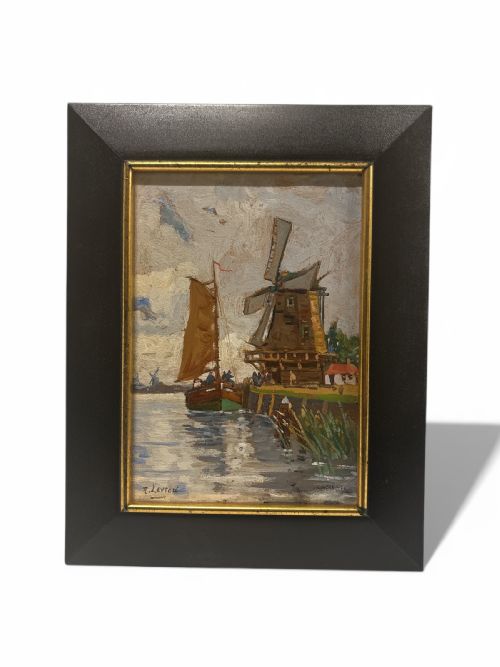
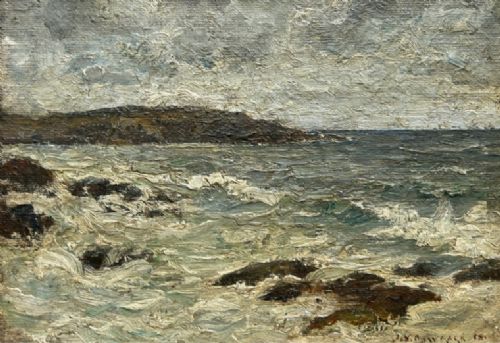
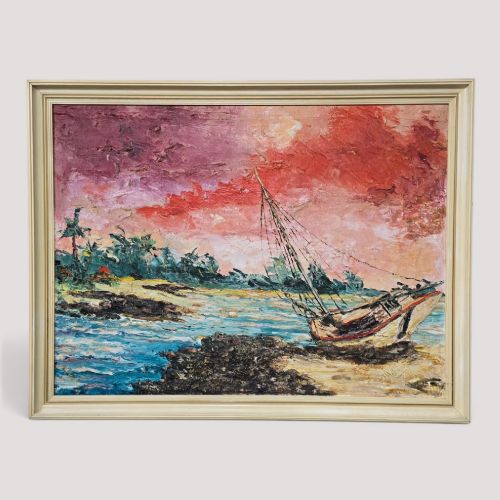
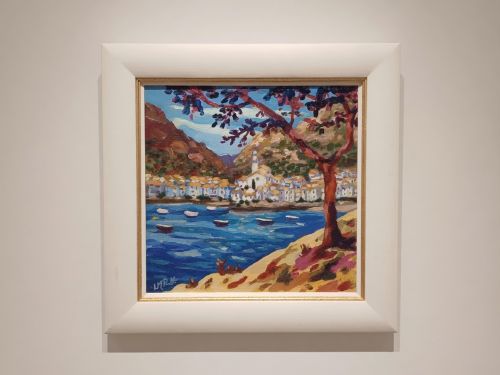
When you search for impasto coastal wall art, you encounter oil paintings that capture marine and seaside subjects through heavy, raised pigment. The selections range from Edwardian canvases to mid-century works and later pieces from British and French hands.
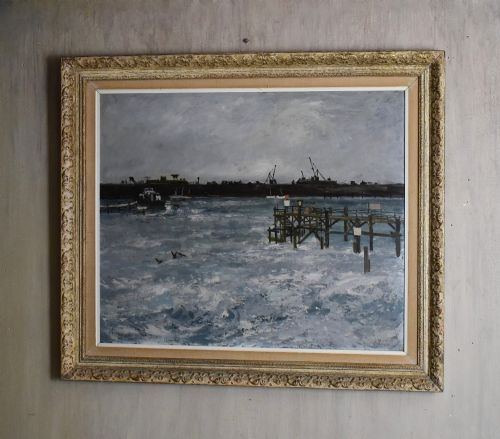
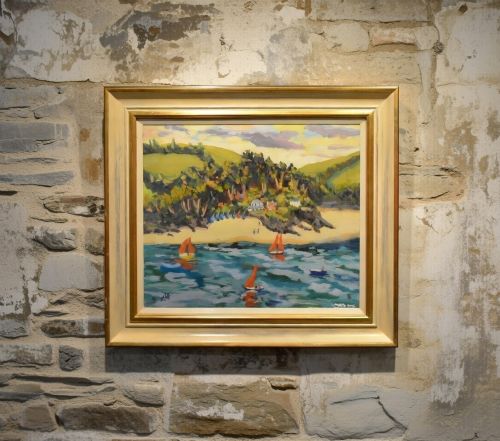
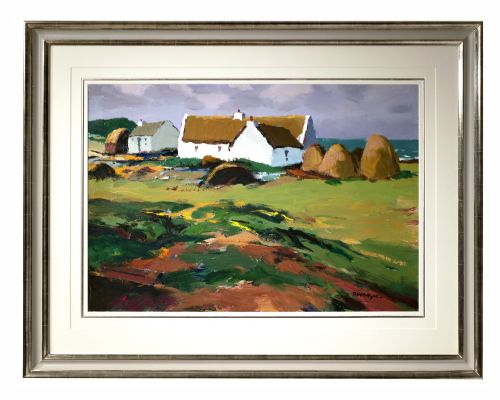
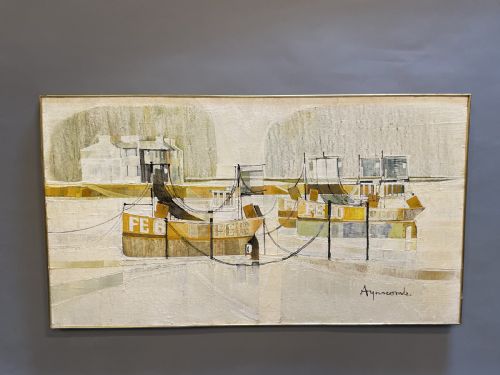
The dominant forms on this page are oil paintings on board or canvas, depicting harbours, estuaries and coastal landscapes. Painters utilise thick strokes to render the texture of water, sand and sky.
Makers span the early twentieth century through to the post-war decades, reflecting Impressionist, Post-Impressionist and Modern British approaches to the sea. Works arrive framed or ready to hang in domestic spaces.
Materials and technique
Artists apply oil paint directly to wood, board or canvas, often building heavy impasto layers with a brush or palette knife. This physical buildup of pigment creates ridges and peaks that catch the light.
Supports vary from traditional stretched canvas to sturdy wooden boards, sometimes housed in period gilt frames. The combination of oil medium and rigid or flexible backing determines how the paint holds its heavy texture over decades.
Several artists captured the exact moment a sailboat caught the wind off Salcombe, decades before modern waterproof cameras existed.
Assessing the work
Quality rests in the handling of the paint and the confidence of the composition. Skilled artists manage heavy impasto without losing the sense of light, air and movement across a coastal surface.
The distinction between ordinary and superior pieces lies in the sureness of the palette knife or brushwork. A strong work uses thick pigment to construct space and atmosphere rather than relying on mere thickness alone.
Kenneth Cozens·R Leyton·Lucy Pratt·Peter Brannan·Donald McIntyre·Helen Layfield Bradley·Jean-Baptiste Olive·Cecil Rochfort D'Oyly-John·Edward M Elliott·Jack R Mould·Ernst Louizor·Jeffrey Pratt
The Impasto Coastal Wall Art Glossary
- Impasto
- Paint applied thickly to a canvas or board so that it stands out from the surface. This technique allows brush or palette knife marks to remain visibly tactile.
- Oil paint
- A slow-drying paint made by combining pigment grains with a drying oil such as linseed. It permits rich colour depth and heavy texturing.
- Impressionism
- A style of painting that focuses on light and its changing qualities rather than precise detail. Artists use visible strokes to capture the immediate visual impression of a scene.
- Gilt
- Covered thinly with gold leaf or gold paint. Frames often feature this finish to complement the warmth of the oil paintings within.
Impasto Coastal Wall Art: Frequently Asked Questions
How do I hang impasto coastal wall art?
Ensure your wall anchor supports the combined weight of the painting and its frame. Because these works often feature heavy wooden supports and thick paint, use robust picture wire and sturdy wall hooks.
Position the centre of the canvas at eye level to allow proper viewing distance. Adequate lighting nearby helps reveal the raised texture of the brushwork.
What periods do these paintings come from?
The pieces span from the Edwardian era through the 1920s, 1930s, 1940s and 1950s into the later twentieth century. Mid-century Modern and post-war British or French movements are particularly well represented.
Each period brings slight shifts in palette and handling, though all share the characteristic thick application of oil paint on canvas or board.
Where were these coastal scenes painted?
Artists captured locations across British shores, Welsh bays, Lake District estuaries and French Mediterranean coasts including the Riviera and Marseille. Many works record specific harbours, rivers and beaches.
These settings reflect the plein air traditions of Impressionist and Modern British painters who travelled to coasts for their changing light.