


Welsh Coastal Art
Welsh coastal art captures the shores and harbours of Wales through oils, watercolours, and lithograph posters from the nineteenth and twentieth centuries.
Welsh Coastal Art
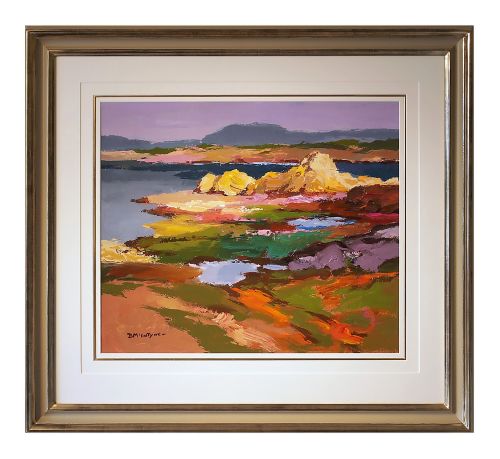
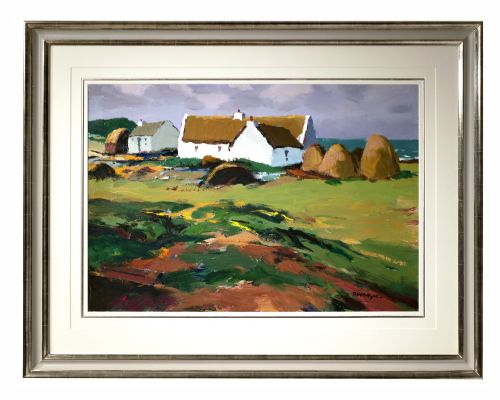
Welsh coastal art encompasses original paintings, watercolours, and posters depicting the Welsh sea and shoreline. Buyers searching for Welsh coastal art find works spanning the Victorian period through to the mid-twentieth century.
The selections include works by named painters and nineteenth-century watercolours of lakes, sailing, and fishing. Mid-century oils on canvas and board represent the post-war decades.
Posters and fine art prints also appear alongside traditional brushwork. These pieces record landscapes from Cardigan Bay to Pembrokeshire and North Wales.
How these works were made
Artists painted on canvas, board, and paper using oil paint and watercolours. Gesso frames often supported the canvases of the period.
Lithograph printing produced the visual posters found from the early twentieth century. Painters applied pigment with brushwork ranging from impressionist marks to detailed watercolour washes.
Periods represented span the Victorian era, 1890, 1920, 1940, 1950, and 1960.
Variations in quality
Quality rests in the handling of light and water by the individual painter. Established artists demonstrate stronger command over composition and palette than anonymous Victorian watercolours.
The medium itself dictates the visual impact, with textured oil on canvas carrying greater presence than paper works. Condition of the pigment and original paper or canvas surface also divides the works.
Donald McIntyre·Herbert Royle·Willie Stephenson·Clarence Woodburn·Thomas Swift Hutton·Charles France·Carleton Grant
The Welsh Coastal Art Glossary
- Gesso
- A plaster-like mixture applied to canvas or wood panels as a base for painting. It provides a smooth surface for oil colours.
- Lithograph
- A print produced from a flat stone or metal plate treated to retain ink. This method was widely used for pictorial travel and railway posters.
- Watercolour
- Pigments ground in a water-soluble binder and painted onto paper. It relies on the white of the paper to show through translucent washes.
- Impressionism
- A style of painting focusing on light and its changing qualities rather than precise detail. Artists use visible brush strokes to capture a scene.
Welsh Coastal Art: Frequently Asked Questions
What periods do these paintings come from?
The pieces range from the nineteenth century through the Victorian era to the mid-twentieth century. Twentieth-century examples include works from the 1920s to the 1960s.
Earlier works date back to the 1890s and include traditional watercolours of Welsh lakes and coastal scenes.
Are these works original or prints?
The listings feature original oil paintings on canvas and board alongside original watercolours. Lithograph posters are also present as printed wall art.
Hand-painted oils and watercolours form the majority of the visual styles available.
Which locations are depicted in the art?
Subjects include specific Welsh coastal locations such as Port Dinorwic, Conwy Castle, Cardigan Bay, and Aberffraw Bay. Other scenes feature Pembrokeshire and Tenby beaches.
North Wales and Cardigan Bay appear frequently in the nineteenth-century watercolours and later oils.
What styles of painting are included?
The selection includes Victorian watercolours, British Impressionism, and Post-Impressionism. Mid-Century Modern and Mid-Century British School paintings also feature.
These styles reflect both traditional topographical recording and twentieth-century painterly approaches to the landscape.