








Imari Porcelain Charger Plates
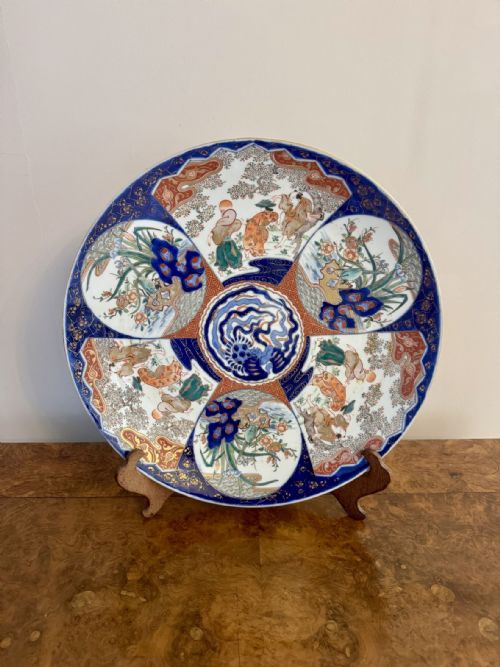
Imari porcelain charger plates combine vibrant cobalt underglaze blue and iron-red enamel with gilt accents, offering a striking display for collectors of Asian ceramics.
Imari Porcelain Charger Plates
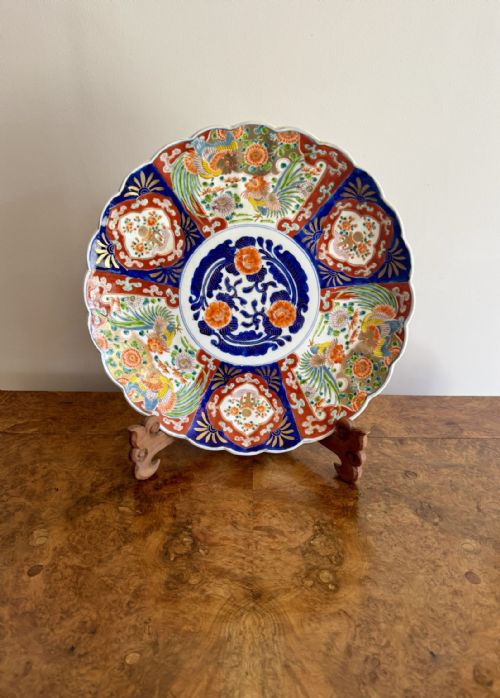
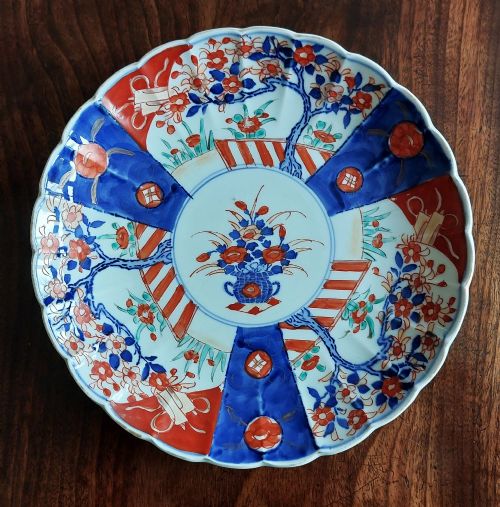
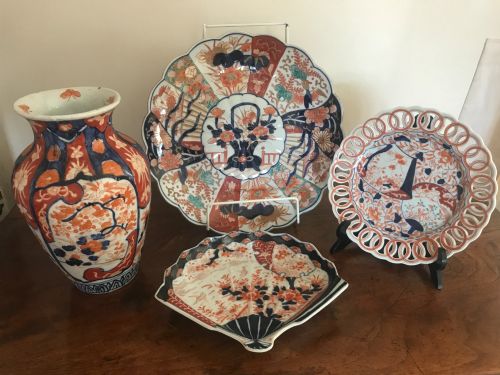
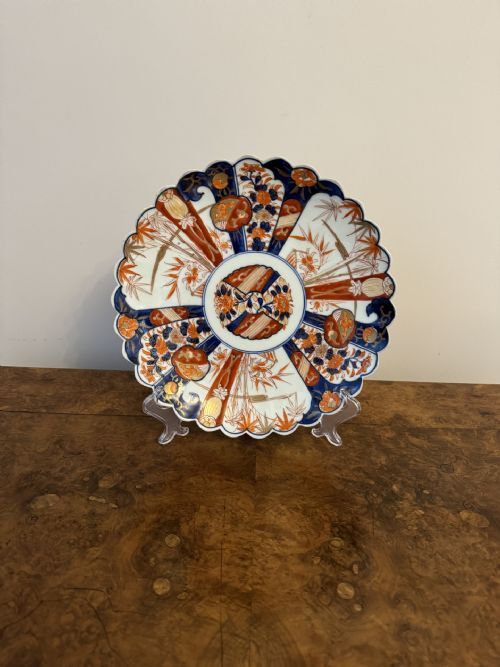
Imari porcelain charger plates are large decorative dishes that were produced in both Japan and China for export and domestic markets. When searching for imari porcelain charger plates, buyers encounter forms ranging from traditional circular chargers to scalloped, square, and hexagonal plates.
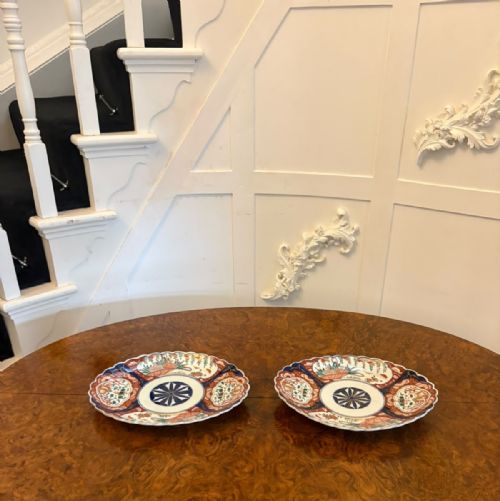
The pieces available originate across several centuries, stretching from eighteenth-century Chinese export and Qing dynasty examples through to nineteenth-century Japanese Meiji period and Edo period creations. Many items survive as pairs or collections alongside single large display chargers.
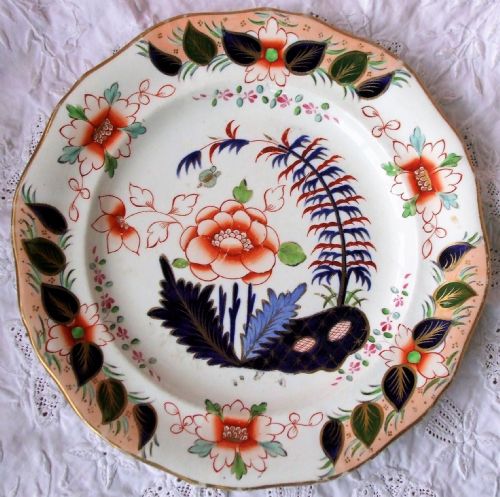
Japanese Arita wares form a substantial portion of these listings, alongside Chinese imari and occasional English ironstone interpretations of the distinctive palette. These items served primarily for decorative display rather than daily service.
Materials and Techniques
Potters shaped ceramic and porcelain bodies before applying cobalt underglaze paint directly to the clay. Artisans then fired the pieces at high temperatures to set the deep blue tones beneath a clear protective glaze.
After the initial glaze firing, makers added iron-red enamel and gold leaf or gilding details by hand. A secondary, lower-temperature firing fused these vibrant surface colours and metallic accents to the glazed porcelain.
The selection includes Japanese Meiji period examples alongside Chinese export pieces, eighteenth-century works, and English ironstone interpretations.
Quality Variations
The division between standard production and superior examples lies in the precision of the hand-painted brushwork and the richness of the enamel and gilt application. Finer chargers exhibit crisp floral and bird motifs with carefully controlled cobalt lines rather than hurried, repetitive strokes.
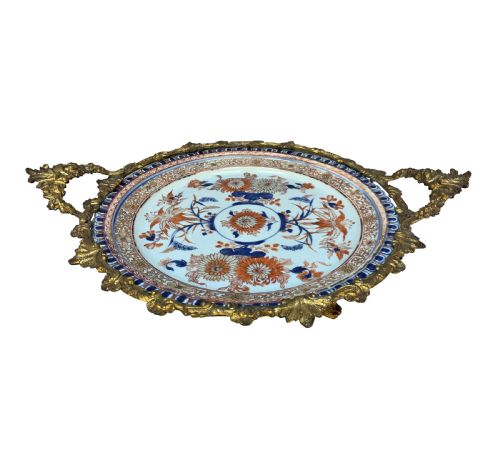
Structural variations also separate the tiers, such as the crispness of moulded scalloped edges, hexagonal facets, or square corners. Additionally, the integration of European mounts, such as ormolu fittings on eighteenth-century pieces, elevates the decorative ambition of the object.
John Davenport of Longport
The Imari Porcelain Charger Plates Glossary
- Charger
- A large decorative plate intended for display on a wall, cabinet, or table rather than for dining. These substantial dishes measure larger than standard dinner plates.
- Cobalt Underglaze
- A blue pigment applied to the raw ceramic body before glazing and firing. This mineral withstands high kiln temperatures, producing a permanent blue design beneath the glossy surface.
- Enamel
- Opaque coloured glass fused to the surface of fired porcelain during a secondary low-temperature kiln run. Iron red is a defining pigment in this palette.
- Gilding
- The application of gold leaf or powdered gold paint to highlight specific elements of the porcelain design. This technique adds reflective warmth to the surface patterns.
- Meiji Period
- The era of Japanese history spanning from eighteen sixty-eight to nineteen twelve, noted for prolific porcelain production directed towards international export markets.
- Arita
- The Japanese town and surrounding region in Saga Prefecture that served as the primary historic centre for porcelain manufacturing and the creation of Imari wares.
Imari Porcelain Charger Plates: Frequently Asked Questions
What is an imari charger plate?
An imari charger plate is a large decorative ceramic dish distinguished by a colour palette typically combining cobalt underglaze blue, iron-red enamel, and gilt highlights. These pieces were made in large formats specifically for display.
Historically, workshops in Japan and China produced these plates for export to European markets. Their striking patterns frequently incorporate floral motifs and exotic birds.
How do I date an imari plate?
Dating involves examining the potting style, the tone of the cobalt blue, and the application of the iron-red and gilt details. Eighteenth-century pieces often reflect Chinese export or early Japanese Edo traditions, whilst late nineteenth-century items typically belong to the Meiji period.
Form variations such as scalloped edges, hexagonal shapes, or ormolu mounts also provide clues to the era of manufacture. Examining the base clay and glaze characteristics helps confirm the period.
Were these plates used for dining?
Most large imari chargers and plates served a decorative purpose rather than a practical dining function. Their generous dimensions and detailed hand-painted surfaces made them ideal for sideboard display or wall mounting.
Smaller dishes within collections might have seen light service, but the presence of delicate gilding and vibrant enamels generally kept them preserved as display items.
How should I display imari porcelain?
Imari porcelain suits placement in cabinets, on open shelving, or mounted securely on walls where the rich colours and gold leaf catch the light. Pairing plates with contrasting backgrounds enhances the deep cobalt blue and iron-red tones.
Avoid hanging pieces in direct, harsh sunlight to protect the surface enamels over time. Sturdy plate stands work well for tabletop display of heavier chargers.