



Imari Pattern Ceramic Jar
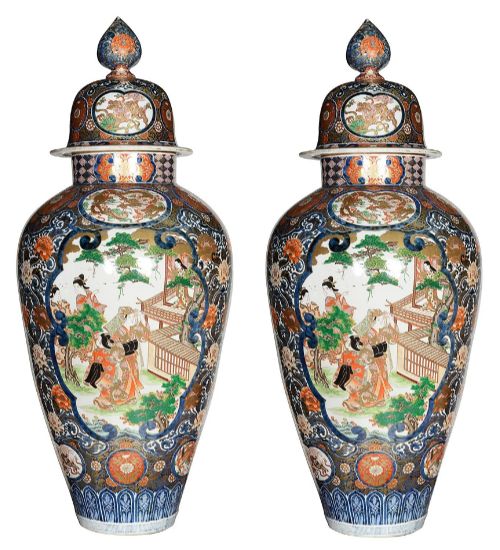
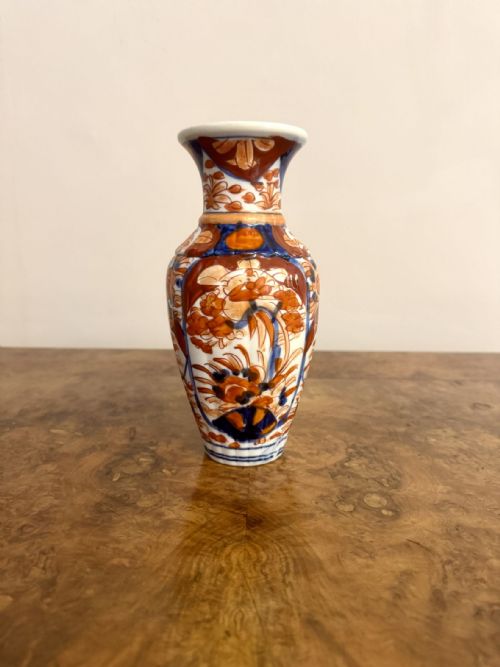
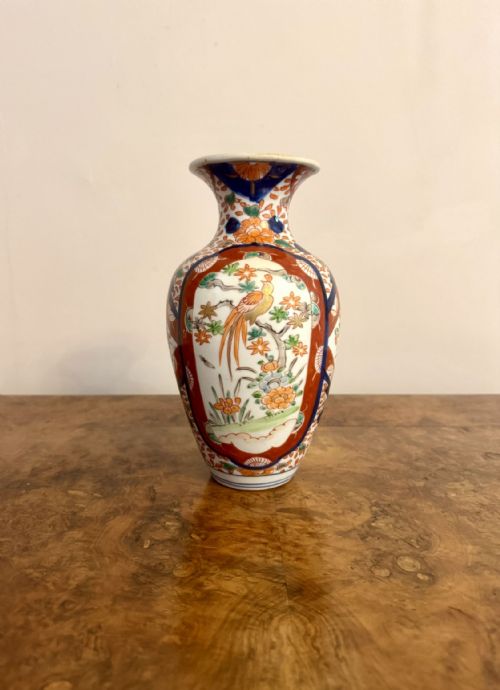
An imari pattern ceramic jar brings together rich enamels and gilt highlights, offering a striking focal point for any room.
Imari Pattern Ceramic Jar
When you search for an imari pattern ceramic jar, you encounter a selection of vessels spanning the Georgian, Victorian, Edwardian, and later periods. The inventory on this page primarily comprises Japanese Imari pieces alongside British iterations from makers such as Mason's and Royal Crown Derby.
Forms vary considerably across the selection, ranging from lidded vases and traditional jars to biscuit barrels, sugar bowls, and pot pourri vessels. You will frequently find lidded examples alongside open vases and tall baluster shapes.
Origins stretch from Japanese Edo and Meiji period workshops to 19th-century British ironstone potteries. This mix provides both traditional Japanese export styles and domestic adaptations created during the Georgian and Victorian eras.
Materials and construction
The foundation of these pieces relies on ceramic, porcelain, bone china, or ironstone bodies shaped into jars, vases, and urns. Potters utilised specialised throwing and moulding techniques to create hexagonal, octagonal, and baluster profiles.
Decoration is applied using vibrant enamel colours, often enhanced with gold leaf or gilt details. Glazes seal the surfaces, while firing fixes the distinctive palette characteristic of the imari style.
Several tall spill vases listed here found a second life illuminating Victorian rooms as converted table lamps.
Factors of quality
Quality rests upon the crispness of the painted enamel and the precision of the gilt work applied over the ceramic body. Pieces that maintain sharp detailing and rich, unrubbed colours stand out within the range.
The structural integrity of the vessel and its matching cover determines desirability, particularly among large lidded jars and baluster vases. Balance in the form and clarity of the underlying porcelain or ironstone further separate standard items from exceptional examples.
Mason s Ironstone·Royal Crown Derby
The Imari Pattern Ceramic Jar Glossary
- Imari pattern
- A decorative style originating in Japan, characterised by a palette of iron red, cobalt blue, and gold.
- Baluster
- A vase or jar form with a rounded lower body that tapers towards the neck.
- Ironstone
- A heavy, durable type of ceramic developed in the 19th century as a robust alternative to porcelain.
- Pot pourri
- A vessel designed with a pierced cover to release the scent of dried flowers and spices held within.
- Enamel
- Opaque glass-like paint applied over the glaze to form intricate surface patterns.
Imari Pattern Ceramic Jar: Frequently Asked Questions
What is an imari pattern ceramic jar?
These pieces are decorative vessels defined by their distinctive palette of iron red, underglaze blue, and gilt highlights.
They encompass Japanese export wares and British ceramic interpretations produced across the 19th and early 20th centuries.
How were these jars used?
Many served as decorative garniture elements on mantelpieces or cabinets, while lidded versions stored dry goods or pot pourri.
Larger examples functioned as floor vases or were later converted into table lamps.
How do I date an imari jar?
Dating relies on identifying the ceramic body, glaze characteristics, and stylistic traits associated with periods like the Meiji era or the Victorian period.
British pieces often carry maker marks on the base to pinpoint their production era.
Are imari jars Japanese or British?
The style originates from Japanese workshops, particularly during the Edo and Meiji periods, exported heavily to European markets.
British potteries soon adopted the aesthetic, producing their own versions on ironstone and bone china.