
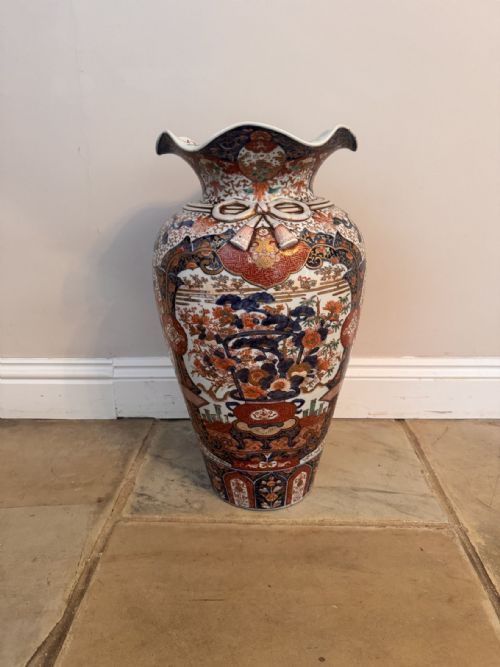

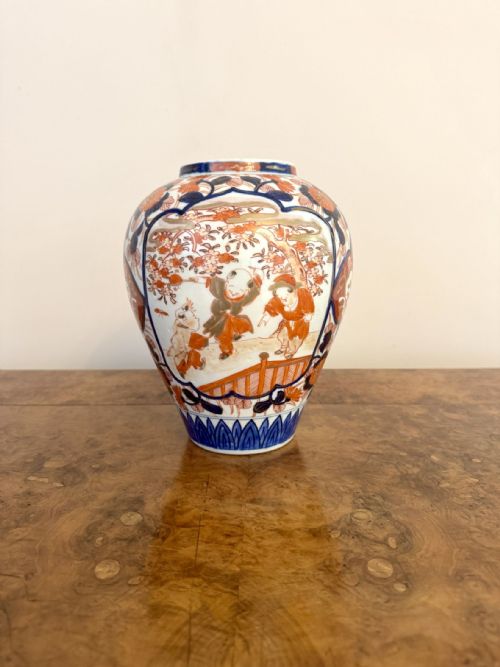
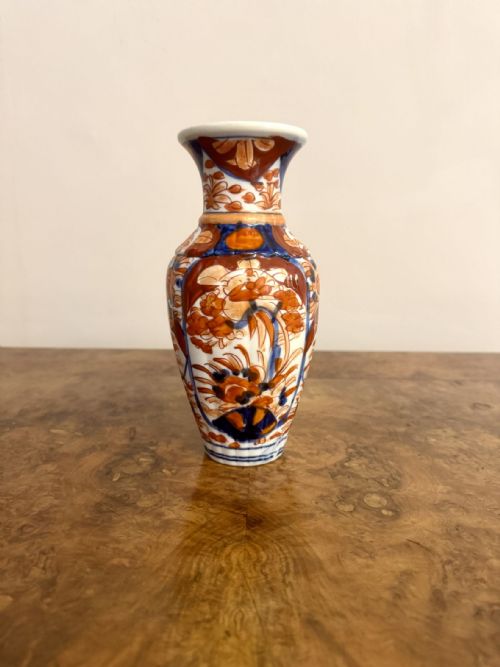
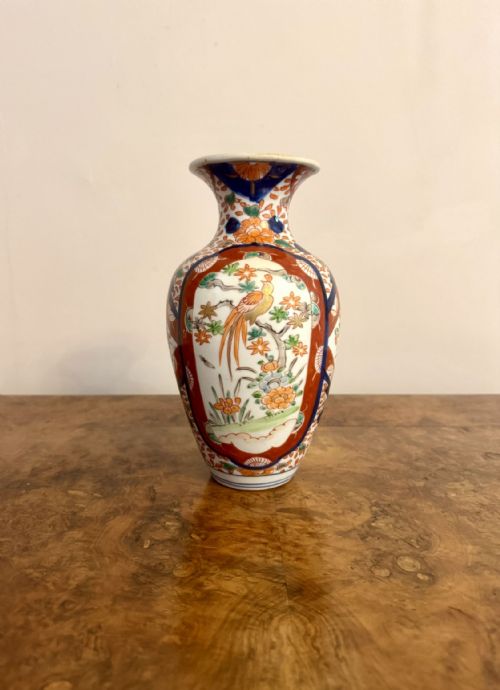


Imari Blue Red Jar
An imari blue red jar brings a striking palette of cobalt and iron red together on porcelain, offering a distinct visual punch for collectors.
Imari Blue Red Jar
When you search for an imari blue red jar, you encounter pieces that span centuries of ceramic production, originating chiefly from Japan alongside select European interpretations. These objects encompass lidded ginger jars, covered vessels, and large floor-standing forms decorated in the characteristic Imari palette.
The pieces you meet most often on this page date from the nineteenth century, particularly the Meiji period, reflecting traditional Arita kiln techniques. Alongside these Japanese works, you find British ironstone and French porcelain interpretations executed in the same vibrant coloration.
Forms range from hexagonal shaped bodies and double gourds to tall garniture sets designed for display. Each piece relies on the interplay of underglaze blue and iron red, frequently augmented with gilding.
How they were made
Potters shaped these objects from porcelain or ironstone, throwing or moulding the clay before applying an underglaze blue pigment. After an initial firing, artisans added detailed overglaze enamel in iron red and supplementary colours.
Gold leaf and gilding were often incorporated in a subsequent low-temperature firing to highlight specific motifs within the design. This layered technique produced the durable, colourful surface characteristic of the style.
Listings feature porcelain and ironstone materials spanning the eighteenth, nineteenth, and early twentieth centuries, including Arita and Meiji period works alongside European interpretations.
What varies in quality
The distinction between ordinary and superior pieces rests on the crispness of the underglaze blue and the precision of the overglaze enamel work. Finely painted examples display sharp brushwork and careful alignment between the blue underglaze and the red and gilt details.
The depth and brilliance of the glaze, alongside the weight and presence of the porcelain body, elevate certain vessels above standard production pieces. Intact covers and matching garniture sets also add to the coherence of a grouping.
Masons Ironstone·Samson
The Imari Blue Red Jar Glossary
- Imari palette
- A decorative scheme utilising underglaze blue, iron red, and gold on a white porcelain ground. This combination originated in Japanese kilns and was later imitated across Europe.
- Arita
- The Japanese town and surrounding region in Hizen province famous for producing porcelain wares. It serves as the historic centre for Japanese export ceramics.
- Ginger jar
- A ceramic vessel with a rounded body and a flat or domed lid, originally used to store spices. Many surviving examples function purely as decorative ornaments.
- Garniture
- A set of three or more matching vases and jars designed to be displayed together on a mantelpiece or cabinet. These sets often comprise alternating shapes.
- Ironstone
- A type of heavy durable ceramic developed in Britain as an affordable alternative to porcelain. It readily accepted the Imari palette in nineteenth-century production.
Imari Blue Red Jar: Frequently Asked Questions
How do I identify Japanese Imari?
Japanese Imari is identified by the characteristic combination of cobalt blue underglaze and iron red overglaze, often highlighted with gold. The paste is typically hard porcelain, and motifs frequently draw on natural Japanese themes.
Examination of the foot ring and glaze pooling helps distinguish these pieces from later European copies. The weight and texture of the ceramic body also provide clues to its origin.
Where were these jars made?
These jars were primarily produced in Arita, Japan, for both domestic use and export to Western markets. The style proved so popular that European potteries in Britain and France soon began creating their own versions.
European pieces often utilise ironstone or soft-paste porcelain rather than traditional Japanese clay. Maker marks or the absence of them usually clarifies the geographic source.
How were lidded jars used?
Lidded jars served practical storage purposes for dry goods, spices, and precious substances in wealthy households. Over time, their primary function shifted towards pure decorative display on mantelpieces and cabinets.
Complete sets, such as garnitures, were arranged symmetrically to demonstrate taste and affluence. The lids were frequently sealed with wax when holding valuable contents.
How do I date an Imari piece?
Dating relies on stylistic shifts, potting techniques, and the characteristics of the glaze and pigments. Eighteenth-century pieces often display a milky white body with softer red tones, whereas Meiji period works feature brighter, denser decoration.
European interpretations usually bear nineteenth-century factory marks that narrow down their production era. Comparing baseline forms in the evidence assists in establishing a reliable chronology.