


Imari Porcelain Lid
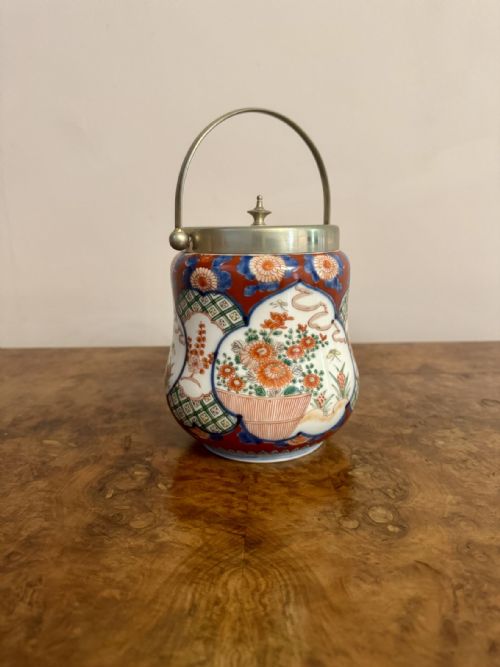
An imari porcelain lid completes a lidded jar, vase or tureen, bringing together ceramic form and distinct palette.
Imari Porcelain Lid
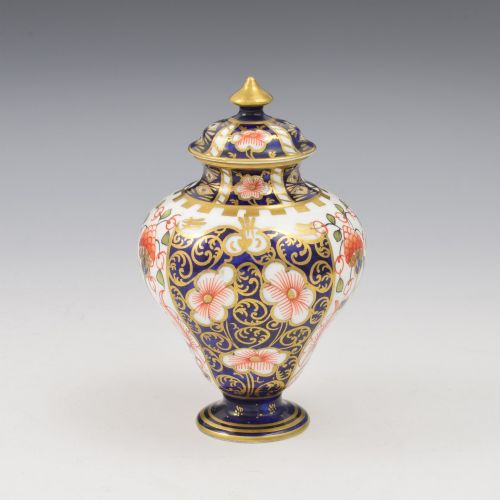
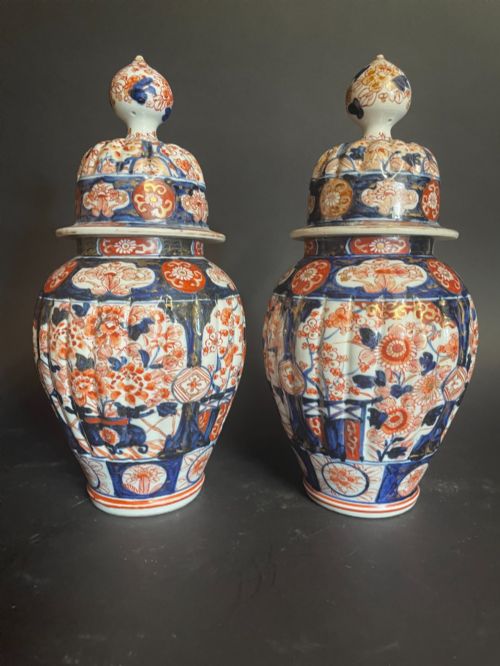
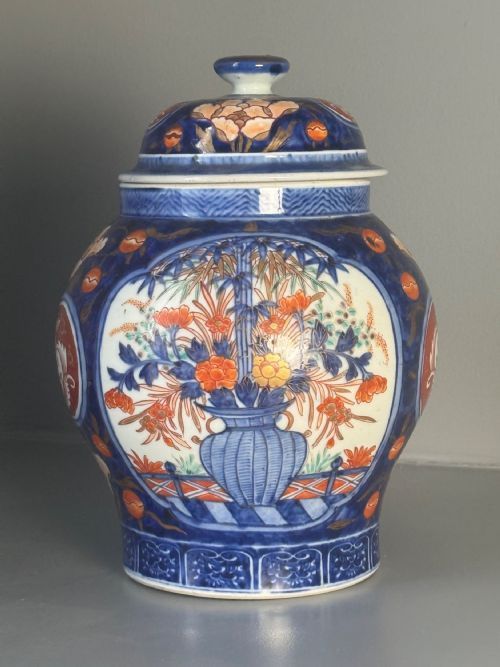
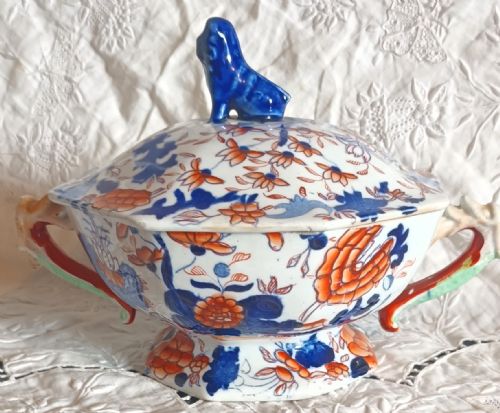
An imari porcelain lid protects or completes vessels such as lidded jars, ginger jars, vases, and tureens found across multiple periods. A buyer seeking an imari porcelain lid encounters pieces originating from Japanese workshops in the Edo and Meiji periods alongside English adaptations by makers like Royal Crown Derby and Mason's ironstone.
The selections span centuries, incorporating 18th-century Arita production and 19th-century export pieces alongside later European interpretations. Forms range from miniature porcelain vases with covers to large baluster jars and octagonal vessels, each retaining a matching or associated cover.
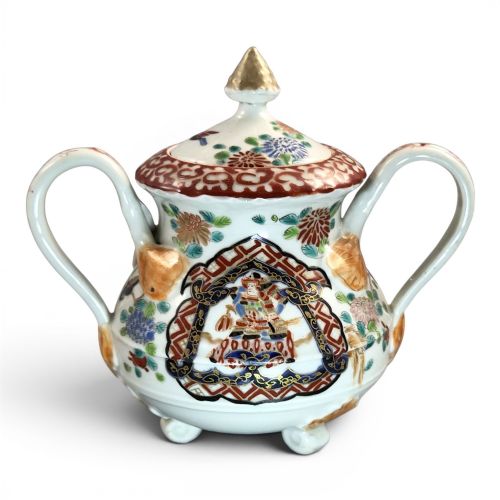
Japanese examples demonstrate distinct styles associated with Arita kilns, while English porcelain and ironstone pieces adapt the familiar palette for domestic sugar bowls, chocolate cups, and pot pourri containers. Surviving lids often share the diagnostic palette of iron red, cobalt blue, and gilt highlights seen on the parent vessels.
Materials and construction
Production relies on hard-paste or soft-paste porcelain, ceramic bodies, and ironstone, shaped into vessels and matching covers before firing. Artisans applied cobalt blue underglaze decoration directly to the clay body prior to the initial high-temperature kiln stage.
Enamel colours, particularly iron red, and gold leaf or gilding were added over the glaze during a subsequent lower-temperature firing to secure the metallic and polychrome details. Glaze applications provided a glossy protective coating across the exterior and interior surfaces of both lid and base.
Samurai figures gaze out from the glaze, standing guard over sugar bowls and ginger jars alike.
Distinguishing quality characteristics
Quality rests upon the precision of the hand-painted brushwork, the vibrancy of the enamel pigments, and the crispness of the gilt highlights applied over the glaze. Superior examples display densely executed motifs without blurring, running, or misaligned pattern registers between the lid and the vessel body.
The integrity of the ceramic body and the snugness of the lid fit within the rim dictate the structural standard. Pieces bearing identifiable factory marks, such as Fukagawa or specific English pattern numbers, demonstrate workshop provenance that influences collector interest.
Royal Crown Derby·Mason's·Spode·Richard Ginori·Samson
The Imari Porcelain Lid Glossary
- Imari
- A decorative style originating in Japan featuring a distinct palette of cobalt blue, iron red, and gold.
- Baluster
- A vase or jar form with a rounded body that tapers toward the base and neck.
- Ironstone
- A durable type of heavy earthenware patented in England as a robust alternative to porcelain.
- Koro
- A traditional Japanese incense burner typically supported on legs and fitted with a pierced cover.
- Underglaze
- Pigment applied to a ceramic piece before the glaze coating is fired in the kiln.
Imari Porcelain Lid: Frequently Asked Questions
What is an imari porcelain lid?
An imari porcelain lid is a matching ceramic cover designed for vessels such as ginger jars, vases, and tureens decorated in the traditional Japanese palette. These covers feature the characteristic cobalt blue and iron red motifs often enhanced with gold leaf.
They appear across Japanese Edo and Meiji periods as well as in 19th-century English ceramics influenced by Asian export goods.
How do I identify Japanese imari pieces?
Japanese imari items typically exhibit cobalt blue underglaze combined with overglaze iron red and gilt details depicting floral or figurative scenes. Arita kilns produced many of these historic export wares during the Edo and Meiji eras.
Examination of the paste, glaze pooling, and mark types helps separate early Japanese production from later European revival styles.
Did English potteries make imari items?
English factories including Royal Crown Derby, Spode, and Mason's produced ironstone and porcelain pieces decorated in the imari style. These domestic adaptations applied the familiar red, blue, and gold palette to sugar bowls, chocolate cups, and tureens.
Such English ceramics often combine traditional European vessel shapes with Asian-inspired surface decoration and factory pattern numbers.
How should I display lidded jars safely?
Lidded jars and vases require stable placement on flat surfaces away from heavy foot traffic or vibration. Keeping the lid and base together prevents accidental separation and loss of the matching components.
Gentle dusting with a soft brush preserves the overglaze enamel and gilt details without risking abrasion to the ceramic surface.