



Hunting Dog Wall Art
Hunting dog wall art captures the spirited energy of the field through canvases and panels celebrating faithful hounds and sporting dogs.
Hunting Dog Wall Art
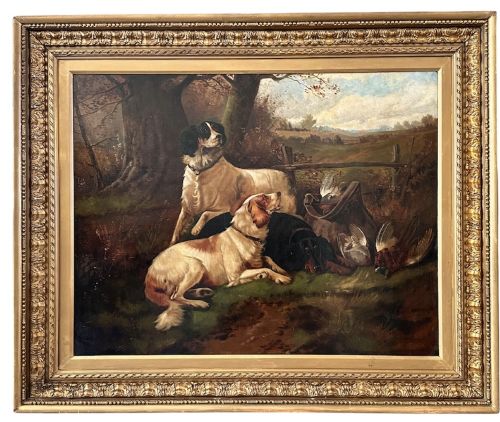
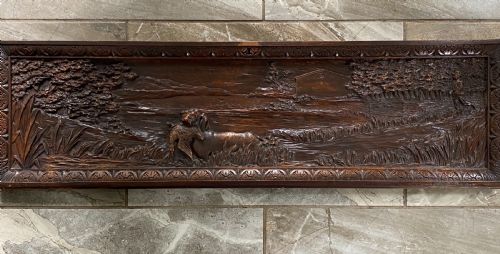
Hunting dog wall art encompasses traditional oil paintings and carved wood panels depicting gun dogs, terriers, and hounds in rural landscapes. These works originate predominantly from the nineteenth century, reflecting a rich heritage of British and European sporting art.
Collectors encounter pieces ranging from intimate watercolours to large canvas portraits set against winter snow or moorland scenes. Victorian Sporting Art dominates the selection, capturing horses, handlers, and working dogs with careful anatomical detail.
Mid-century portrayals and architectural panels also appear, offering varied expressions of canine portraiture from later decades. Each piece records the historic bond between sportsmen, landscape, and working animals.
Factors of quality
Quality rests upon the artist's command of anatomy, expression, and composition, distinguishing skilled animal painters from formulaic workshops. Fine brushwork renders the texture of fur, the alertness of a pointer's stance, and the atmospheric light of a winter landscape.
The integration of the subject within its environment also determines merit, with superior works balancing detailed portraits of hounds against atmospheric skies and convincing terrain. Original framing and untouched surfaces preserve the historic integrity of each piece.
Several hounds gaze out from snowy landscapes, wearing expressions of profound melancholy despite having successfully caught their rabbit.
Fannie Moody·John Charles Tunnard·Jules Chardigny·Tom Carr·Robert Cleminson·Henry Frederick Lucas Lucas·William Albert Clark·Samuel John Egbert Jones·Charles Hunt Jnr
The Hunting Dog Wall Art Glossary
- Sporting art
- Depictions of rural pastimes, including shooting, hunting, and the animals associated with them. These works document the social history and landscape traditions of the nineteenth century.
- Canvas
- A heavy woven fabric stretched across a wooden frame to provide a durable surface for oil paint. It remains the most common support for nineteenth-century portraits.
- Giltwood
- Wood carved and coated with gold leaf or metallic paint to create a decorative frame. This finish enhances the visual weight of traditional oil paintings.
- Watercolour
- A paint medium using water-soluble pigments on paper, producing translucent washes of colour. It offers a lighter alternative to heavy oil compositions.
- Architectural panel
- A carved wooden piece integrated into interior woodwork, such as overdoors. These heavy panels feature sculptural depictions of animals in relief.
Hunting Dog Wall Art: Frequently Asked Questions
What periods do these pieces date from?
The selection is anchored primarily in the nineteenth century, with Victorian sporting pieces forming the core of the collection. Later twentieth-century examples also surface to offer mid-century perspectives on the theme.
Buyers will find that Victorian works dominate the offerings, showcasing the height of British and European animal portraiture.
How should I hang heavy oil paintings?
Substantial nineteenth-century canvases and carved wooden panels require secure wall anchors fixed directly into masonry or studs. Due to the weight of traditional giltwood frames, professional installation is often advisable.
Ensure the hanging wire and D-rings match the overall weight of the piece to prevent shifting or accidents over time.
How do I care for antique canvas art?
Keep oil paintings away from direct sunlight and fluctuating humidity to prevent the canvas from sagging and the paint from cracking. Gentle dusting with a soft, dry brush is sufficient for routine maintenance.
Avoid using water or chemical cleaners on the painted surface or gilt frames, as professional conservation is required for deep cleaning.
What is the difference between an oil and a watercolour?
Oil paintings utilise pigments suspended in drying oils on canvas or board, creating rich, opaque layers with deep colour saturation. Watercolours employ water-soluble pigments on paper, resulting in a lighter, more translucent finish.
Oils were typically framed behind open mounts, whereas watercolours require glass protection to shield the paper from environmental damage.
Are these works signed by the artists?
Many pieces bear the signature of established animal and sporting artists from the nineteenth and twentieth centuries. Unsigned works also appear, attributed through style, subject matter, and period characteristics.
Signatures often provide valuable context regarding the painter's regional school and specific focus within sporting art.