


Hunting Hound Canvas Art
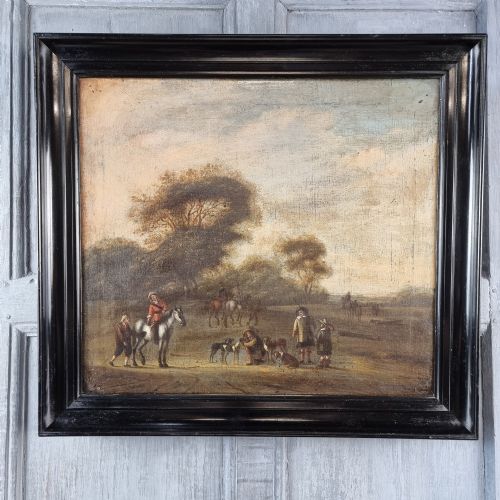
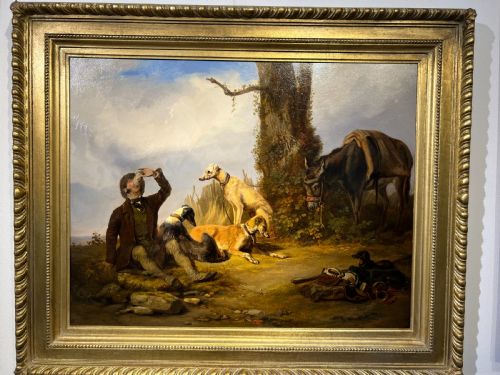
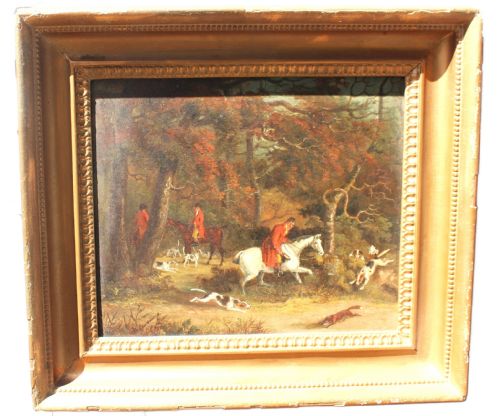
Hunting hound canvas art brings the traditional field sports of the nineteenth century into domestic interiors through oil paintings.
Hunting Hound Canvas Art
Hunting hound canvas art encompasses oil paintings on canvas depicting hounds, hunting dogs, and sporting scenes. Buyers looking for hunting hound canvas art will encounter nineteenth-century works predominantly, alongside occasional seventeenth-century examples and mid-century portraits.
The subjects range from solitary dog portraits and pairs of hounds in landscapes to dynamic fox hunting scenes and coaching depictions. Traditional British sporting art and Victorian sporting art form the majority of the works seen on this page.
Canvases often capture specific hunts such as the Berkeley Hunt, alongside rural landscapes and winter snow settings. These pieces reflect the prominent place of equestrian and canine subjects in historical British and French painting traditions.
Materials and technique
These works are executed in oil paint on canvas, capturing the texture of animal coats and the light of outdoor landscapes. Many pieces are housed within wood or giltwood frames that complement the traditional character of the oil paintings.
Artists utilised brushwork to render the anatomy of hounds, horses, and human figures in motion or repose. The combination of oil on canvas with gilt wood framing represents the standard method of production for this category of fine art.
Listings feature oil paintings on canvas spanning from the seventeenth century to the mid-twentieth century, with a strong concentration of nineteenth-century Victorian sporting art.
Assessing quality
Quality in these oil paintings rests upon the artist's ability to render the anatomy and expression of the hounds with anatomical precision. Works by established nineteenth-century animal painters and portraitists demonstrate superior handling of light, movement, and composition compared to anonymous workshop pieces.
The integration of the animals within the broader landscape or interior setting distinguishes finer examples. Preserved canvas condition and original giltwood frames also contribute to the distinction between standard decorative works and notable fine art.
Sir Edwin Henry Landseer·George Wright·Colin Graeme Roe·Fannie Moody·Jules Chardigny·John Sanderson-Wells·Alfred Duke·Henri Schouten·Ludolf de Jongh·Heywood Hardy·Guillaume Urban Régamey·George Goodwin Kilburne·Henry Frederick Lucas-Lucas·Edward B. Herberte·Wilfred Bailey
The Hunting Hound Canvas Art Glossary
- Oil on Canvas
- A traditional painting medium where pigment mixed with drying oil is applied to stretched woven fabric. This combination allows for rich colour depth and lasting durability.
- Gilt Wood
- Wood carved and covered with a thin layer of gold leaf or metallic gilt finish. It is commonly found framing nineteenth-century oil paintings.
- Sporting Art
- A genre of fine art depicting field sports, horses, hounds, and rural pursuits. It gained significant popularity during the Victorian period.
- Dutch Golden Age
- A period in Dutch history spanning the seventeenth century noted for exceptional achievements in painting. Works from this tradition often influence landscape and interior compositions.
Hunting Hound Canvas Art: Frequently Asked Questions
What periods do these paintings come from?
The listings span from the seventeenth century through the nineteenth century and into the mid-twentieth century. Victorian examples and nineteenth-century sporting art form the largest portion of the available selections.
Occasional pieces reach back to earlier Dutch Golden Age traditions or extend into the nineteen-twenties and nineteen-sixties.
Who painted these hunting hound scenes?
The works include paintings by named nineteenth-century animal and sporting artists such as Fannie Moody, Henri Schouten, and Henry Frederick Lucas-Lucas. Other pieces are attributed to figures like Sir Edwin Henry Landseer or created in the style of historical masters.
Many listings highlight specialised Victorian sporting painters who focused on hounds, horses, and huntsmen.
How were these artworks framed?
Many of these oil paintings are presented in wood or giltwood frames appropriate to their period. Gilt wood frames provide a traditional decorative border that enhances the tones of the canvas.
Frames often reflect the Victorian taste for ornate woodwork surrounding fine art oil paintings.
What subjects appear alongside the hounds?
The compositions frequently feature fox hunting scenes, rural landscapes, winter snow settings, and coaching scenes with stagecoaches and hounds. Some works portray specific hunts like the Berkeley Hunt or show paired setters and individual portrait studies of dogs.
Human figures such as huntsmen, rustic figures, and tavern attendants also appear alongside the animals.