
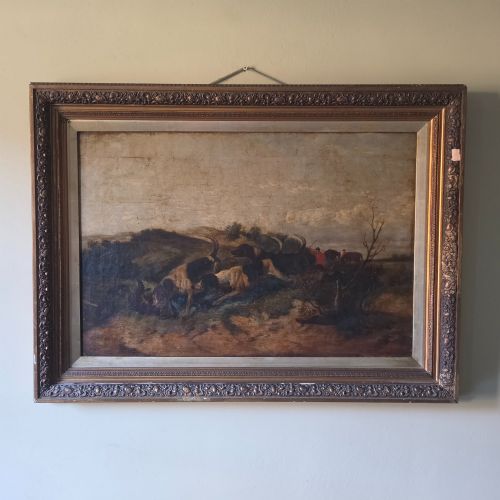


19th Century Hound Portrait
These 19th century hound portrait pieces capture the intense character and sporting heritage of canine subjects through oil paint, canvas, and gilt framing.
19th Century Hound Portrait
A 19th century hound portrait presents canine subjects with distinct personality, ranging from solitary retrievers and bloodhounds to dynamic hunting packs in winter landscapes. These works emerge primarily from Victorian sporting art and realism traditions, capturing individual animals with remarkable fidelity.
Buyers encounter oil paintings on canvas or board, alongside occasional etchings and unusual supports like artist palettes. The subjects span named hounds, paired setters, and grand copies after famous animal artists of the era.
Materials and construction
These works rely on oil paint applied to canvas or wood panels, capturing the texture of fur and the depth of outdoor settings through layered pigments. Painters utilised traditional brushwork to render realistic expressions and anatomical precision.
Frames incorporate wood and giltwood with gold leaf finishes, providing the traditional Victorian presentation that surrounds the painted surface.
At least one hound portrait is painted directly onto a wooden artist's palette, turning the tool of trade into the canvas itself.
Evaluating the artwork
Quality rests in the anatomical accuracy of the hound and the nuance in the animal's expression, separating masterly depictions from generic renderings. Superior pieces capture light and texture with confident brushwork.
The sophistication of the landscape background and the preservation of the original canvas and giltwood frame influence the overall distinction of the piece.
Samuel Raven·Sir Edwin Landseer·Colin Graeme Roe·Fannie Moody·Henri Schouten·Henry Frederick Lucas-Lucas·Herbert Dicksee·James Clark
The 19th Century Hound Portrait Glossary
- Oil on Canvas
- A traditional painting method using pigments suspended in drying oils applied to a woven fabric surface stretched across a wooden frame.
- Giltwood
- Wood that has been treated with a thin layer of gold leaf or gold paint, frequently seen on ornate Victorian frames.
- Victorian Sporting Art
- A genre of painting dedicated to depicting animals, hunting scenes, and rural pursuits popular during the 19th century.
- Etching
- A printmaking technique where lines are incised into a metal plate with acid before being inked and transferred to paper.
19th Century Hound Portrait: Frequently Asked Questions
What subjects appear in these paintings?
The artworks feature individual hounds, retrievers, bloodhounds, and pairs of setters placed in landscapes or interior settings. Many pieces record specific named dogs and hunting dogs from the period.
Other compositions show larger packs engaged in winter hunts, reflecting the sporting interests of the nineteenth century.
How should I display a gilt frame?
Keep giltwood frames away from direct sunlight and sources of extreme heat to prevent the gold leaf and wood from drying out or cracking.
Position the artwork on a stable interior wall where temperature and humidity remain relatively constant throughout the year.
Are these works original paintings?
The selection includes original oil paintings on canvas and wood panel, alongside period etchings and traditional nineteenth-century painted copies of famous animal artworks.
Each listing specifies the exact medium used by the artist, distinguishing hand-painted works from printed graphic material.
What periods do the pieces span?
The items originate primarily from the nineteenth century, encompassing Georgian, Victorian, and Edwardian eras up to the early twentieth century.
Dates range across the decades, reflecting shifting styles in animal portraiture and sporting art over time.