
Howard Style Upholstered Chair
A howard style upholstered chair offers deep comfort and traditional English country house charm, built for lounging with generous proportions.
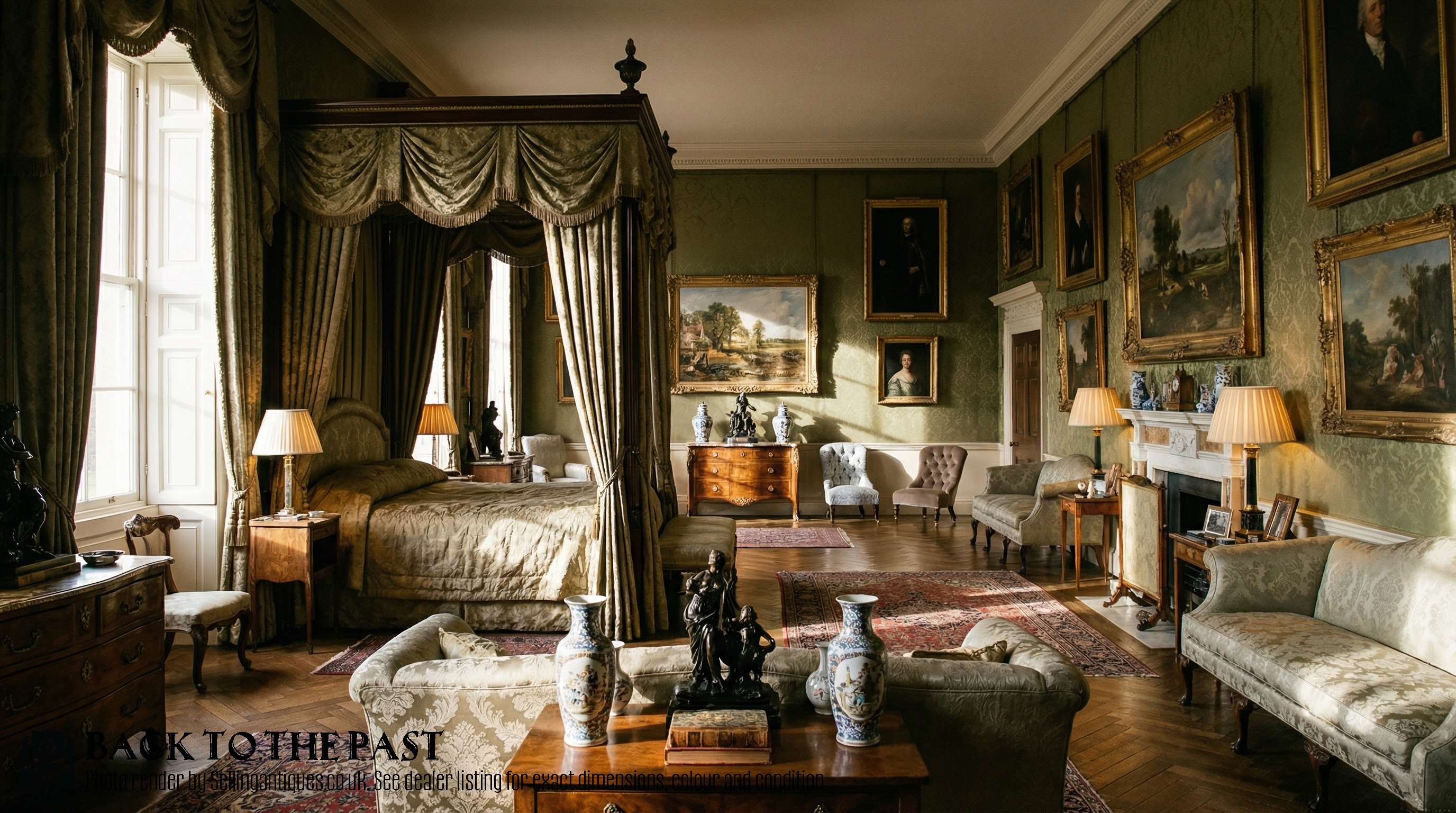
Howard Style Upholstered Chair
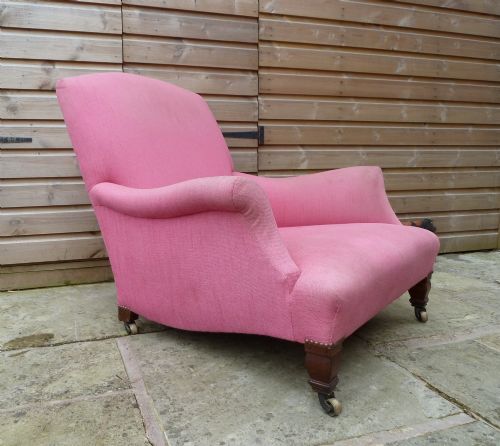
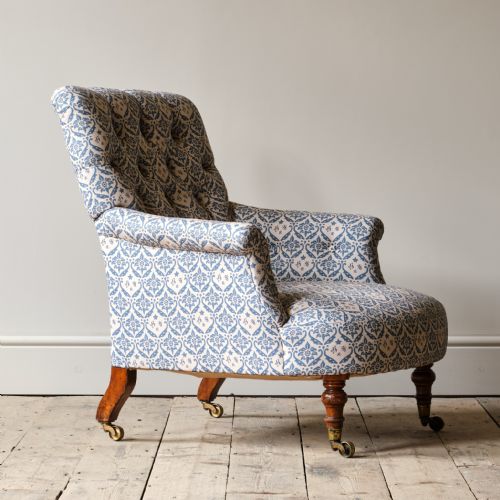
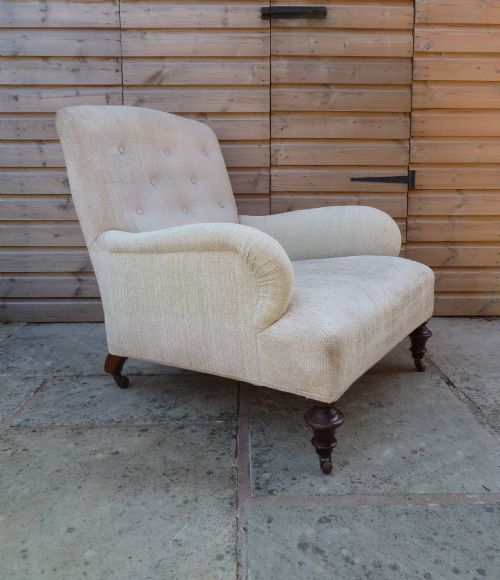
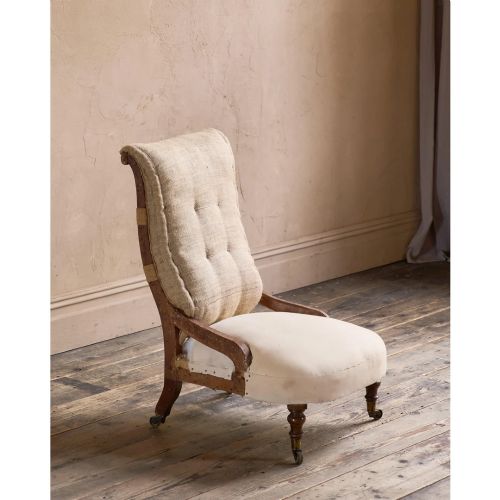
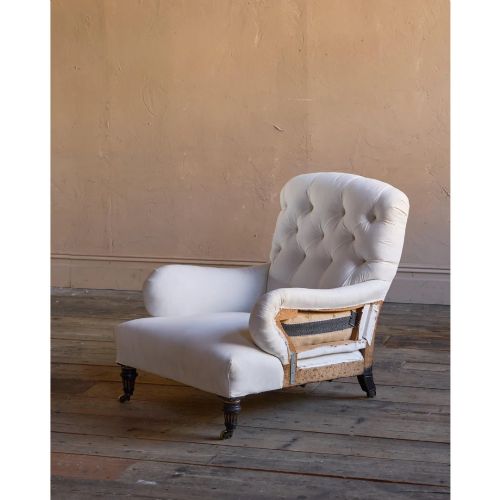
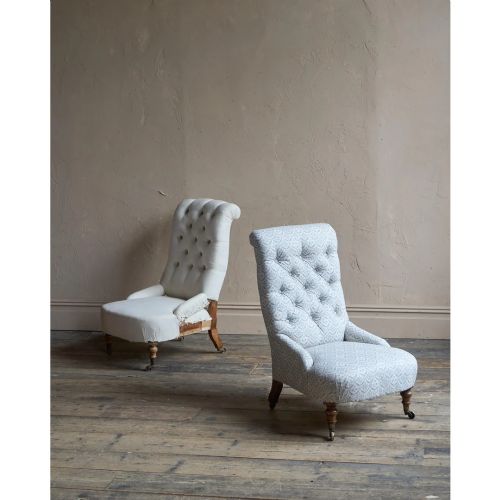
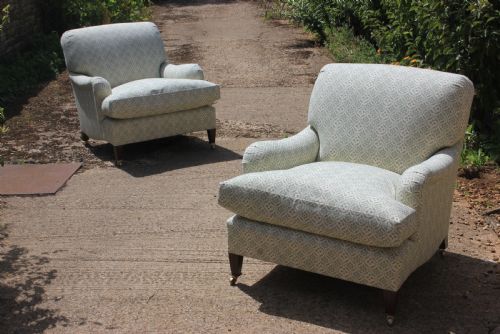
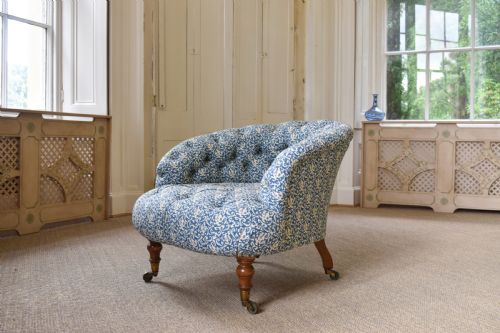
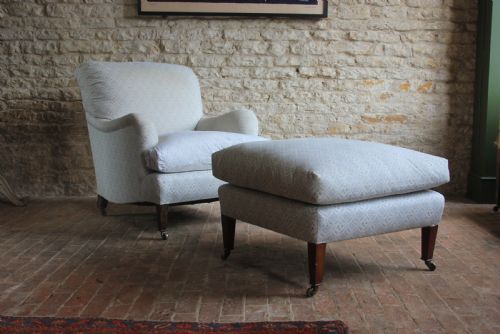
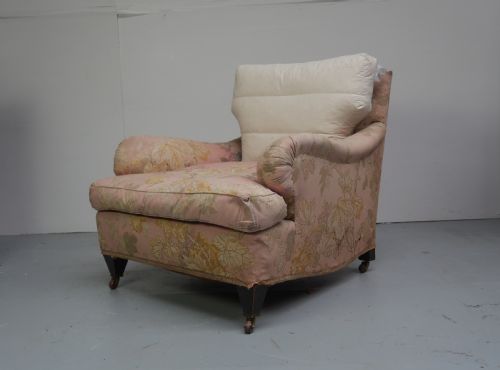
When you search for a howard style upholstered chair, you encounter comfortable seating designed for relaxation, spanning the nineteenth and early twentieth centuries. These pieces encompass armchairs, tub chairs, club chairs, and daybeds originating from the Victorian and Edwardian periods. The most common form on this page is the deep-seated armchair, often upholstered in ticking, cotton, or patterned fabric.
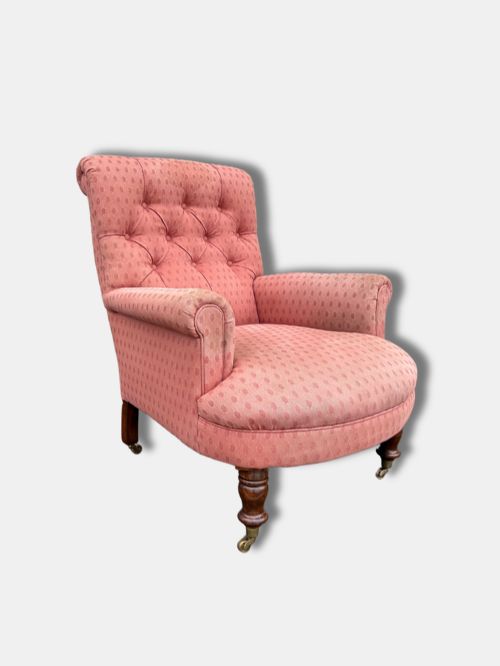
The aesthetic embraces English country house taste, occasionally featuring aesthetic movement legs, button backs, or open arms. Makers and firms such as Howard and Sons, James Shoolbred, and Robert Strahan produced comparable seating during the Victorian era. Many pieces reflect this heritage through low seats, rolled arms, and substantial proportions intended for domestic comfort.
How they were made
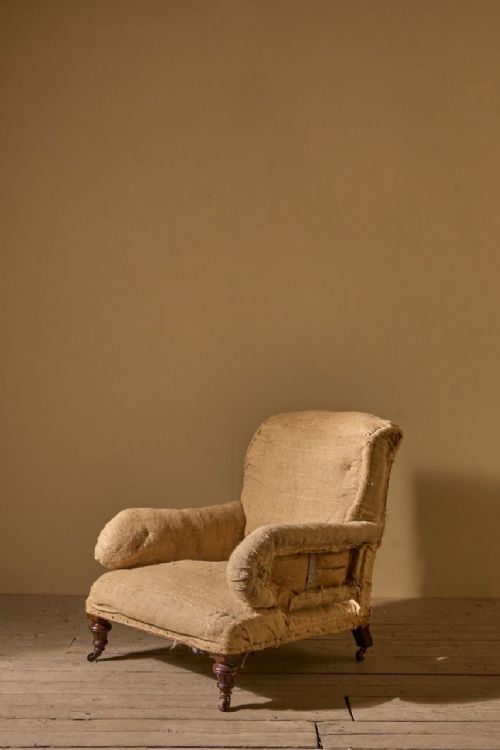
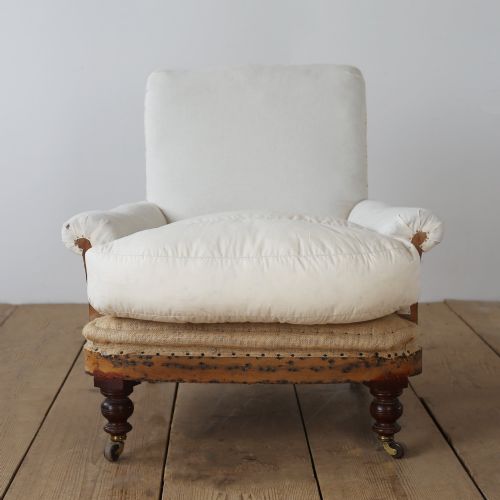
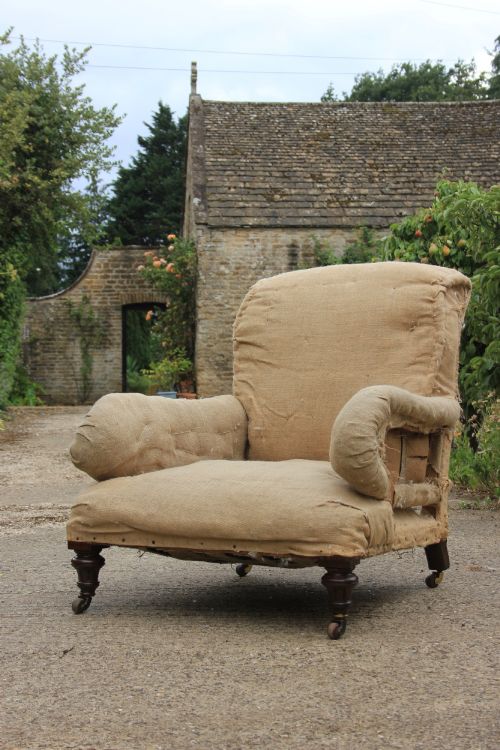
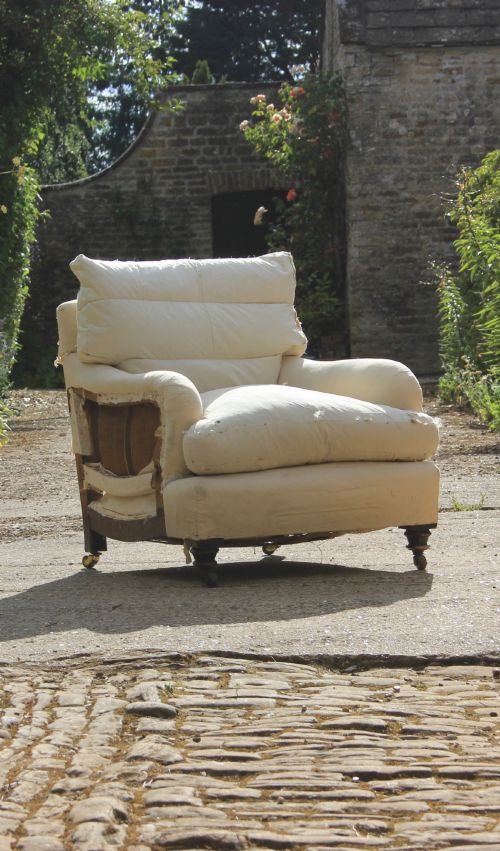
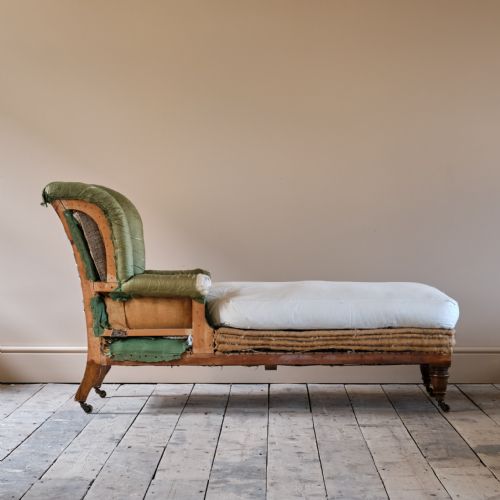
Frames rely on sturdy timbers such as walnut, mahogany, oak, and general wood, providing a solid foundation for deep upholstery. Traditional construction incorporates internal stuffing supported by hessian, cotton, and calico linings beneath the outer fabric. Castors often terminate the legs, sometimes paired with brass details to allow movement across heavy carpets.
Upholstery techniques range from plain cotton ticking and fitted fabric to button-backed leather and custom prints by designers like William Morris. Frames frequently exhibit turned or tapering wooden legs, reflecting the stylistic preferences of the nineteenth century from aesthetic movement accents to simpler country house designs.
Listings feature pieces spanning the 1850s to the Edwardian era, constructed from walnut, mahogany, and oak with cotton ticking and brass details.
What varies in quality
The distinction between standard examples and superior pieces rests upon the integrity of the original frame and the retention of maker markings. Pieces bearing stamps or labels from established firms command greater interest from collectors seeking documented provenance. The subtlety of the turning on the wooden legs and the balance of the proportions also separate fine workshop output from standard commercial production.
Upholstery materials and execution dictate the finish of each piece, distinguishing between utilitarian reupholstery and careful conservation using traditional fabrics like ticking or cotton. Frames that maintain their original spring tension and structural rigidity without timber compromise represent the higher tier of surviving seating.
Howard and Sons·James Shoolbred·Trollope and Sons·Robert Strahan·Cornelius V Smith
The Howard Style Upholstered Chair Glossary
- Ticking
- A tightly woven cotton or linen fabric traditionally used as a durable mattress or furniture covering. It is frequently seen in grey stripes on country house armchairs.
- Hessian
- A coarse woven fabric, typically made from jute fibres, utilised as internal webbing and foundation support beneath upholstery. It provides underlying tension for the springs.
- Button back
- An upholstery technique where indentations are formed by pulling buttons deep into the padding in a geometric grid. This secures the stuffing and adds decorative texture.
- Tub chair
- A compact armchair featuring a rounded back that curves continuously into low arms. This form offers an enclosed and supportive seat.
- Calico
- A plain-woven cotton fabric often used as an interim lining layer over internal stuffing before the final top cover is applied.
Howard Style Upholstered Chair: Frequently Asked Questions
How do I identify a genuine period piece?
Examine the timber frame underneath and check for maker stamps on the legs or castors, which often indicate nineteenth-century origin.
Look for traditional internal materials like hessian and calico beneath the outer fabric rather than modern synthetic webbing.
What fabrics are appropriate for reupholstery?
Traditional choices include heavy cotton ticking, plain linen, or patterned prints by historical designers that match English country house aesthetics.
Avoid overly glossy modern synthetics that conflict with the traditional nineteenth-century proportions and character of the frame.
Where were these chairs used historically?
These comfortable seats belonged primarily in country house libraries, drawing rooms, and bedrooms where long periods of reading or resting occurred.
Their deep proportions made them popular for informal family spaces rather than formal reception rooms.
How do armchairs differ from club chairs?
Club chairs generally offer lower, broader profiles with deeper seats designed explicitly for relaxed lounging in studies and smoking rooms.
Standard armchairs can vary more in back height and arm shape, including open-armed or button-backed variants.