





Hoshiarpur Inlay Table
A hoshiarpur inlay table brings intricate craftsmanship into a room, offering rich surface patterns and distinctive geometric forms.
Hoshiarpur Inlay Table
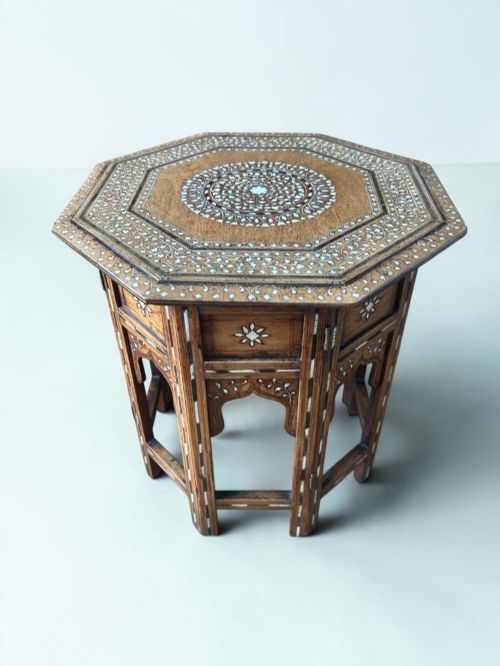
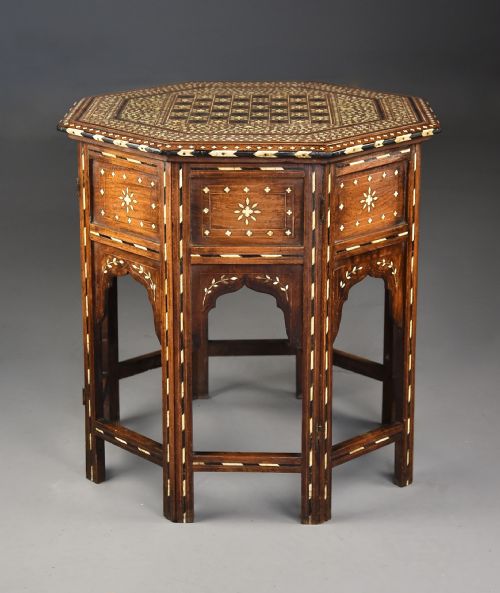
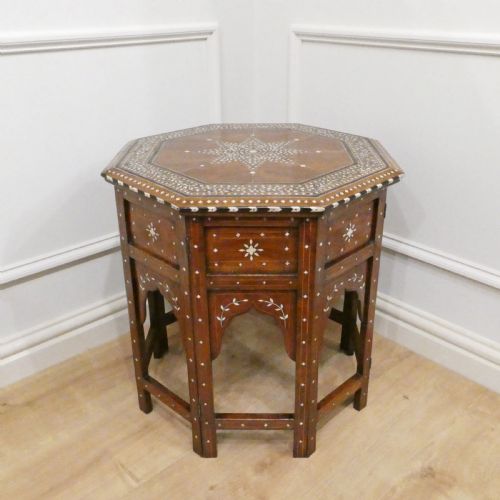
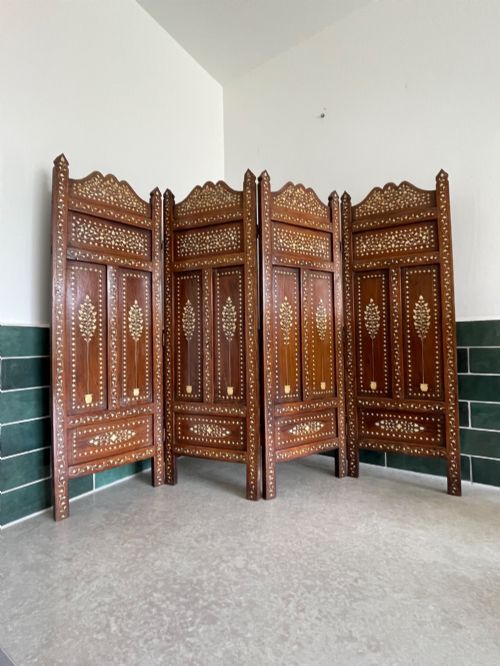
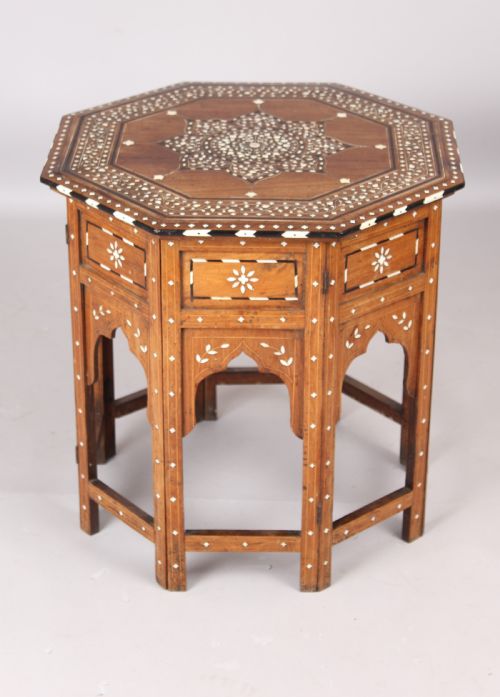
A hoshiarpur inlay table represents a specific tradition of craftsmanship originating from the Punjab region, noted for elaborate surface decoration. These pieces arrive in various formats including occasional tables, side tables, and table screens.
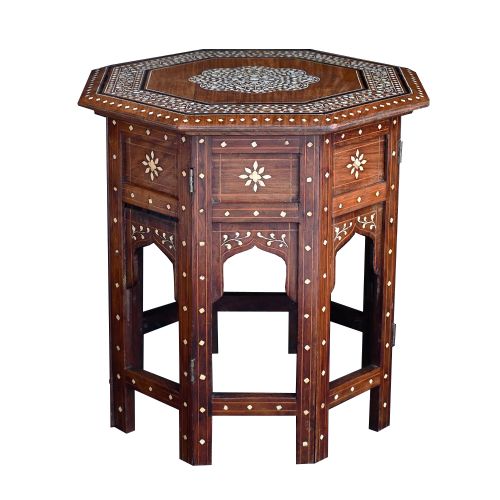
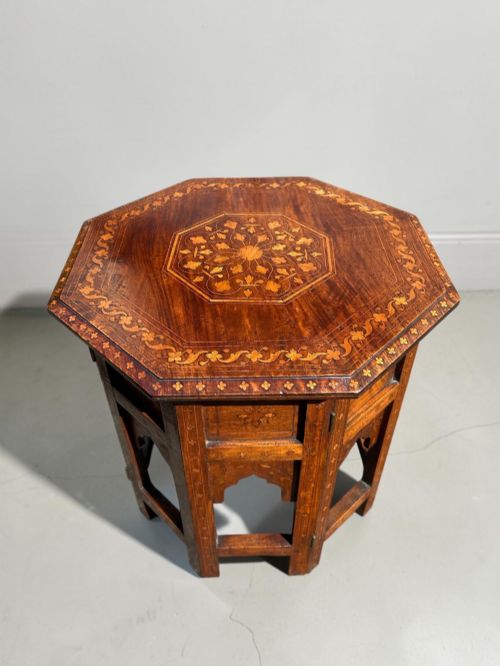
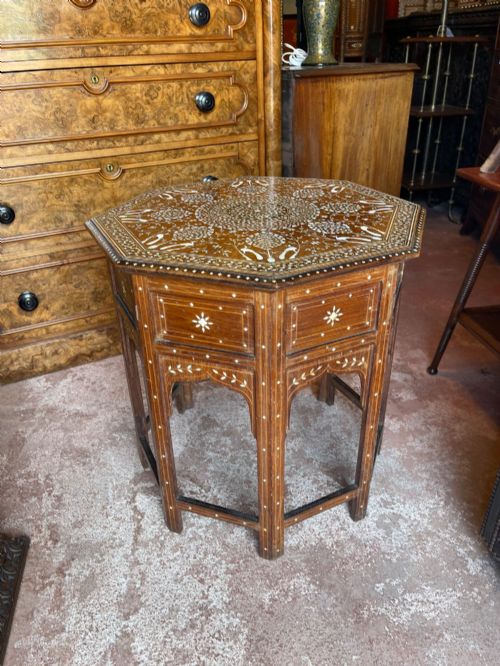
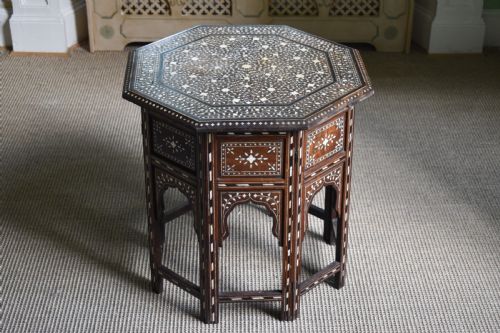
The octagonal form appears frequently across the selection, often accompanied by folding bases and star designs. Buyers encounter woods such as rosewood, teak, sandalwood, and hardwood forming the primary structure.
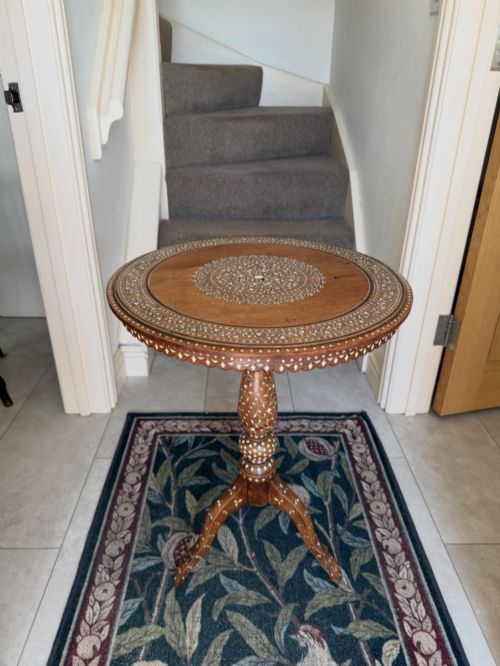
The Anglo-Indian aesthetic heavily defines these items, blending local Indian woodworking techniques with British colonial tastes of the nineteenth and early twentieth centuries. Pieces range from compact small tables to full-size pedestal designs.
How they were made
Makers construct these tables using dense timbers like teak, rosewood, and sandalwood as a solid foundation for intricate surface work. Artisans then carve the wooden framework deeply to receive contrasting decorative elements.
Bone and brass serve as the primary inlay materials, fitted meticulously into hand-cut recesses across the timber surface. This combination creates the striking tonal contrast characteristic of the regional output.
Hoshiarpur Inlay Table Retail Price Guide 2026
Typical asking prices for hoshiarpur inlay table among the pieces listed under this phrase on Sellingantiques today, from the lower quarter to the upper quarter. They describe what is for sale here now, not the wider market.
Listings demonstrate that 19th Century, 1890, and 1920 represent the primary production periods for these pieces.
What varies in quality
The precision and density of the surface pattern determine the standard of an individual piece, with finer work displaying tighter geometric harmony. The complexity of the carved motifs and the crispness of the fitted bone or brass elements separate standard examples from superior ones.
Material selection also dictates the grade, as tables utilising fragrant sandalwood or finely figured rosewood command greater attention. The structural integrity of folding mechanisms and the preservation of intricate inlay work further distinguish the range.
The Hoshiarpur Inlay Table Glossary
- Bone Inlay
- A decorative technique where small pieces of animal bone are shaped and pressed into carved channels within wooden furniture. This method creates pale, luminous geometric patterns against dark timber.
- Octagonal
- Having eight sides and eight angles. This geometric shape is a signature format for folding occasional tables in this tradition.
- Anglo-Indian
- A descriptive term for furniture made in India during the British colonial period, combining local artisan methods with European furniture forms.
- Tripod Table
- A small table supported by three legs stemming from a central pillar. This construction appears frequently in pedestal variants.
- Table Screen
- A decorative panel supported on a base, designed to sit upon a surface rather than serve as a functional table. These items share the same carved and inlaid techniques as the tables.
Hoshiarpur Inlay Table: Frequently Asked Questions
How do I care for a hoshiarpur inlay table?
Keep these tables away from direct sunlight and excessive heat sources to prevent the wood and bone elements from drying out and shrinking.
Dust gently with a dry, soft cloth and avoid applying liquid polishes that might loosen the fitted inlay work.
Are these tables sturdy enough for daily use?
Many examples feature clever folding mechanisms designed for portability and occasional placement rather than heavy weight-bearing duties.
Placing lighter decorative items on top preserves the structural integrity of the joints and the delicate inlaid surfaces.
How can I tell the age of a hoshiarpur table?
Examine the timber species, the fastening methods used underneath, and the overall wear patterns on the wooden base and feet.
Nineteenth-century examples often display older hand-cut joinery and deeper patina within the rosewood or teak components compared to later twentieth-century iterations.
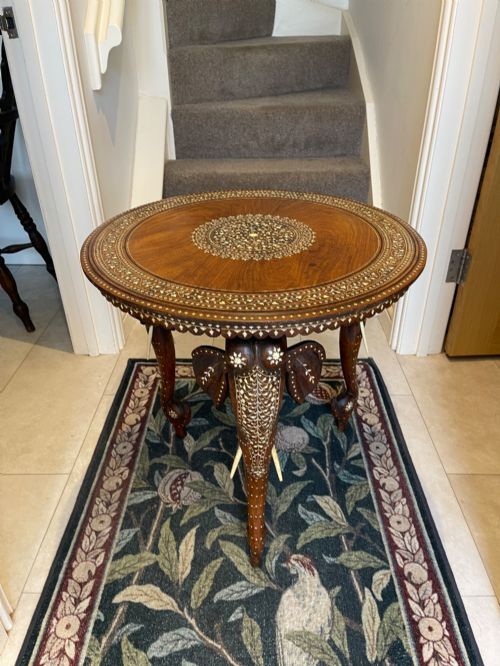
What is an elephant table?
An elephant table incorporates structural supports or carved motifs depicting the animal, integrated into the traditional woodwork.
These whimsical forms reflect specific nineteenth-century design tastes within the broader Anglo-Indian decorative repertoire.