




Hoshiarpur Inlaid Table
A hoshiarpur inlaid table brings dense geometric craft from northern India straight into a room, offering rich surface patterns that catch the eye.
Hoshiarpur Inlaid Table
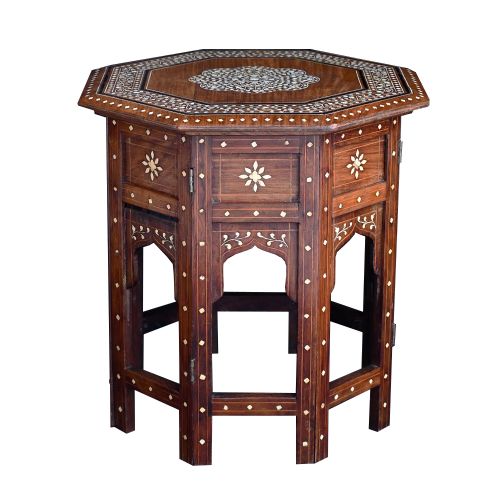
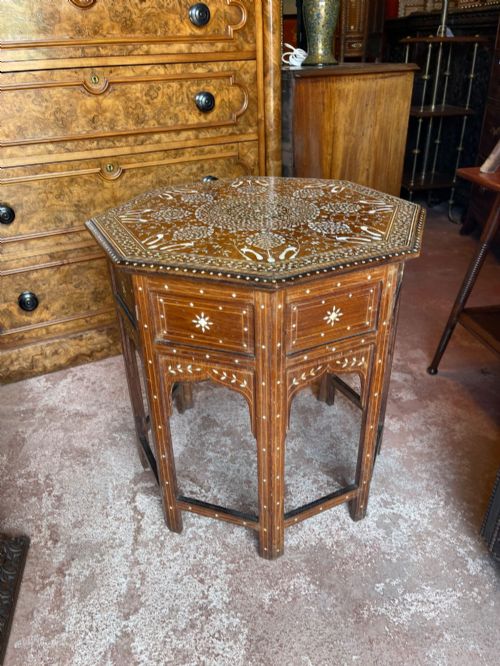
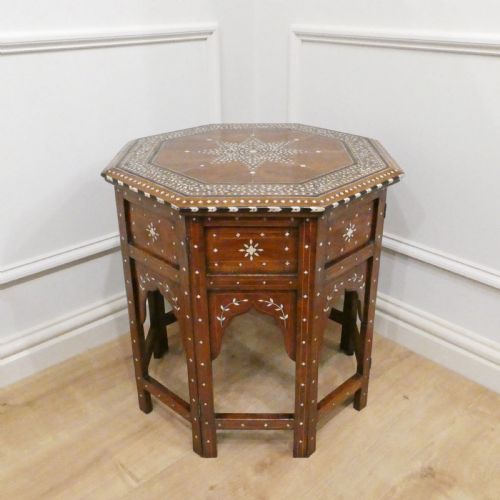
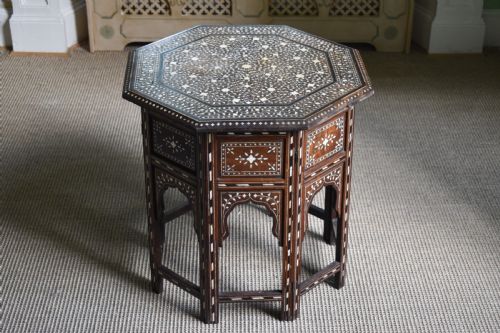
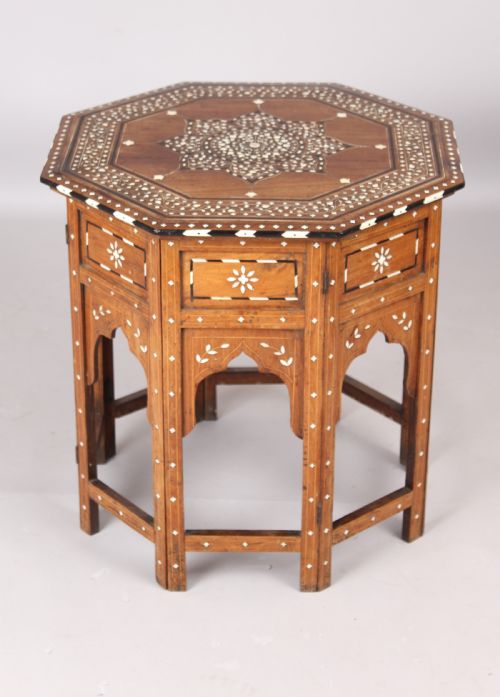
When someone searches for a hoshiarpur inlaid table, they encounter intricate wooden furniture originating from the Punjab region during the nineteenth and early twentieth centuries. These pieces belong to the Anglo-Indian style, blending traditional Indian woodworking techniques with British colonial domestic forms.
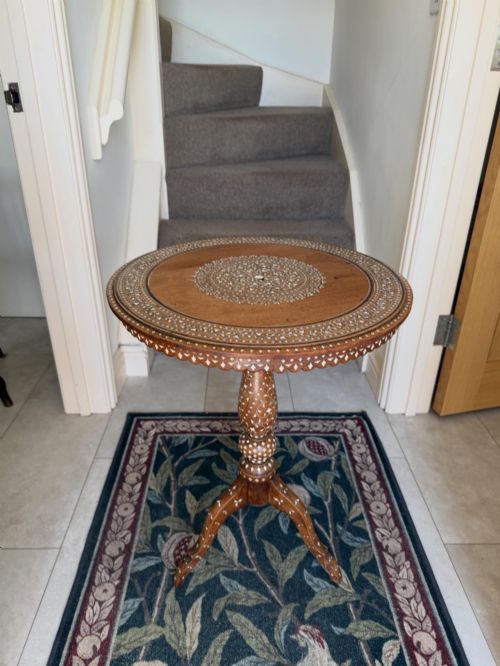
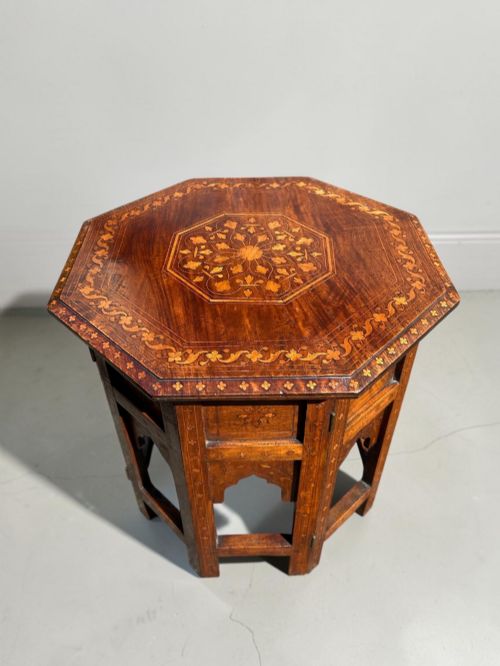
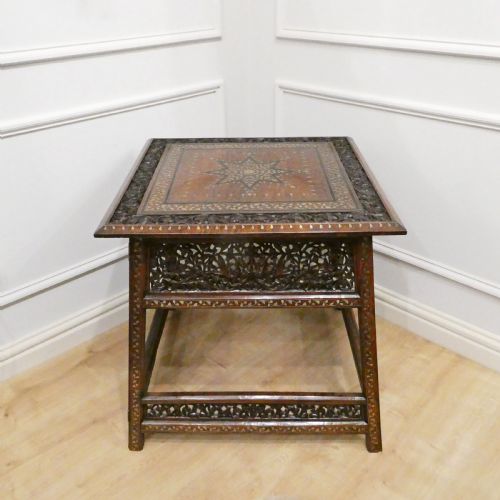
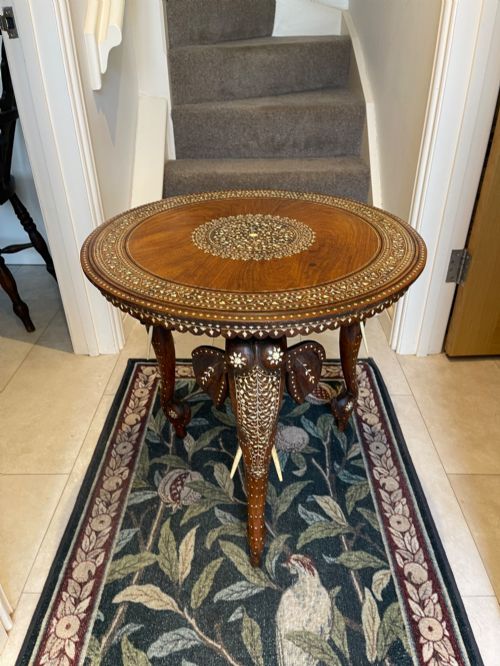
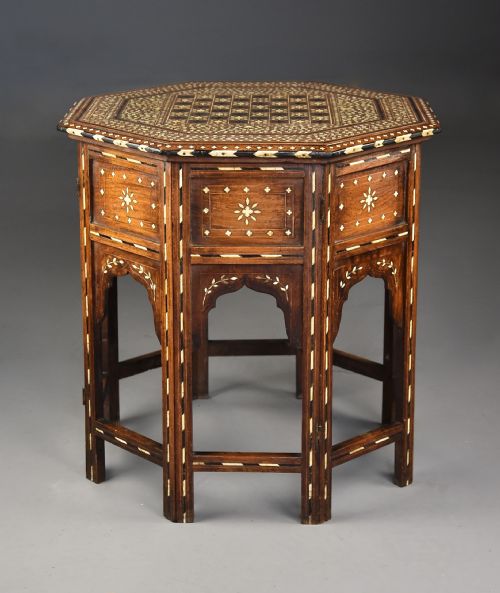
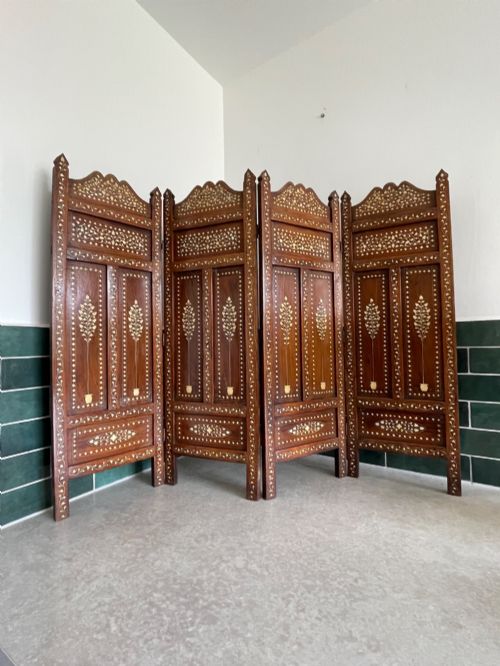
The octagonal occasional table represents the most common form on this page, often built with a folding base and a star-shaped top. Other frequent variations include square side tables, pedestal designs, elephant tables, and occasional table screens.
Examples typically date from the late nineteenth century up through the nineteen-twenties, spanning the height of the Anglo-Indian craft export trade. Buyers find pieces ranging from small tea tables to large coffee tables suitable for modern living spaces.
How They Were Made
Artisans constructed these tables using dense timbers such as teak, shisham, sandalwood, padauk, and ebony as a foundation. The wood was hand-carved and pierced to receive complex geometric mosaics.
Inlay elements combine animal bone, brass, and copper, cut meticulously and pressed into tight recesses across the surface. Folding bases utilise clever interlocking joinery that allows the framework to collapse flat without metal hinges.
Several tables take the form of elephants, proving that nineteenth-century artisans understood the universal appeal of domestic pachyderms.
What Varies in Quality
Quality rests primarily on the density and precision of the surface decoration, where master carvers achieved tighter, more intricate geometric patterns with minimal filler material. Simpler examples display broader carved motifs and simpler wood selection.
The choice of foundation timber also dictates the tier of the piece, with heavier hardwoods like teak and ebony supporting finer, crisper carving than softer secondary woods.
The Hoshiarpur Inlaid Table Glossary
- Anglo-Indian
- A design style produced in India during the British colonial period, combining local craftsmanship with European furniture forms. These items were widely imported for British drawing rooms.
- Octagonal
- Having eight sides. This geometric shape is the defining form for the majority of table tops found in this category.
- Shisham
- Indian rosewood. This durable timber serves as a primary structural wood for many carved items from northern India.
- Padauk
- A heavy tropical hardwood with a reddish brown tint. It provides a stable, resilient base for intricate inlay work.
- Tripod
- A piece of furniture supported by three legs. These formations often feature animal motifs such as elephants.
Hoshiarpur Inlaid Table: Frequently Asked Questions
How do I fold the table base?
Most octagonal tables utilise a clever intersecting wooden frame that unhooks and collapses flat in two matching sections. Lifting the top separates the slotted wooden legs from the centre pivot.
Take care to support the table top fully while folding or unfolding the base to avoid stressing the interlocking joints.
What wood are these tables made from?
Makers utilised dense regional timbers including teak, shisham, sandalwood, and ebony. These woods provided a stable dark background that contrasted sharply with pale bone inlay.
Secondary woods also appear depending on availability and the specific workshop producing the item for export.
Are the inlay pieces bone or ivory?
Examining the surface closely reveals the characteristic striations and tiny growth marks typical of animal bone rather than smooth ivory. Artisans utilised camel or bovine bone shaped into delicate geometric triangles and squares.
This material held up well to carving and provided a brilliant white contrast against the dark timber.
Where were these tables made?
Production centred on Hoshiarpur in the Punjab region of northern India, a city renowned for its woodcarving and inlay traditions. Workshops there fulfilled orders for the colonial market.
Finished items were shipped to British buyers who favoured exotic furnishings for their homes.