
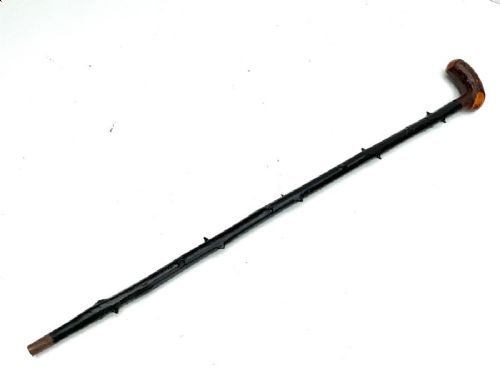
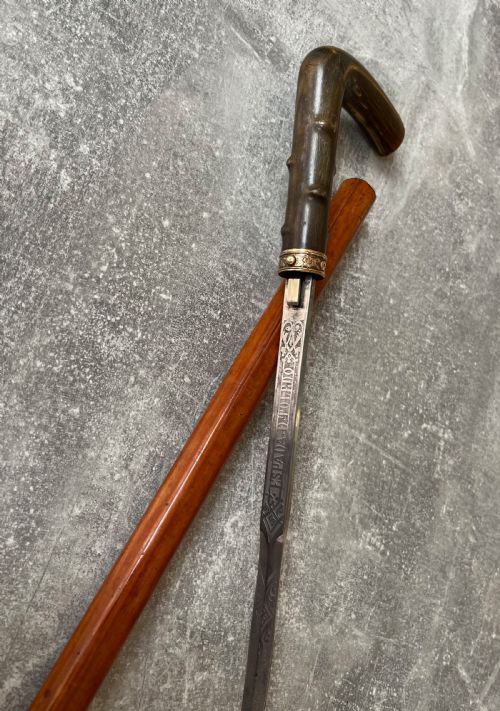
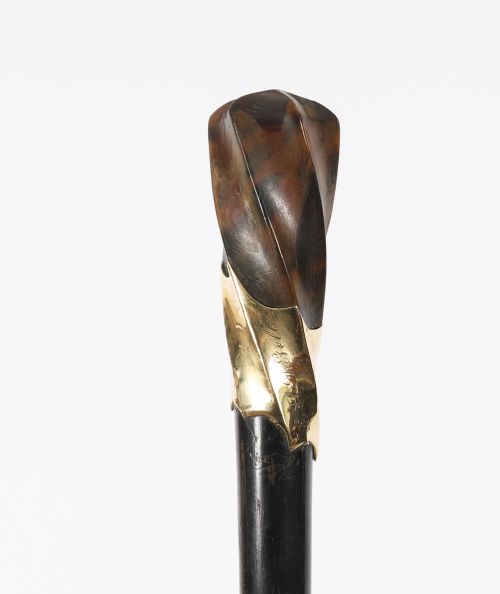


Horn Handle Cane
A horn handle cane combines practical support with distinct natural texture, offering a tactile grip shaped by Victorian craftsmanship.
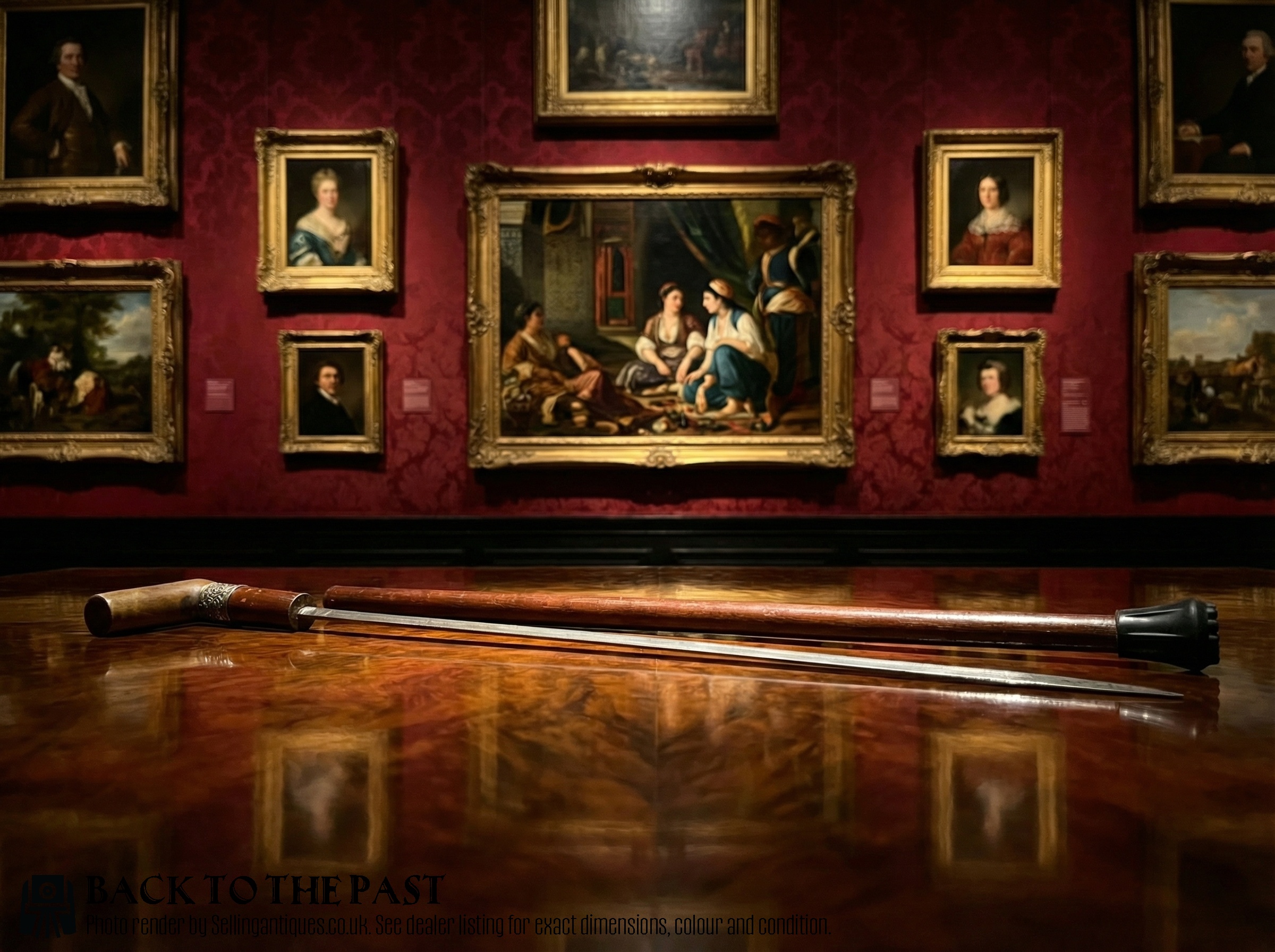
Horn Handle Cane
A horn handle cane is a walking aid defined by its grip formed from natural horn, antler, or staghorn, often paired with shafts of wood or malacca. These pieces surface across the nineteenth century, the Edwardian era, and into the nineteen thirties, reflecting period tastes for both sturdy utility and concealed function.
The most common examples on this page pair a natural horn or antler handle with a timber shaft, frequently incorporating silver collars or hidden blades. Walking sticks and sword sticks dominate the selection, alongside specialised gadget pieces featuring hidden corkscrews or musical instruments.
Origins span British workshops, French makers, and traditional Irish craft, showing a diverse European output. Collectors encounter everything from plain gentleman's walking sticks to maritime folk art utilising shark vertebrae and carved animal forms.
Factors of quality
Quality rests upon the skill of the carving and the integrity of the natural material used for the grip, distinguishing simple horn shaping from deeply detailed animal figures. Finer pieces demonstrate careful balance between the handle and the shaft, whether malacca or rosewood.
The presence of precious metal collars in silver or gold, along with maker attribution or hallmarks, elevates a piece. Mechanism precision in gadget sticks and sword sticks also marks superior workshops.
Horn Handle Cane Retail Price Guide 2026
Typical asking prices for horn handle cane among the pieces listed under this phrase on Sellingantiques today, from the lower quarter to the upper quarter. They describe what is for sale here now, not the wider market.
A nineteenth-century maker once decided a walking stick simply had to be a musical instrument and hid a flute inside.
Brigg's·Swaine Adeney Brigg
The Horn Handle Cane Glossary
- Pommel
- The rounded or decorative grip at the top of a walking stick. It provides the primary point of contact for the hand.
- Malacca cane
- A durable, polished stem derived from rattan palms. It is prized for its flexibility and distinctive nodular joints.
- Sword stick
- A walking cane designed with a concealed blade hidden inside the shaft. A button release typically secures the blade.
- Gadget stick
- A walking cane that conceals an additional functional item such as a corkscrew, flute, or tool. These dual-purpose objects reflect nineteenth-century utility.
- Collar
- A metal band encircling the cane shaft directly beneath the handle. It often bears silver hallmarks or owner initials.
Horn Handle Cane: Frequently Asked Questions
What is a horn handle cane?
A horn handle cane is a walking stick featuring a grip fashioned from animal horn, staghorn, or antler. These pieces date predominantly from the nineteenth and early twentieth centuries.
They serve as both walking supports and expressions of period craftsmanship, often incorporating shafts of malacca or rosewood.
How do I identify a sword stick?
A sword stick conceals a steel blade inside the wooden or malacca shaft. Many examples feature a button release mechanism near the collar to secure the blade.
Care should be taken when examining these pieces to understand their dual-purpose nature.
What materials are used for the shafts?
Shafts commonly utilise malacca cane, rosewood, and other treated timbers. Some unusual examples incorporate materials like shark vertebrae or snakeskin coverings over the haft.
Silver and gold collars frequently join the handle to the main shaft.
How should I care for a vintage cane?
Keep the cane away from excessive moisture and direct sunlight to protect the natural horn and wood. Handle the shaft gently to preserve any original polish and metal collars.
Store the stick upright in a stable indoor environment.
Are all horn handles carved?
Not all horn handles feature carving; many rely on the natural smooth curve or polished dome of the horn. When carving is present, it often takes the form of dogs, rabbits, or detailed staghorn textures.
Both plain and carved versions were popular among nineteenth-century gentlemen.