

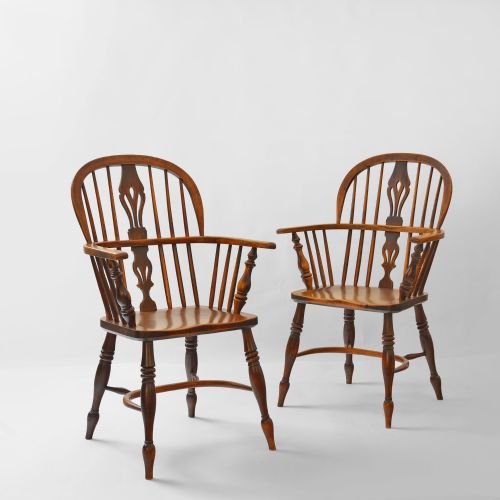
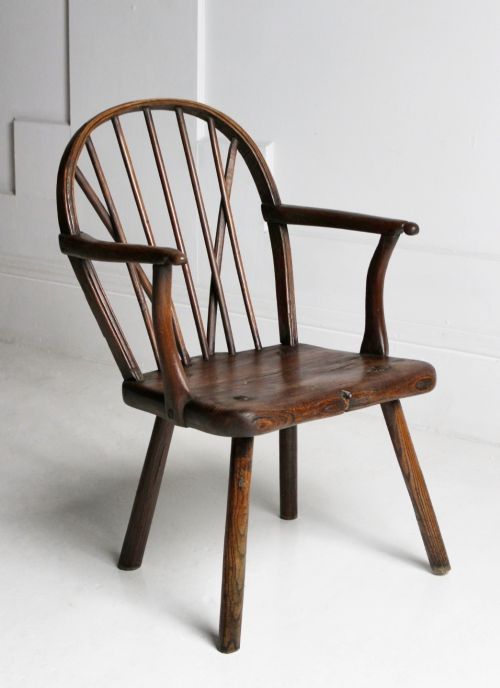


Hoop Back Stick Armchair
A hoop back stick armchair delivers solid construction and regional character, shaped by centuries of traditional British country seating design.
Hoop Back Stick Armchair
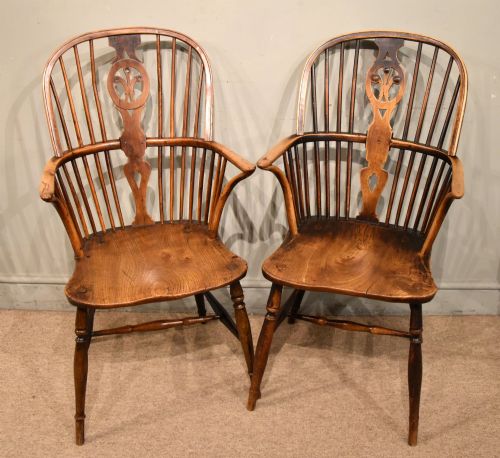
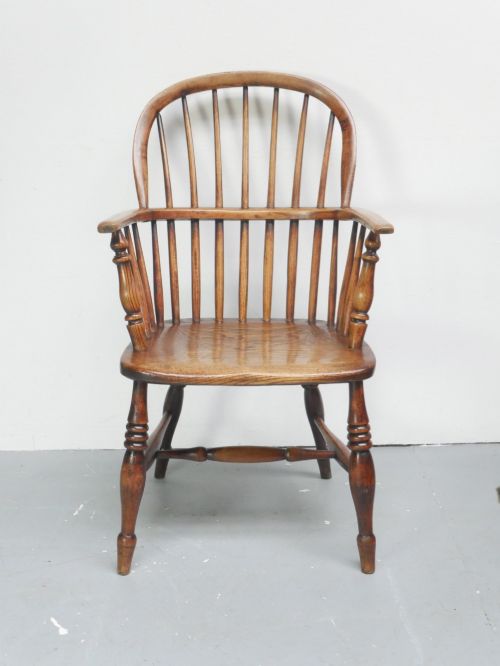
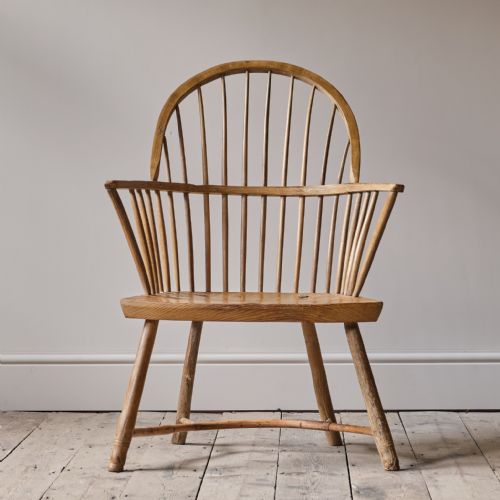
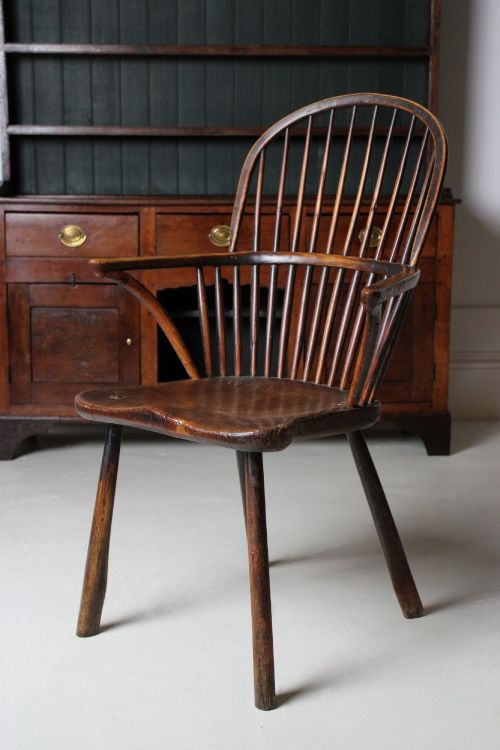
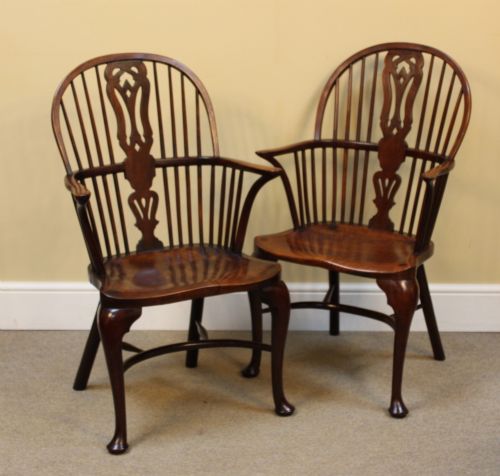
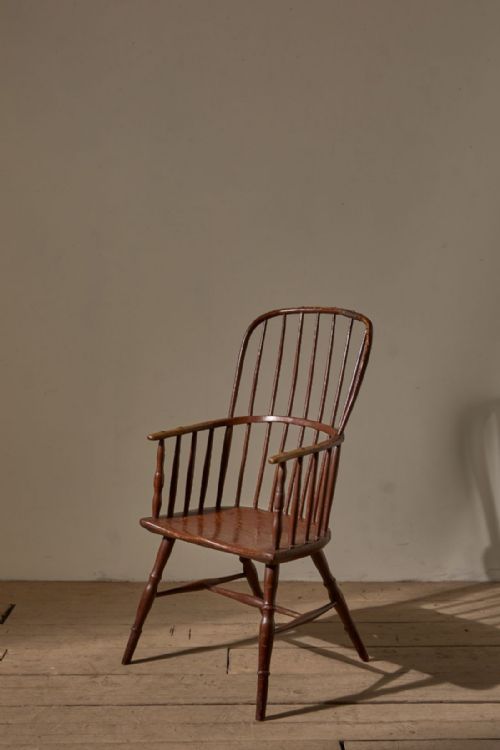
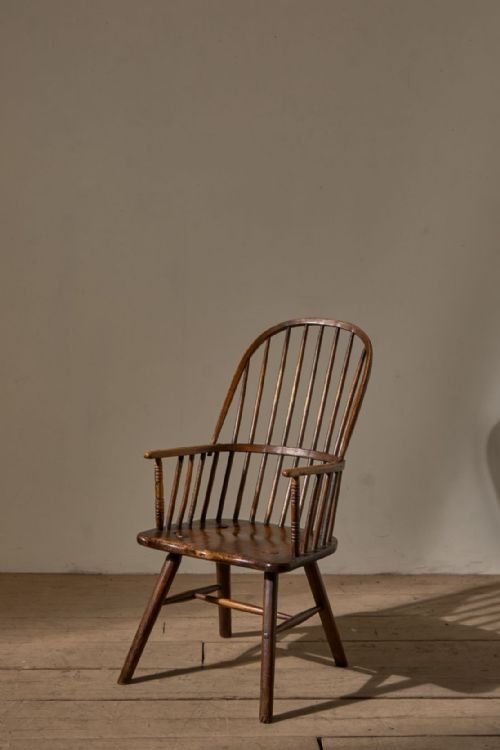
A hoop back stick armchair is a sturdy wooden seating form rooted in traditional English country vernacular craftsmanship. These chairs appear in forms ranging from compact child sizes to broad arm variants and high back seating.
The versions most common in these listings span the eighteenth, nineteenth, and early twentieth centuries. Regional variations emerge from Welsh, Scottish, West Country, and Yorkshire workshops, each displaying distinct local turns of the lathe.
How they were made
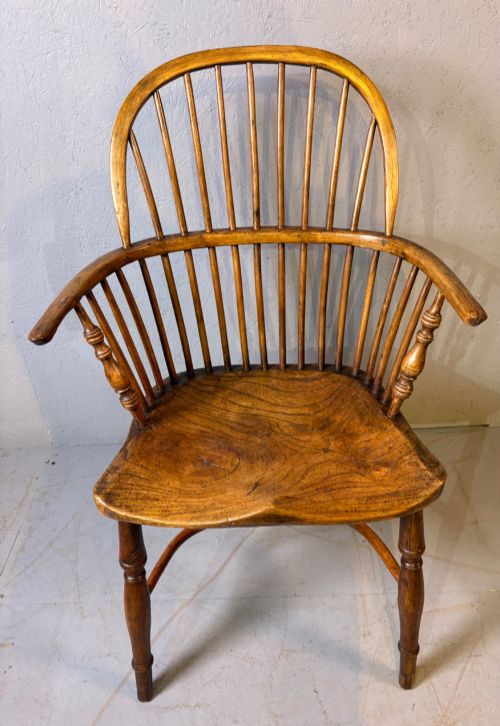
Makers utilised mixed timber construction, typically pairing resilient ash or elm for seats and bending green wood like yew or fruitwood for the continuous hoop and spindles. This combination provided both structural flexibility and solid weight at the base.
Traditional methods relied on steam-bending the back rail and wedging tapered spindles directly into a saddled solid wood seat plank. Surfaces often retain original brown paint, bare grain, or simple wax finishes developed through decades of domestic use.
Child-sized armchairs preserve the exact miniature turnings of full-scale workshop seating, scaled down for rural nurseries.
What varies in quality
Quality rests upon the balance of the timber selection and the purity of the regional lines. Yew wood examples with rich grain patterns and substantial proportions generally command greater attention from collectors than standard utility chairs.
The crispness of the spindle turnings and the depth of the adzed seat shaping separate standard kitchen seating from finer cabinet-maker output. Original surface treatments and minimal timber replacement preserve the historical integrity of the piece.
John Brand of Sleaford·Worksop Made
The Hoop Back Stick Armchair Glossary
- Hoop back
- A continuous bentwood bow forming the back and arm rail of the chair. This steam-bent member distributes weight down to the solid wooden seat.
- Windsor chair
- A chair built with a heavy solid timber seat into which the legs and back spindles are separately tenoned. It represents a cornerstone of British country vernacular furniture.
- Broad arm
- A chair featuring an expanded, paddle-like wooden armrest designed for writing or comfort. These wider terminals are typically carved from a single piece of timber.
- Vernacular
- Objects made by local craftsmen using regional traditions and readily available materials rather than strict academic pattern books. These pieces reflect the practical needs of rural households.
- Saddled seat
- A wooden seat base carved into a concave, ergonomic contour resembling a riding saddle. This shaping provides comfort without requiring upholstery.
Hoop Back Stick Armchair: Frequently Asked Questions
What is a hoop back stick armchair?
A hoop back stick armchair is a traditional wooden seat featuring a steam-bent continuous bow and vertical spindles socketed into a solid slab seat.
These pieces developed across British rural workshops as durable seating for kitchens, farmhouses, and vernacular domestic spaces.
How can I tell the region of origin?
Regional attribution depends on specific structural traits, such as the characteristic comb pieces in Welsh chairs or the distinctive turning found in Yorkshire and Scottish examples.
Local timber choices also offer clues, with yew and fruitwood often pointing to specific West Country or northern traditions.
Were these chairs painted originally?
Many historical country chairs received coats of protective paint, often dark green, brown, or black, to seal the mixed timbers.
Original paint surfaces survive on select pieces, showing craquelure and wear that reflect generations of domestic utility.
How do I care for antique country chairs?
Maintenance involves keeping wooden furniture away from direct heat sources and rapid humidity shifts to prevent timber splitting.
Applying microcrystalline wax periodically helps nourish dry grain without building up heavy residue on the surface.