
Antique Ash Armchair
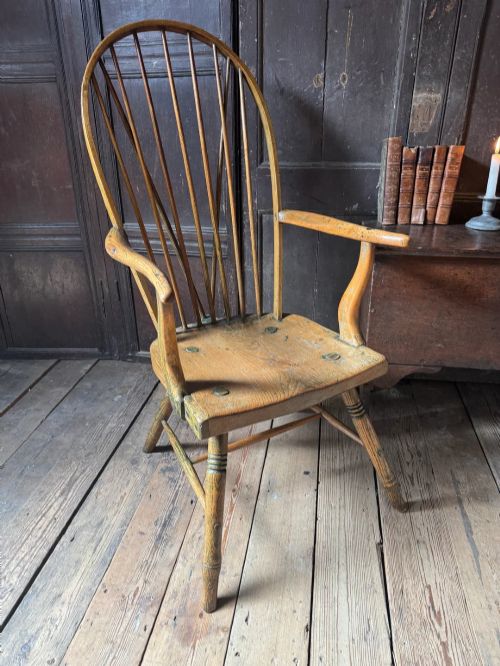
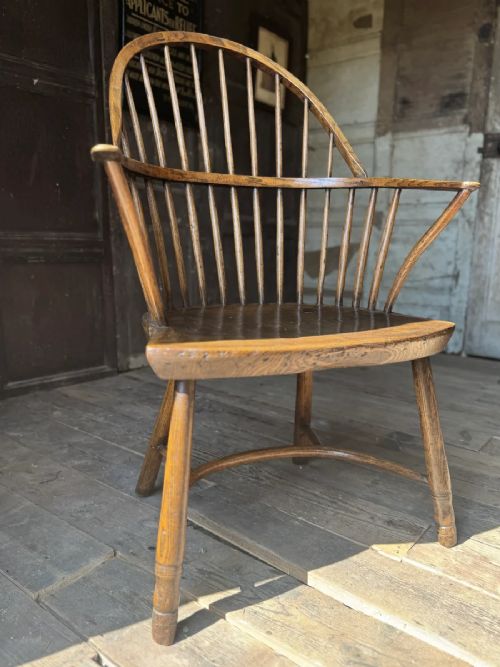
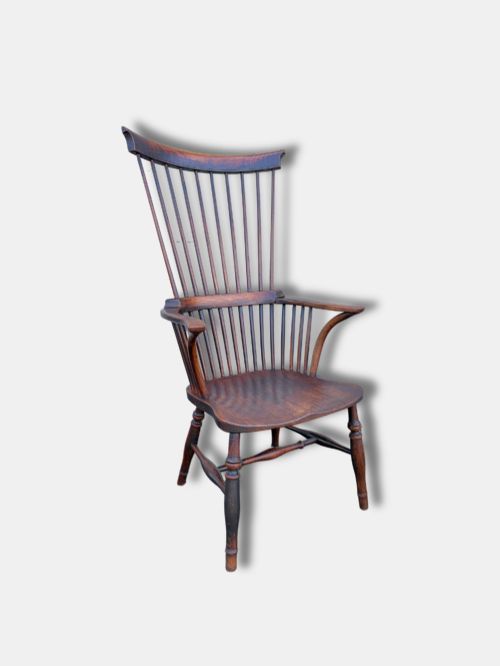
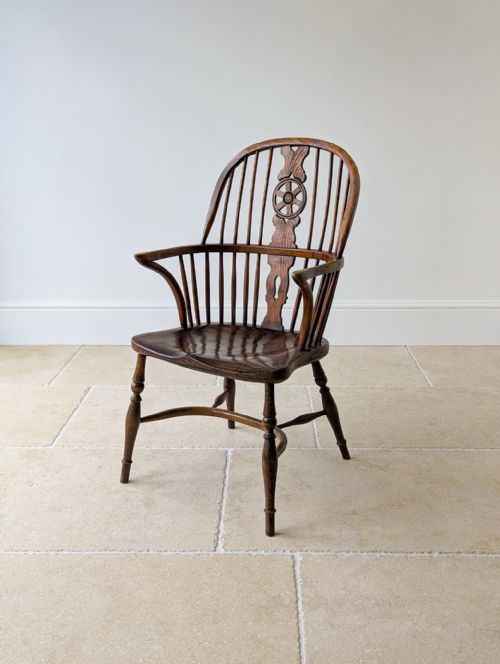
An antique ash armchair brings robust vernacular character to a room, combining tactile native woods with generations of domestic use.
Antique Ash Armchair
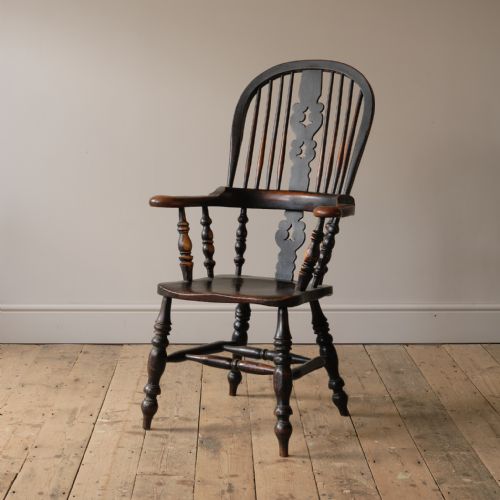
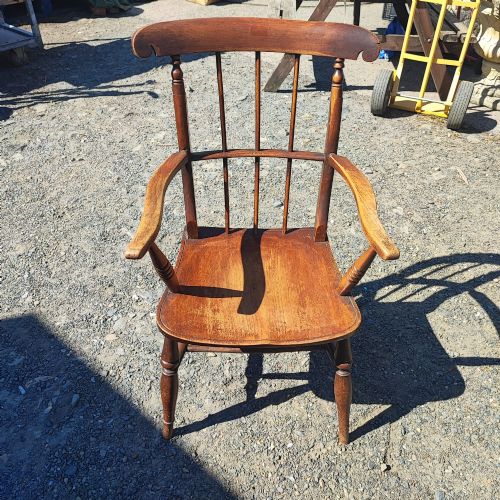
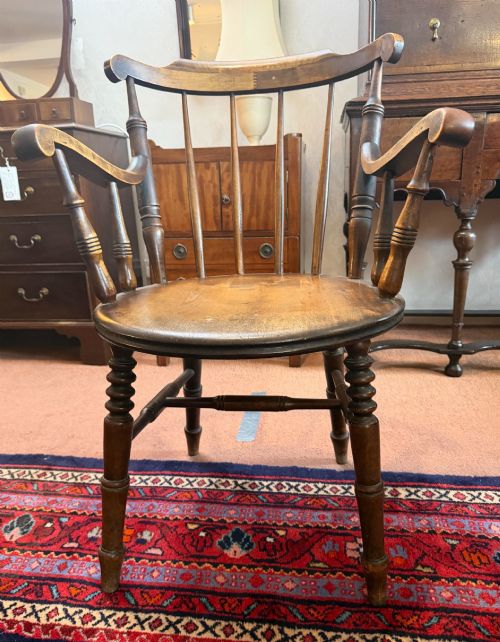
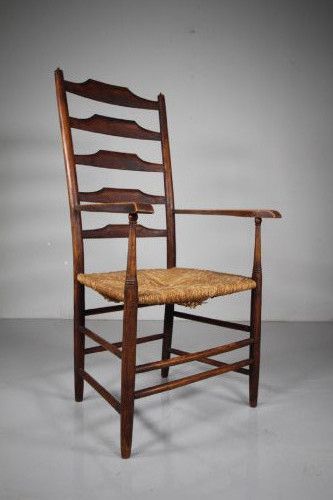
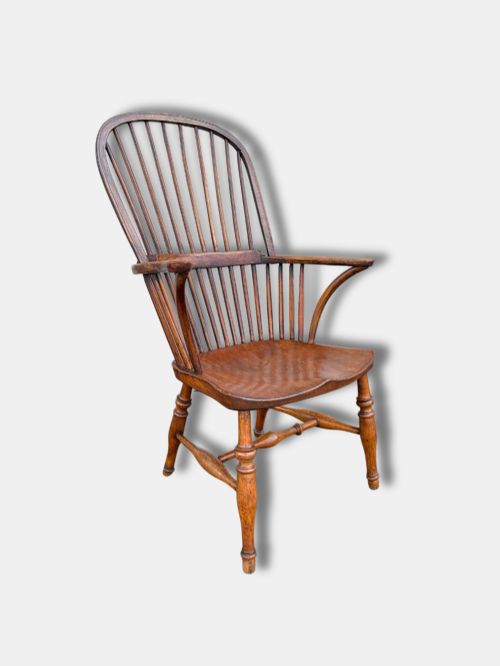
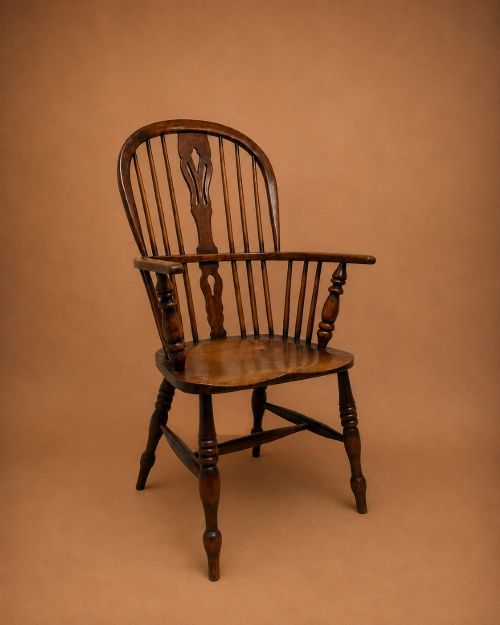
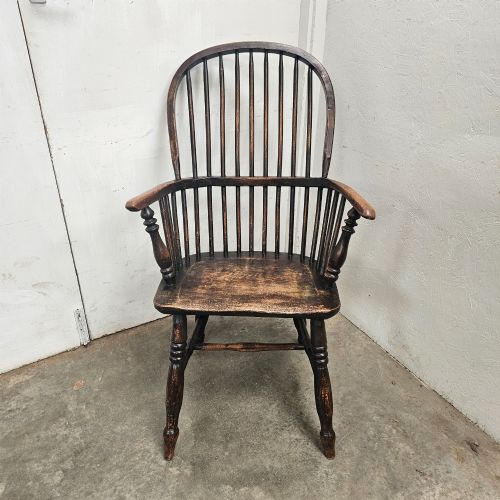
The version most commonly encountered on this page pairs an ash frame with a solid elm seat, often supported by turned spindles or stick backs. Regional variations range from West Country hooped designs to Lancashire ladderbacks, reflecting local timber supplies and woodworking traditions.
Makers utilised ash for its considerable strength and flexibility, particularly for bentwood components like bows and arm-rails. Elm provided a stable, heavy seat base that resisted splitting when carved into a saddle shape.
How They Were Made
Constructed primarily using traditional green woodworking techniques, chairmakers shaped ash components while the wood was still workable, allowing it to dry into rigid, enduring forms. Steam-bending created continuous curves for high hoops and comb-backs.
Seats were typically carved from a single slab of elm, scooped into a comfortable saddle shape using an adze and scorper. Legs and spindles were turned on a bodger's pole lathe in woodland encampments before being pegged and wedged into bored mortise joints.
Antique Ash Armchair Retail Price Guide 2026
Typical asking prices for ash armchair among the pieces listed under this phrase on Sellingantiques today, from the lower quarter to the upper quarter. They describe what is for sale here now, not the wider market.
Listings show these chairs span the eighteenth and nineteenth centuries, predominantly uniting ash frames with elm seats.
What Varies in Quality
Quality rests in the harmony of the timber selection and the retention of original surface patination. Chairs featuring bold, well-defined turnings and tight, uncompromised joinery stand apart from utilitarian replacements.
The grace of the bentwood bow and the depth of the adzed saddle seat dictate the aesthetic success of the piece. Untouched dry surfaces with decades of domestic wax take precedence over stripped or heavily restored frames.
Philip Clissett·Duncan McKellar·Charles Robert Ashbee
The Antique Ash Armchair Glossary
- Windsor chair
- A chair built with a heavy wooden saddle seat into which the legs and back sticks are independently inserted. This form dominates vernacular English seating.
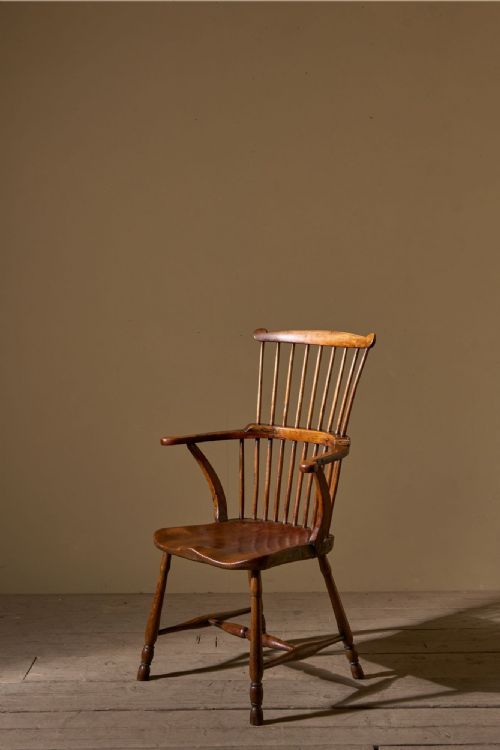
- Comb-back
- A Windsor variation where the vertical spindles of the back extend upward to support a horizontal top rail, resembling the teeth of a comb.
- Crinoline stretcher
- An arched or bowed stretcher linking the legs of a chair to provide structural rigidity. It frequently curves forward toward the front legs.
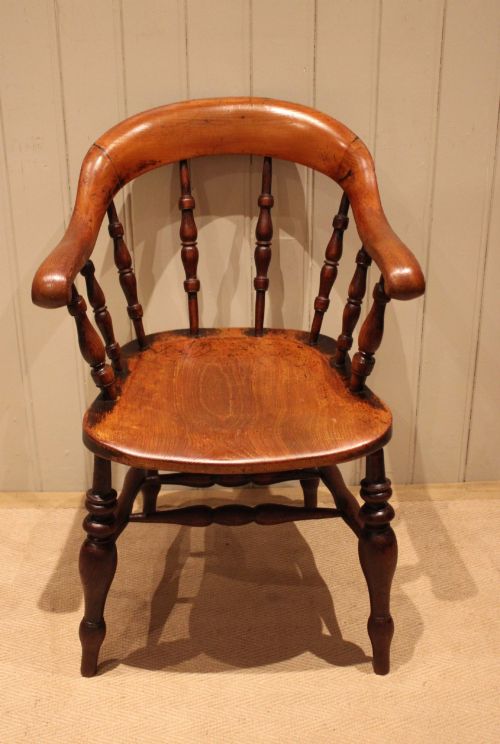
- Smokers bow
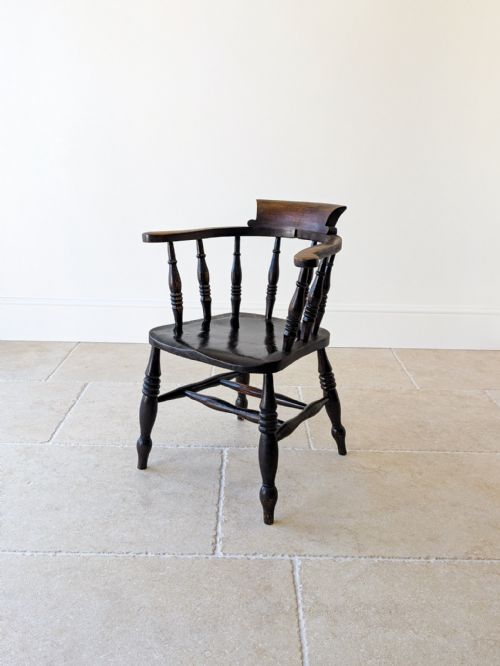
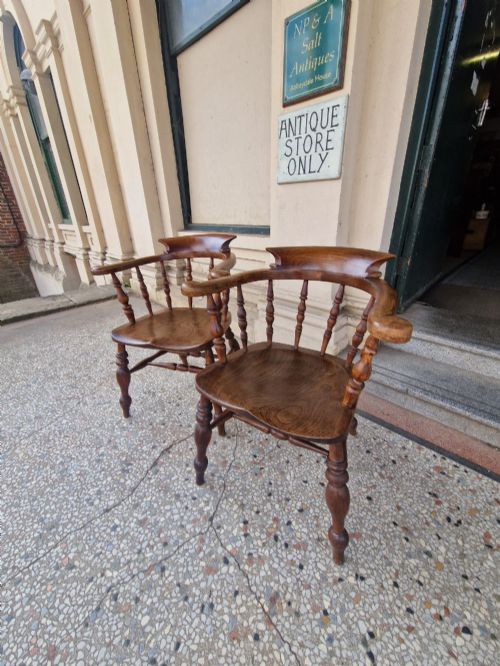
- A low-backed Windsor armchair with a continuous curved arm-rail, also known as a captain's chair. These pieces were common in nineteenth-century parlours and public houses.
- Vernacular
- Objects designed by regional tradesmen for practical local use rather than following polite metropolitan high-style canons.
Antique Ash Armchair: Frequently Asked Questions
How do I care for an antique ash armchair?
Feed the dry timber occasionally with a traditional beeswax polish to preserve the surface texture. Keep the chair away from direct heat sources and rapid temperature fluctuations to prevent wood splitting.
Avoid modern silicone-based sprays, which sink into open-grained ash and attract dust over time. Gentle dusting with a soft cloth maintains the natural lustre.
Why are elm and ash used together?
Ash offers exceptional tensile strength and pliability, making it ideal for steam-bent hoops, arms, and slender spindles. Elm provides a dense, interlocking grain that resists splitting when shaped into a dished seat.
This functional division of labour maximised the mechanical properties of native British hardwoods. Country chairmakers selected each timber for its specific structural duty.
How can I tell a regional style?
Regional attribution relies on specific turning profiles, timber combinations, and structural motifs unique to certain shires or river valleys. West Country chairs often feature distinctive crinoline stretchers and generous proportions.
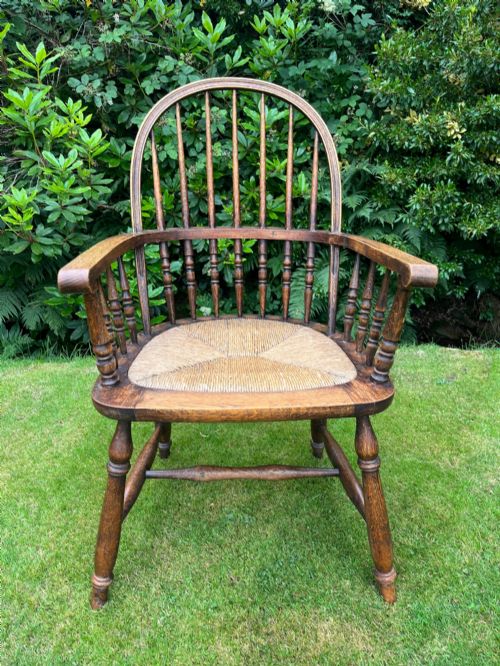
Northern workshops, such as those in Lancashire and Cheshire, favoured ladderbacks with rush seats or robust spindle arrangements. Local woodland availability heavily dictated these design choices.