
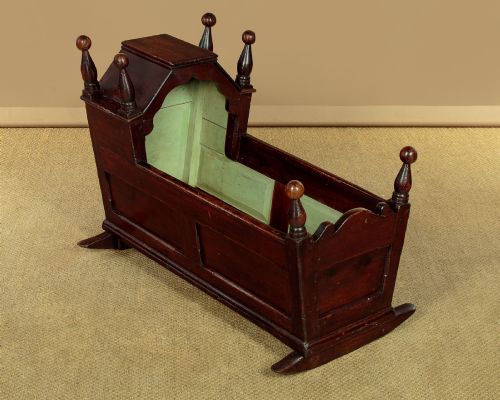


Hooded Baby Cradle
Hooded baby cradle pieces combine deep historical forms with traditional rocking functions, offering buyers authentic early sleeping furniture for children.
Hooded Baby Cradle
A hooded baby cradle provides a enclosed sleeping space for infants, featuring a protective canopy or hood at the head end. When searching for a hooded baby cradle, buyers encounter robust rocking beds designed to soothe babies through gentle motion.
The selections span centuries from the seventeenth century through the Victorian era, showing how these domestic objects evolved in form. Pieces range from austere early oak examples to later painted pine and mahogany variants.
Constructed primarily as rocking cradles and cribs, these items often sit on curved wooden rockers to facilitate movement. Common regional variations include Welsh pine pieces and English oak panelled formats.
Materials and construction
Makers utilised solid timbers such as oak, pine, and mahogany to build durable domestic furniture. Oak panels appear frequently in early examples, employing traditional joinery techniques.
Surface treatments vary from natural wood finishes to original blue paint and general painted applications. Some iterations incorporate cane, glass, or metal elements alongside upholstered sections.
The listings show periods ranging from the 17th century to the Victorian era, utilising oak, pine, mahogany, and cane.
Assessing quality in early cradles
Quality rests in the integrity of the timber and the sophistication of the panel work, particularly in seventeenth century styles and oak panelled cribs. Superior pieces display thoughtful proportions and robust construction on their rockers.
The preservation of original surface details, such as early paint finishes or patinated hardwood, distinguishes finer examples from heavily altered items. Craftsmanship in the hood construction and side panels marks the distinction between standard utilitarian furniture and higher grade work.
The Hooded Baby Cradle Glossary
- Hood
- A protective canopy extension over the head of the cradle. This feature shielded infants from drafts in older homes.
- Rockers
- Curved wooden rails attached to the base of the cradle. They enable the bed to sway back and forth.
- Panelled
- Construction method utilising fitted wooden boards held within a frame. This technique accommodates wood movement over time.
- Cane
- Woven material utilised for decorative or structural side panels. It appears in later nineteenth century iterations.
Hooded Baby Cradle: Frequently Asked Questions
How do I date a hooded baby cradle?
Dating relies upon timber choices, construction methods, and stylistic details visible in the panels and hood. Early pieces use solid oak with traditional joinery, while later Victorian versions incorporate pine, mahogany, or cane.
Changes in hardware and paint finishes also help determine the period of origin, moving from seventeenth century styles through to nineteenth century production.
What wood types were used?
Oak is the predominant material in early examples, often featuring heavy panel construction. Pine and mahogany become more common by the nineteenth century.
Makers occasionally utilised secondary woods alongside painted finishes, cane work, and upholstered elements.
How were these cradles used?
These pieces served as infant beds designed to keep babies secure and warm near the hearth. The integrated hood blocked cold drafts in historic houses.
The curved rockers allowed parents to soothe infants to sleep without lifting the bed.
Are these cradles suitable for modern use?
These historic items are primarily collected as decorative antiques, historical artefacts, or display pieces due to modern safety standards for infant sleep. Some owners repurpose robust wooden examples for alternative domestic storage.
Buyers should evaluate structural stability carefully if considering them for any functional application today.