





Hongmu Occasional Table
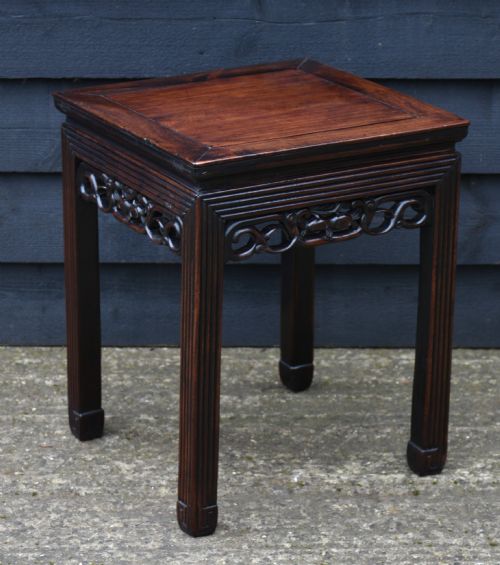
These hongmu occasional table pieces are dense, heavy items built from dark timber, offering solid surfaces for lamps, plants, and display.
Hongmu Occasional Table
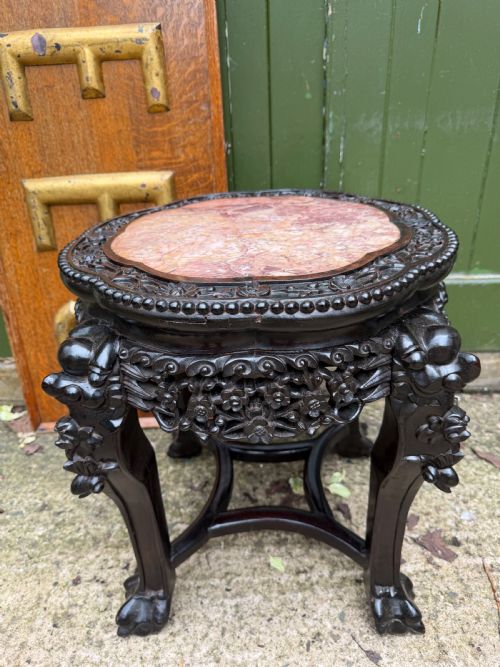
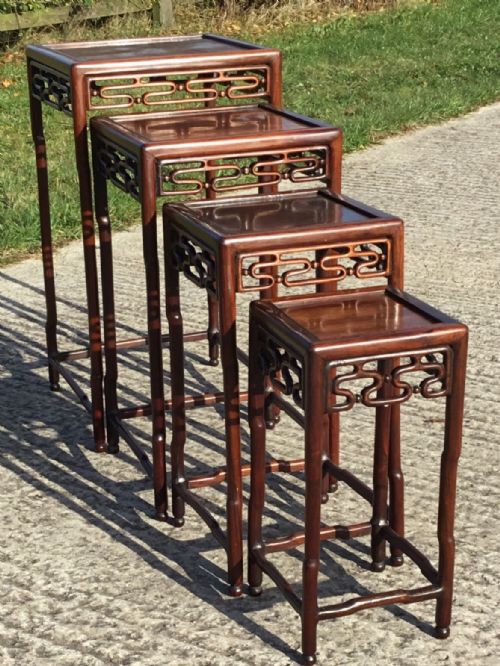
A hongmu occasional table brings traditional Chinese craftsmanship into domestic spaces through forms such as side tables, nests, stands, and stools. The selection ranges from low jardiniere stands and barrel-form pieces to nests of four tables and folding tray designs.
Most examples date from the nineteenth century, including the Victorian era, spanning periods from around eighteen-sixty up to nineteen-twenty. Makers worked within Qing dynasty and Chinese export traditions to produce versatile items for daily utility and decorative display.
Buyers encounter single occasional tables alongside nested sets, tripod tables, and low stands. The surface forms vary from standard rectangular tops to inset variegated rouge marble and burrwood panels.
How they were made
Carpenters utilised dense tropical hardwoods, specifically hongmu and rosewood, alongside supportive secondary materials like burrwood, bone, and mother of pearl for inlay work. These timbers provide natural weight and structural rigidity without relying on soft woods.
Surfaces feature detailed hand carving executed directly into the hardwood frame, alongside fitted stone elements such as inset variegated rouge marble tops. Construction methods include precise joinery that allows nested tables to slide together and folding mechanisms for tray tables.
Hongmu Occasional Table Retail Price Guide 2026
Typical asking prices for hongmu occasional table among the pieces listed under this phrase on Sellingantiques today, from the lower quarter to the upper quarter. They describe what is for sale here now, not the wider market.
Materials recorded on this site include hardwood, hongmu, rosewood, burrwood, marble, mother of pearl, and bone.
What varies in quality
The standard of carving defines the visual weight of the piece, moving from simple plain frames to deeply undercut floral and geometric motifs. Crisp execution in the hardwood grain shows the skill of the carver.
The Hongmu Occasional Table Glossary
- Hongmu
- A traditional Chinese term for dense, heavy hardwoods that translate literally as red wood. These timbers form the primary structure of nineteenth-century tables.
- Jardiniere stand
- A low support designed specifically to hold heavy ceramic plant pots or flower containers. These stands feature reinforced tops to bear vertical weight.
- Quartetto
- A matched set of four occasional tables designed to nest neatly beneath one another. This form gained popularity during the nineteenth century for entertaining.
- Rouge marble
- A variegated red limestone used for decorative table tops. It provides a cool, hard surface inset directly into the hardwood frame.
Hongmu Occasional Table: Frequently Asked Questions
What is a hongmu occasional table?
A hongmu occasional table is a solid hardwood piece of furniture originating from nineteenth-century China, designed for flexible placement around a room.
These items appear as single side tables, low plant stands, or nested sets, utilising dense tropical timbers and traditional joinery.
How do you use a nest of tables?
A nest of tables provides multiple surfaces that stack together into the footprint of a single small table when floor space is needed.
In daily use, the smaller tables pull out independently to serve drinks or hold books, then slide back into the main frame.
How do you care for hardwood surfaces?
Hardwood furniture requires gentle dusting with a dry cloth and protection from direct heat sources and strong sunlight.
Applying natural wax polish occasionally helps nourish the timber grain and maintains the natural lustre of the dark wood.
How are different periods identified?
Periods are determined by construction details, carving styles, and material combinations recorded across nineteenth-century and early twentieth-century examples.
Items linked to the Qing dynasty or Victorian period display specific hand-carving techniques and timber selections characteristic of those eras.