


Honey Pine Pew
These honey pine pew pieces are solid wooden seats shaped by centuries of use, offering enduring warmth and practical charm for any interior.
Honey Pine Pew
When you search for a honey pine pew, you encounter a selection of sturdy seating designed for churches, taverns, schools, and country homes. These forms span the nineteenth century, including Victorian examples alongside rustic country and farmhouse styles.
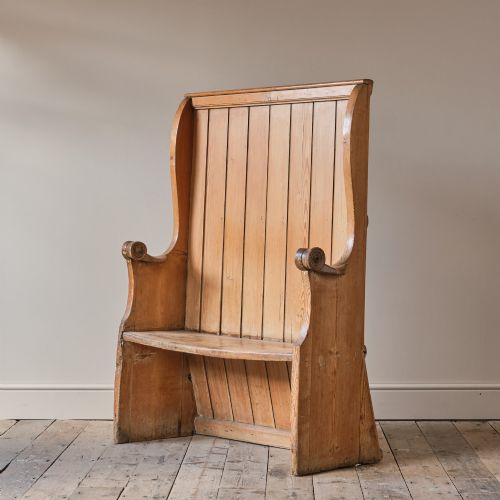
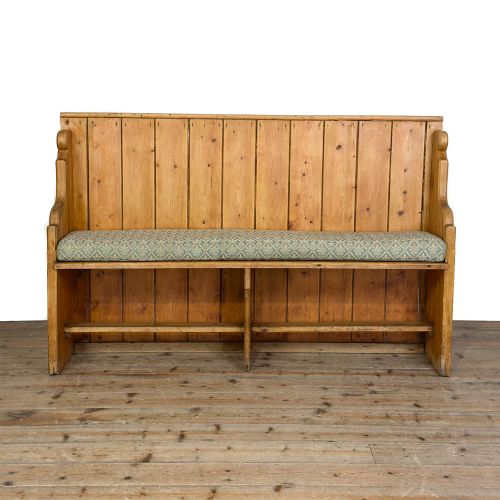
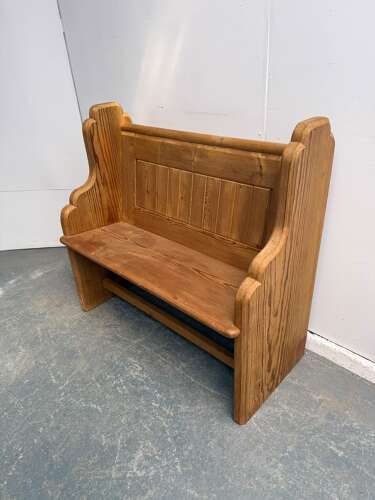
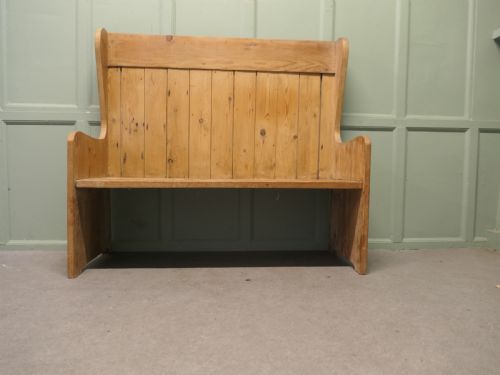
The objects listed range from single-seater church pews and multi-seater benches to high-back fireside settles and barrel settles. English country and East European origins appear among the selections, alongside tavern and school benches.
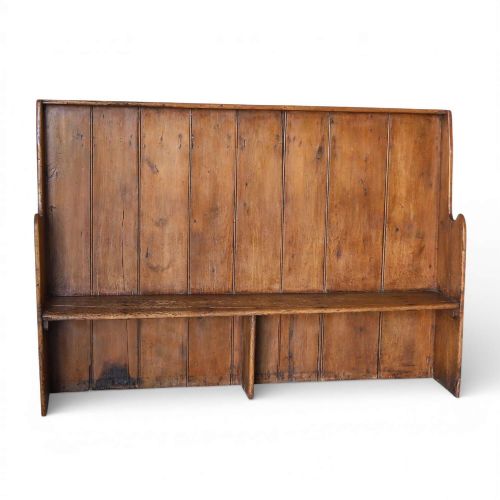
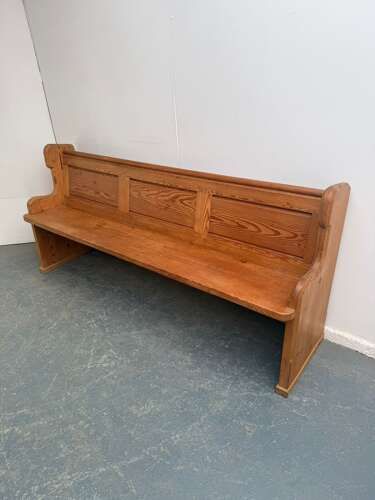
Most pieces display the warm tones characteristic of waxed pine, occasionally utilising pitch pine. High-back designs and low tavern benches provide varying degrees of shelter and support, suiting different domestic settings.
How they were made
Makers utilised pine and pitch pine as the primary timbers for these benches and settles, selected for availability and durability. Joinery methods relied on sturdy plank construction to withstand heavy daily use in public and private spaces.
Surfaces received treatments of wax to nourish the grain and develop a rich patina over decades of handling. Fabric elements appear on select examples to provide added comfort on seating areas.
Listings span the 19th Century, Victorian period, and early 20th Century, constructed from pine, pitch pine, and wax.
What varies in quality
The depth and richness of the honey brown patina separate ordinary examples from those with exceptional visual presence. Surface warmth develops through continuous waxing and handling, giving older pine a distinct lustre.
Proportion and architectural detail dictate the character of a settle or pew, particularly in high-back and barrel forms. Pieces retaining their original structural integrity and uncompromised timber show greater integrity.
The Honey Pine Pew Glossary
- Pine
- A softwood commonly used for everyday furniture throughout the nineteenth century, valued for its workability and receptive surface to wax finishes.
- Settle
- A wooden bench with a high back, solid arms, and often a enclosed lower section designed to keep out drafts in traditional rooms.
- Patina
- The surface sheen and colour acquired by wood over long periods through friction, light, and polishing with wax.
- Pitch Pine
- A dense, resinous variety of pine known for strong grain patterns and robustness, often utilised in Victorian institutional seating.
Honey Pine Pew: Frequently Asked Questions
How do settles differ from pews?
Settles typically feature high backs and solid sides intended to block drafts near firesides or in tavern settings. They offer a more enclosed seating arrangement compared to standard open pews.
Pews are usually longer linear benches designed for institutional or ecclesiastical use, though many have transitioned into domestic dining and hallway environments.
Where were these benches used?
Historical evidence places these benches in churches, country pubs, schools, and rural farmhouses across England and Eastern Europe. Their sturdy construction made them suitable for high-traffic public areas as well as domestic farmhouses.
Today, buyers place them in entryways, alongside dining tables, or against living room walls for practical seating.
What does a barrel settle look like?
A barrel settle incorporates a curved, high-backed wooden structure that wraps around the seated person to protect against cold drafts. This traditional form creates a private, sheltered nook by a fireplace.
Victorian examples in waxed pine combine this functional enclosure with the warm tones characteristic of country furniture.