



Historical Military Oil Artwork
These historical military oil artwork pieces record centuries of command, combat and campaign on canvas.
Historical Military Oil Artwork
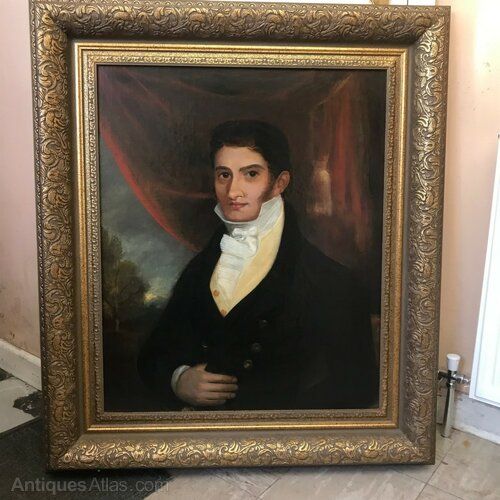
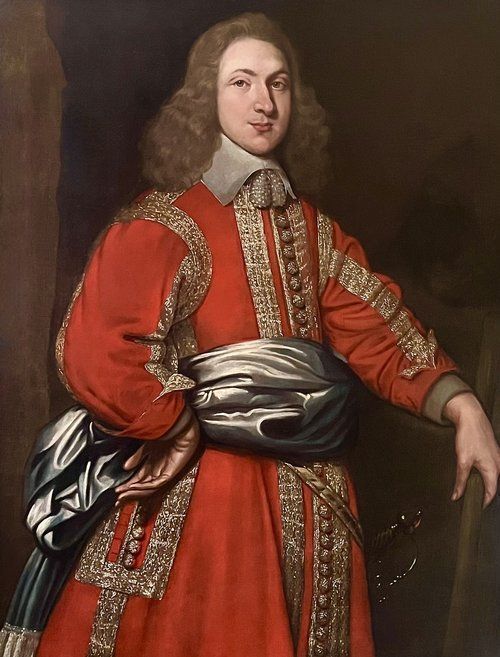
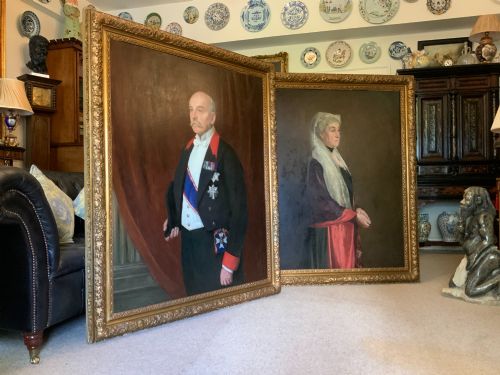
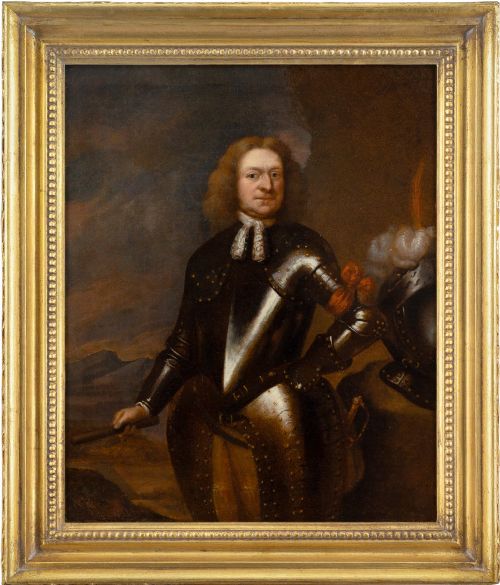
When you examine historical military oil artwork, you are looking at oil paintings on canvas that depict officers, cavalrymen, admirals and battles from the seventeenth century onwards. The pieces on this page span diverse periods including the seventeenth, eighteenth and nineteenth centuries, alongside mid-twentieth-century works.
You will encounter individual portraits of named commanders in armour or uniform, such as generals and admirals, as well as narrative battle scenes and skirmishes. These works originate from various European schools, including English, French, German, Italian and Flemish traditions.
Most items take the form of framed rectangular canvases or small miniature paintings, reflecting both formal grand manner portraiture and dramatic historical illustration.
Materials and technique
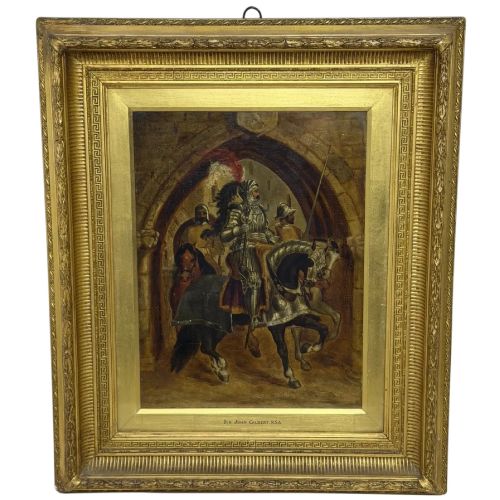
The primary material combination is oil paint applied to woven canvas stretched over wooden frames, often housed within heavy giltwood or gold leaf frames. Artists built up subjects using layered oil colours to render the textures of red coats, steel armour, lace cravats and naval uniforms.
Techniques range from the fine brushwork of academic portraitists working in oils to looser painterly execution found in military sketches and battle scenes by regional schools. Some works are signed by listed artists or attributed to specific circles, while others remain historic studio pieces.
The inventory includes portraits of generals and admirals alongside depictions of naval battles, cavalry skirmishes and roundhead soldiers.
Quality and execution
Quality in historical military oil artwork rests upon the skill of the portraitist or marine painter in capturing facial likeness, anatomical proportion and the accurate rendering of period military insignia, lace and weaponry. Superior works display confident brush control and depth in the modelling of light on armour or fabric.
The survival of the original pigment layer and the condition of the canvas support also distinguish finer examples from heavily restored canvases. Additionally, the presence of a documented sitter or an identifiable artist elevates the historical significance of the piece.
John A. Houston·Jean Sobieski·Ernest Crofts·Sir Thomas Lawrence·Francis Russell Flint·Albert Ferdinand Le Dru·John F.H. Dutton·Henry Walton·Ruth Cecil Latter·George Duncan Beechey·William Salter·Henry Wyatt·Robert Ker Porter·Ambrosini Jerome·Richard Hall
The Historical Military Oil Artwork Glossary
- Oil on Canvas
- Pigment mixed with a drying oil binder applied to a woven fabric support. This combination allowed artists to achieve rich tonal gradations and durable surfaces.
- Giltwood
- Wood carved and coated with gold leaf or metallic powder to create a bright decorative frame. These frames often match the historical period of the painting they enclose.
- Circle of
- A designation indicating the work was produced by an unidentified artist closely associated with a master's studio or working in their distinct style. It denotes proximity to a known hand without direct attribution.
- Miniature Painting
- A portrait or scene executed on a very small scale. These compact works required fine detail brushes and steady execution.
- School
- A grouping of artists sharing a common regional origin, training background or stylistic approach during a specific era. Examples include the Italian School and the Flemish School.
Historical Military Oil Artwork: Frequently Asked Questions
What periods do these paintings cover?
The listings on this page span from the seventeenth century through to the mid-twentieth century, capturing shifting styles in military portraiture and battle painting over several hundred years.
You will find seventeenth-century depictions of officers in armour alongside Victorian narrative scenes and twentieth-century portraits of generals.
Who are the subjects in these portraits?
Subjects include named historical commanders such as admirals, generals, cavalry officers and monarchs from British and European military history.
Many pieces identify high-ranking figures, while others depict anonymous soldiers, knights or cavalrymen engaged in skirmishes and camp life.
Are these paintings supplied with frames?
Most of the oil artworks on this page are presented within period-style frames, frequently utilising giltwood or gold leaf construction.
These frames complement the age of the canvas, ranging from ornate nineteenth-century mouldings to simpler wooden borders.
How do I care for an antique oil painting?
Antique oil paintings require stable indoor humidity and protection from direct sunlight to prevent canvas degradation and pigment fading.
Dust the surface gently with a soft, dry brush and avoid using liquid cleaners on either the canvas or the giltwood frame.