






Historical Bronze Statue
A historical bronze statue brings the weight of centuries into a room, capturing monarchs, soldiers and legendary figures in metal.
Historical Bronze Statue
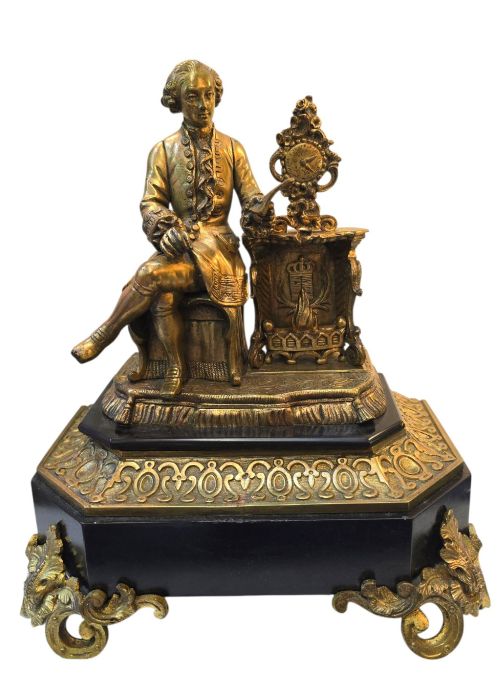
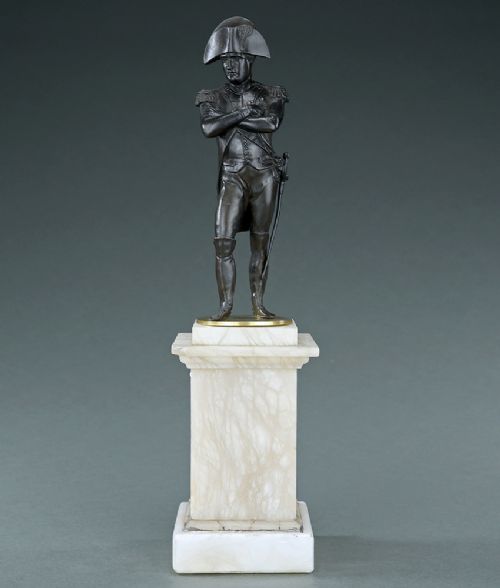
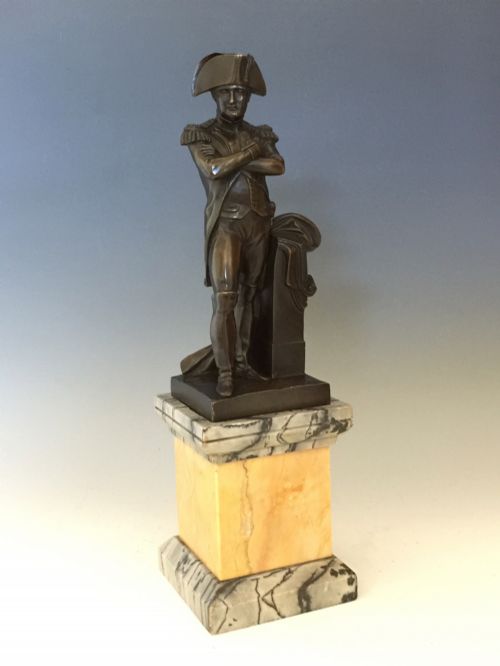
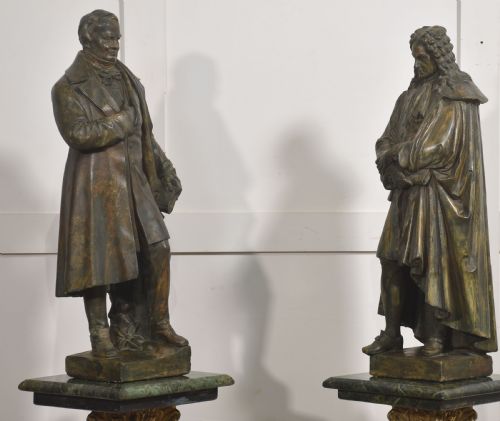
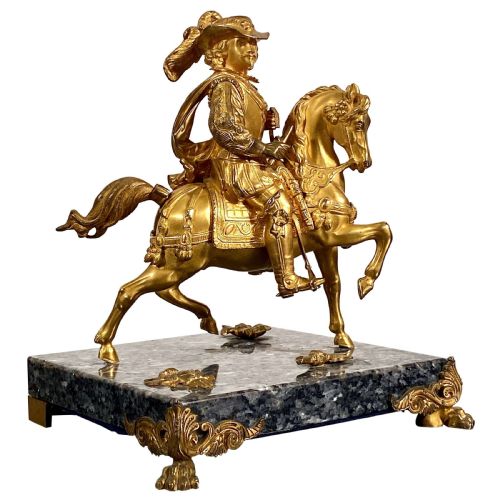
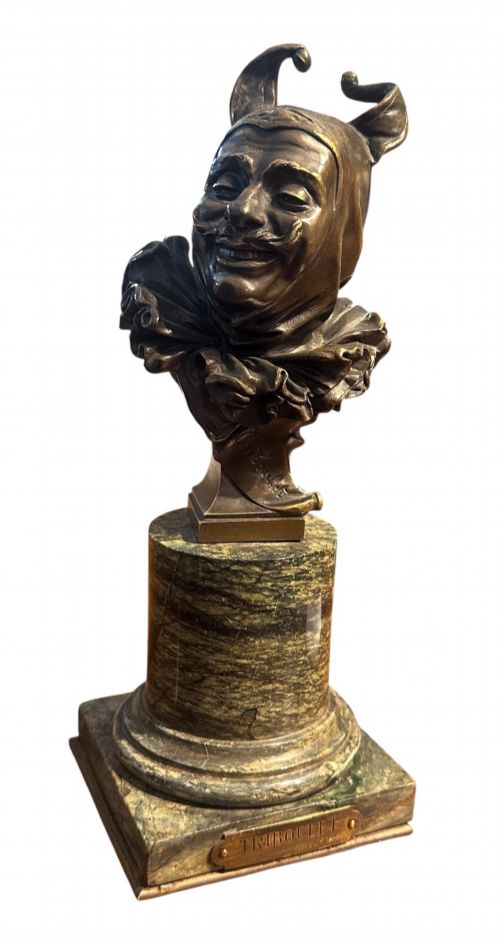
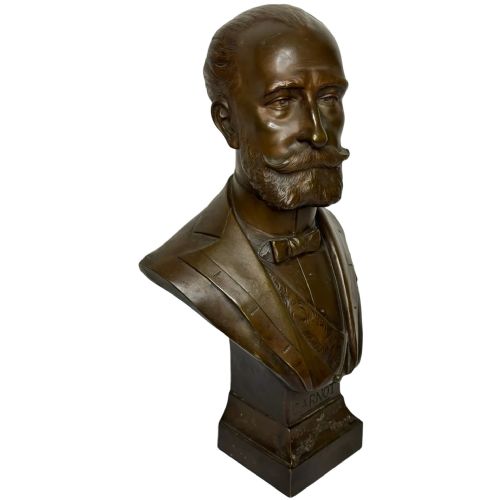
A historical bronze statue depicts figures from European history and antiquity, ranging from French monarchs and military leaders to classical rulers and literary subjects. The pieces on this page span the nineteenth century and the early twentieth century, taking the form of library bronzes, equestrian statuettes and portrait busts.
French foundries dominate the selection, producing works in styles that stretch from French Empire and Baroque to Neoclassical and Victorian Academic Realism. Buyers encounter both single figures and matched pairs, often cast after celebrated sculptors of the period.
How they were made
Foundries utilised the lost-wax casting method or sand casting to achieve fine detail in metal, frequently finishing the surface with dark patination, gilt bronze or ormolu. Some examples incorporate marble bases or supplementary materials such as chalkware, plaster and pigment.
Selected pieces utilise electrotyping to deposit metal onto a form, while others carry foundry stamps or signatures from the makers who oversaw the final chasing and patination.
The listings feature nineteenth-century and early twentieth-century works, combining bronze, marble, gilt bronze, ormolu, chalkware and plaster.
What varies in quality
The presence of recognised foundry marks, artist signatures and integrated marble plinths elevates an individual casting, reflecting the standing of the workshop that produced it.
Emile Guillemin·Dopmeyer·E.H. Dumaige·Jean Jules Salmson·Barbedienne·Willems·Adolphe Jean Lavergne·James Pradier·C.Anfrie
The Historical Bronze Statue Glossary
- Patinated bronze
- Bronze that has been chemically treated to alter its surface colour, usually achieving deep brown, green or black tones. This finish protects the metal and highlights the sculptural modelling.
- Ormolu
- Finely ground high-carat gold applied to a bronze base using a mercury amalgam technique, creating a brilliant golden surface. It is characteristic of decorative French bronzes from the period.
- Electrotype
- A metal copy produced by electroplating copper or bronze onto a prepared mould. This technique allowed workshops to replicate intricate sculptural forms with precision.
- Equestrian
- A genre of sculpture depicting a rider upon a horse. Such pieces typically portray monarchs, military commanders or historical generals.
- Library bronze
- A smaller cabinet-sized statuette designed for domestic display on desks or bookshelves. These pieces often depict historical rulers or literary figures.
Historical Bronze Statue: Frequently Asked Questions
How do I identify a nineteenth-century cast?
Nineteenth-century casts usually display deep patination, fine hand-chasing across the metal surface and occasionally foundry stamps or artist signatures. The weight and density of the bronze reflect traditional casting methods of the period.
Examination of the underside often reveals the nature of the core material or the threaded bolts used to secure the figure to its base.
Where should I place a bronze sculpture?
These pieces suit stable indoor environments away from direct heat sources and excessive moisture. Placing them on sturdy furniture or dedicated marble pedestals ensures they remain secure.
Good ambient lighting helps reveal the subtle variations in patination and the crisp details of the casting.
How do I clean an antique bronze?
Dusting gently with a soft, dry cloth is generally sufficient for maintenance. Avoid using commercial metal polishes, abrasive cloths or chemical cleaners, which can strip away the original historic patination.
Professional conservation is recommended if the surface requires deeper cleaning or stabilisation.