





Historic Tapestry Panel
A historic tapestry panel brings centuries of woven narrative into a room, offering rich texture and deep colour from periods like the seventeenth century.
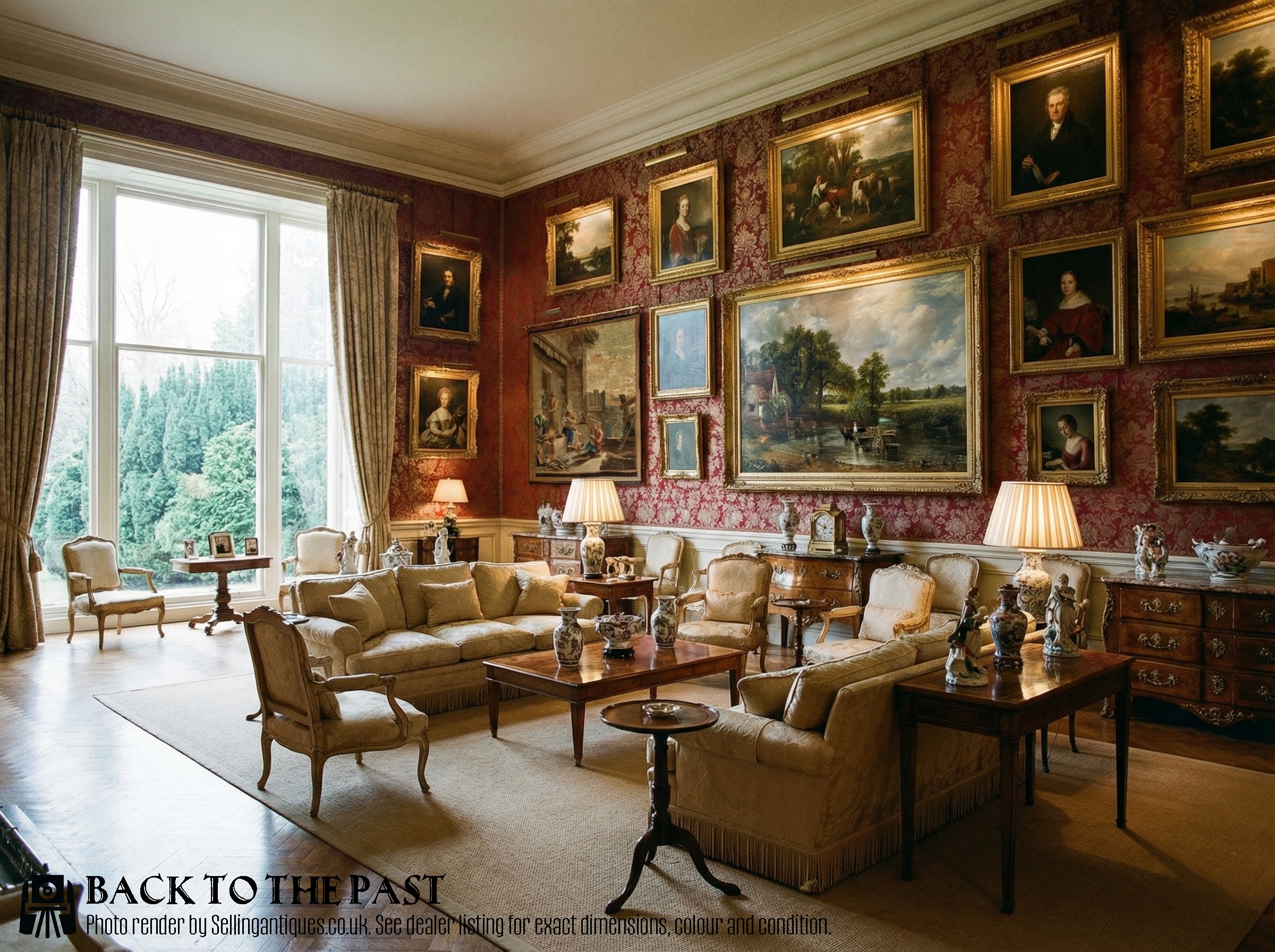
Historic Tapestry Panel
When you search for a historic tapestry panel, you look for textile art spanning from the sixteenth century through to the twentieth century, encompassing wall hangings, framed pictures, and cushion covers. These items originate from English, French, Flemish, and Italian workshops, reflecting diverse regional aesthetics and domestic functions.
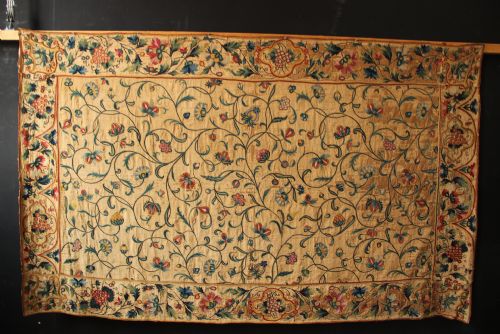
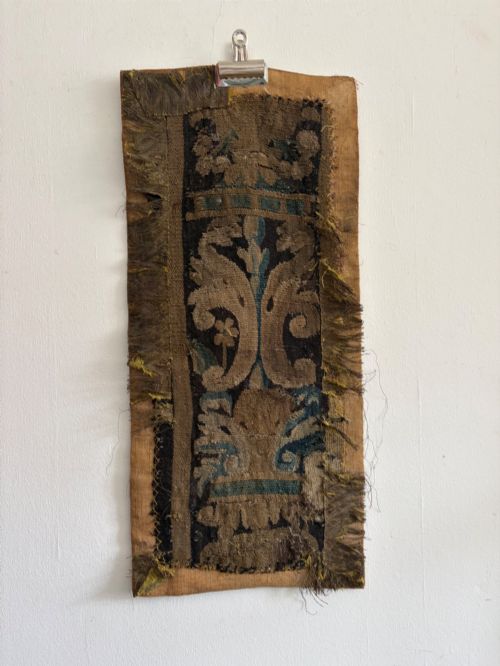
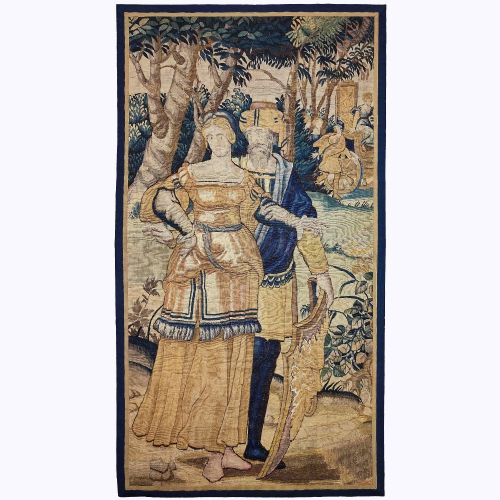
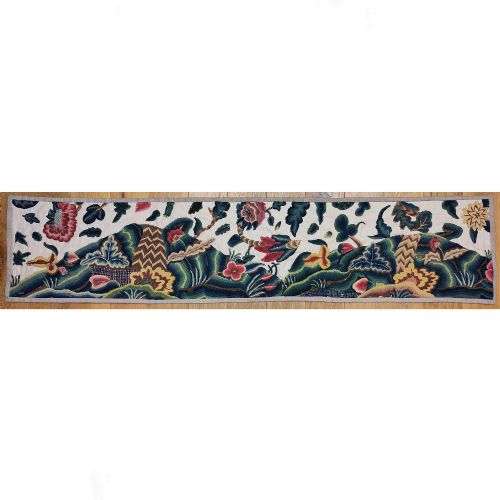
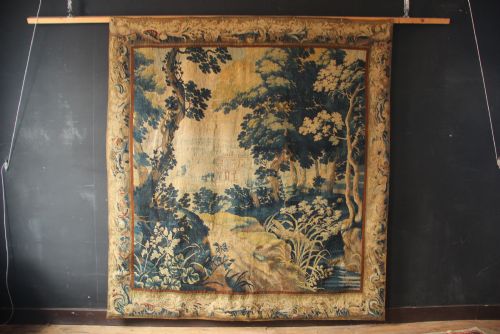
The version you are most likely to meet on this page is a fragment or full panel from the seventeenth or eighteenth century, frequently featuring Flemish verdure designs or crewelwork. These textiles range from large wall art pieces mounted to linen down to smaller needlework fragments and cushion covers.
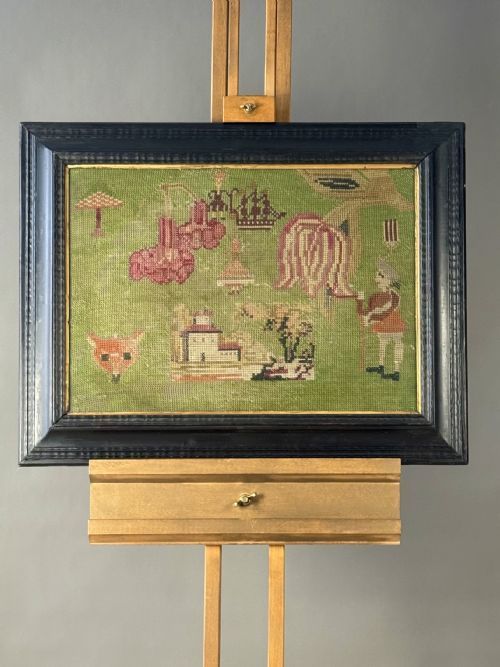
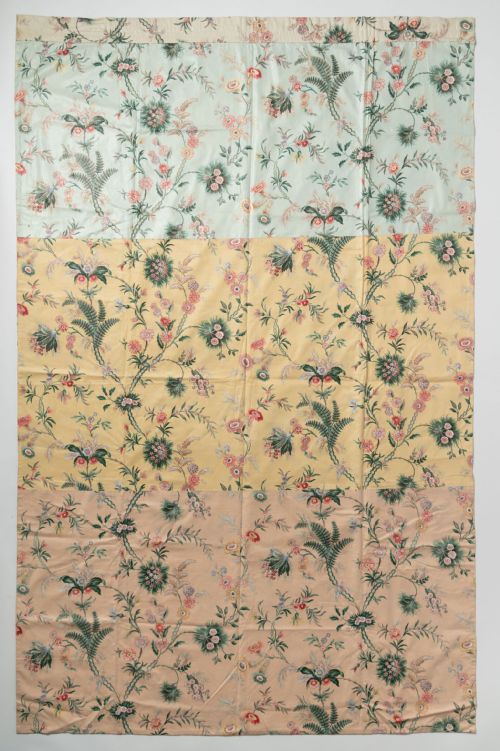
The inventory also includes nineteenth-century revivals, needlework samplers, and silk embroidery mounted in giltwood frames, showing how textile arts evolved long after the primary weaving periods. Each form carries distinct characteristics tied to its original period and purpose.
Distinctions in quality
The top of the range is defined by the fineness of the needlework and the complexity of the design, such as early English crewelwork or detailed Flemish verdure panels. Superior density in the wool, silk, and metal thread creates depth and clarity that simpler or later pieces lack.
Execution and provenance further divide the selection, distinguishing masterworks like a Brussels tapestry after Teniers from standard domestic samplers. The integrity of the mounting, whether framed in period giltwood or supported on linen, influences how successfully the textile presents its original form.
Materials documented across the inventory include wool, silk, linen, cotton, glass, wood, giltwood, and metal thread.
The Historic Tapestry Panel Glossary
- Verdure tapestry
- A type of woven wall hanging featuring stylised foliage, trees, and landscape elements as the primary subject matter. These pieces frequently incorporate subtle shades of green and brown wool.
- Crewelwork
- A form of embroidery utilising wool yarn on a linen or cotton ground to create textured, flowing designs. It is particularly associated with early English domestic textiles.
- Needlework sampler
- A piece of embroidery produced to demonstrate skill in various stitches and alphabets, often dated and signed by the maker. Many examples originate from the eighteenth and nineteenth centuries.
- Tapestry fragment
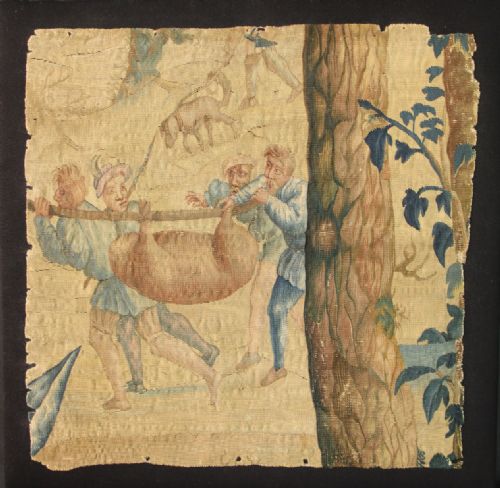
- A surviving section of a larger wall hanging, preserved and often mounted to linen for display. These pieces capture specific scenes or borders from dismantled textiles.
- Metal thread
- Fine wire spun from or coated with precious metals like gold or silver, incorporated into textile panels to add luminosity. It appears alongside wool and silk in select European pieces.
Historic Tapestry Panel: Frequently Asked Questions
How were historic tapestry panels used originally?
Historic tapestry panels served primarily as functional wall hangings in grand interiors, providing insulation against cold stone walls while displaying wealth and narrative scenes. Smaller examples functioned as cushion covers or decorative furnishings within domestic spaces.
Over time, many larger hangings were cut down into fragments or mounted for easier display as independent works of art. This adaptation allowed textiles to survive in residential rooms long after their original architectural context vanished.
What is a verdure tapestry?
A verdure tapestry depicts natural foliage, trees, and gardens, often featuring birds or distant châteaux tucked behind dense canopies of leaves. These landscape scenes were immensely popular in Flemish workshops during the seventeenth and eighteenth centuries.
The palette typically relies on earthy greens, blues, and browns, created through dyed wool and silk threads. They brought the outside world into wood-panelled or stone rooms.
How do I care for a textile panel?
Textile panels require protection from direct sunlight to prevent the fading of wool, silk, and metal thread. Keeping them away from excessive moisture and fluctuating humidity preserves the organic fibres.
Displaying pieces mounted securely to linen or framed behind glass helps prevent sagging and structural strain. Gentle dusting with a soft brush is usually sufficient for routine maintenance.
Can I date a piece by its materials?
Materials offer strong clues to a panel's age, particularly when combining wool, linen, and hand-spun silk within a single weave. Early pieces from the sixteenth and seventeenth centuries often utilise heavy wool and metal thread.
Later nineteenth-century revivals and samplers introduce cotton grounds and machine-prepared threads alongside traditional techniques. Examining the backing and the type of stitch helps confirm the period of manufacture.