


Highland Scene Canvas
A highland scene canvas brings the atmospheric mist, dramatic mountains, and rugged moors of Scotland directly into a room.
Highland Scene Canvas
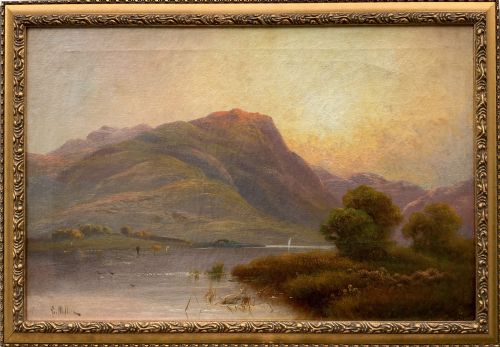
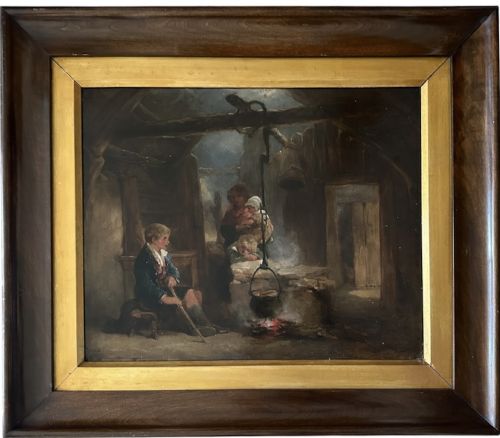
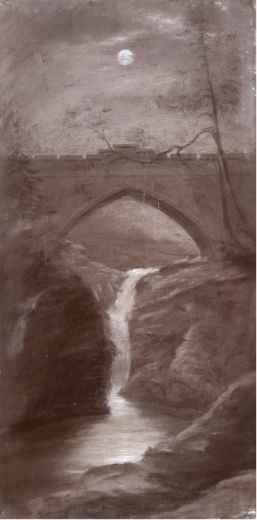
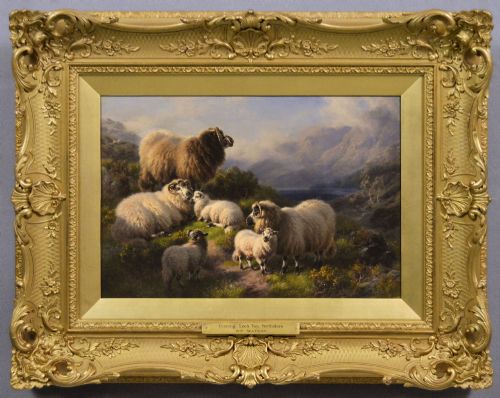
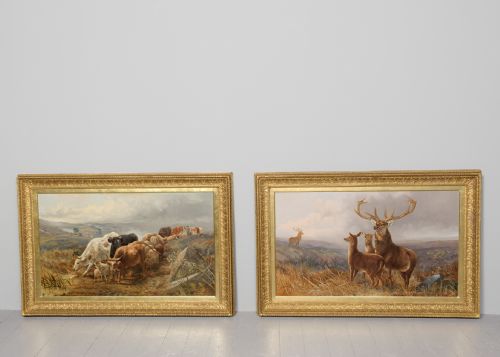
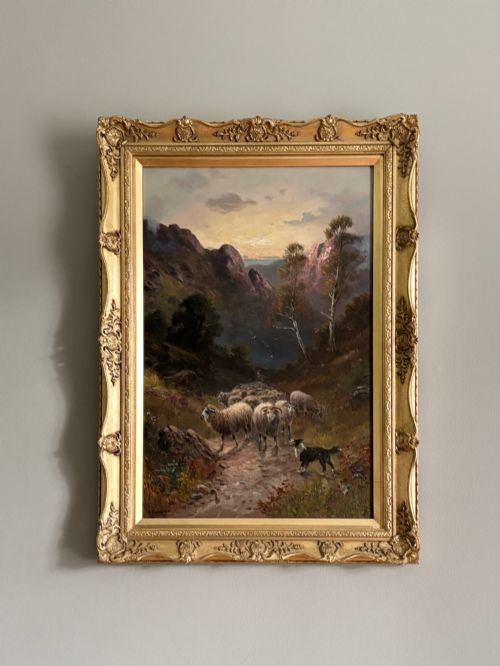
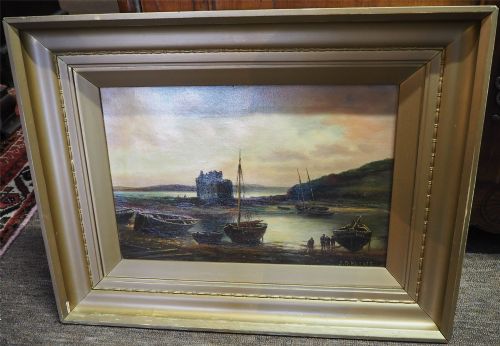
A highland scene canvas depicts traditional Scottish landscapes, frequently featuring roaming cattle, sheep, stags, or figures near misty lochs and mountains. These works capture the romanticism of the British countryside during the nineteenth and early twentieth centuries.
The selections available here span from Victorian pastoral depictions to post-impressionist interpretations. Most examples date from the nineteenth century into the Edwardian era, rendered by artists capturing the distinct light of the northern terrain.
Materials and Technique
These works are painted primarily with oil paint upon stretched canvas or occasionally wood panels, building rich textures through layered brushwork. Artists utilised pigments that captured the moody greys of morning mists alongside the warm tones of heather and golden gorse.
Framing typically involves heavy timber adorned with gesso and gold leaf or giltwood, often moulded into ornate patterns characteristic of the period. The interaction between the oil medium and the heavy gilt frames defines the physical presence of these pieces.
Materials recorded across the archive include oil paint, canvas, gesso, gold leaf, and wood.
Distinctions in Quality
Quality rests in the handling of atmospheric light and the anatomical accuracy of the figures, whether cattle, ponies, or hounds. Superior works demonstrate a confident command of scale, rendering distant mountain peaks with subtle perspective rather than flat grey washes.
The depth of the pigment layering and the preservation of the original canvas surface distinguish the finer examples. Works attributed to established regional painters show superior compositional balance compared to anonymous studio output.
George Whitton Johnstone·William Beattie Brown·William Watson Jnr·Robert Cleminson·Douglas Cameron·Archibald Kay·John Charles Tunnard·Sir David Murray·John W Morris·Daniel Sherrin·George Cole·Alfred de Breanski·Benjamin Williams Leader·Louis Bosworth Hurt·William Langley·Charles Leslie·Charles W Oswald
The Highland Scene Canvas Glossary
- Gesso
- A plaster-like mixture applied to wood frames as a base for moulding and gilding. It allows the ornate scrollwork on antique frames to hold crisp detail.
- Giltwood
- Timber that has been coated with gold leaf or gold paint for decorative effect. This finish catches candlelight and natural daylight in period interiors.
- Oil on Canvas
- Pigments bound in drying oil spread across woven fabric stretched over a wooden frame. This combination allows for rich blending and enduring colour.
- Pastoral
- Art depicting country life, livestock, and tranquil rural landscapes. These scenes emphasise a calm harmony between animals, figures, and nature.
Highland Scene Canvas: Frequently Asked Questions
What defines a highland scene canvas?
A highland scene canvas portrays Scottish landscapes featuring elements like mountains, lochs, heather moors, and native livestock such as cattle or red deer. These paintings capture the romantic atmosphere of the British countryside during the Victorian and Edwardian eras.
Created primarily in oil on canvas, these works range from intimate studies to large framed gallery pieces. They reflect the nineteenth-century fascination with untamed wilderness and pastoral life.
How should I display an antique oil painting?
Antique oil paintings require stable indoor environments away from direct sunlight and rapid temperature fluctuations. Hang them on interior walls where humidity remains moderate to protect both the canvas and the gesso frame.
Ensure the hanging wire and wall fixings safely support the weight of heavy giltwood frames. Professional picture hooks suited to plaster or stud walls provide secure installation.
How do I identify the period of these paintings?
Dating relies on stylistic clues, artist signatures, framing techniques, and canvas stamps. Victorian works often display dramatic chiaroscuro and meticulous realism, while later nineteenth-century and Edwardian pieces lean towards impressionistic brushwork.
Examining the reverse of the canvas can reveal stretcher construction methods, maker stamps, or historical exhibition labels. These physical markers help place the work within a specific decade.
Were these paintings created outdoors?
Artists often sketched initial compositions on site in Scotland, recording the fleeting mountain light and weather conditions. The final detailed works were then completed back in the studio using these field studies and charcoal drawings.
This method allowed painters to manage large canvases and complex subjects, such as herds of highland cattle or shooting parties, with precision.