



Pair of Oil Landscapes
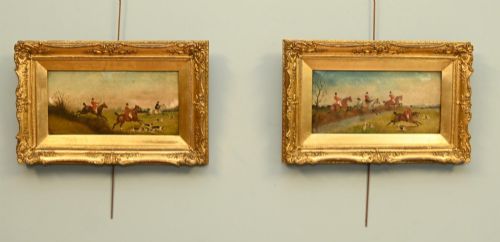
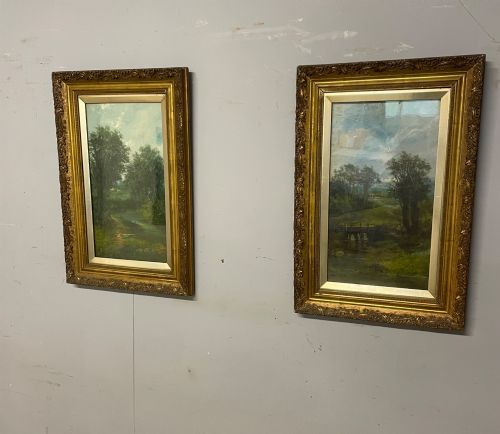
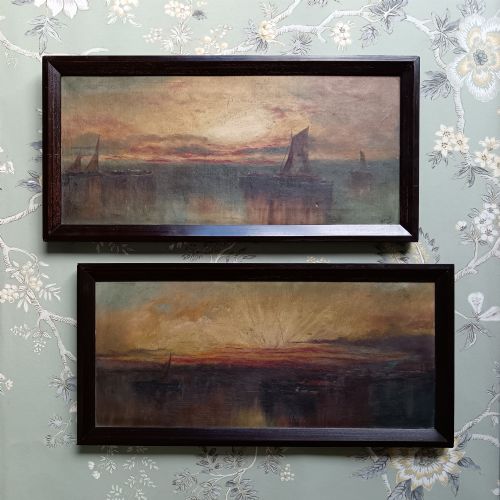
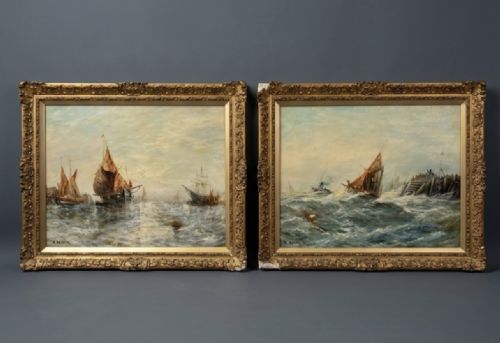
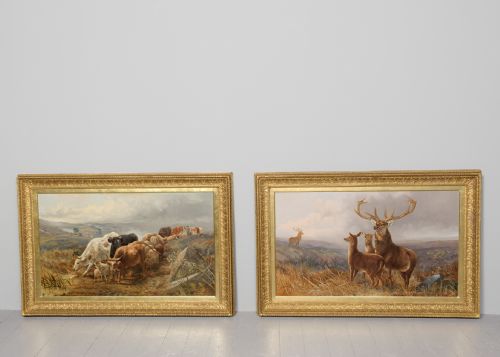
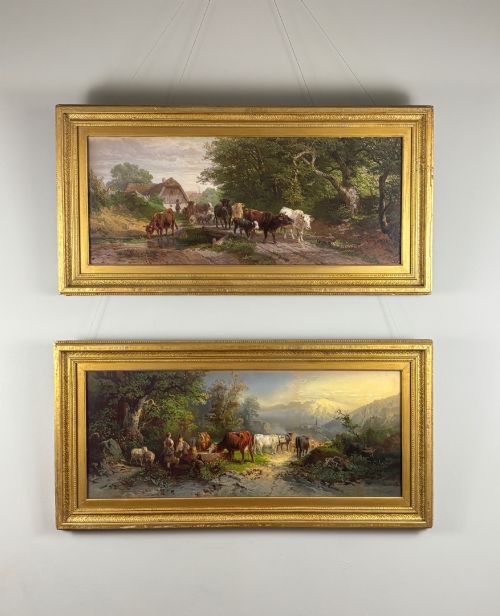
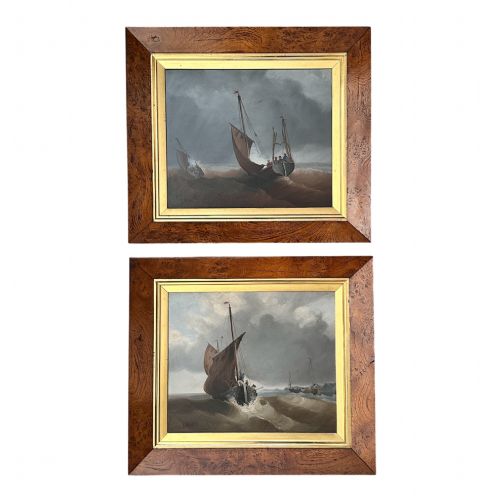
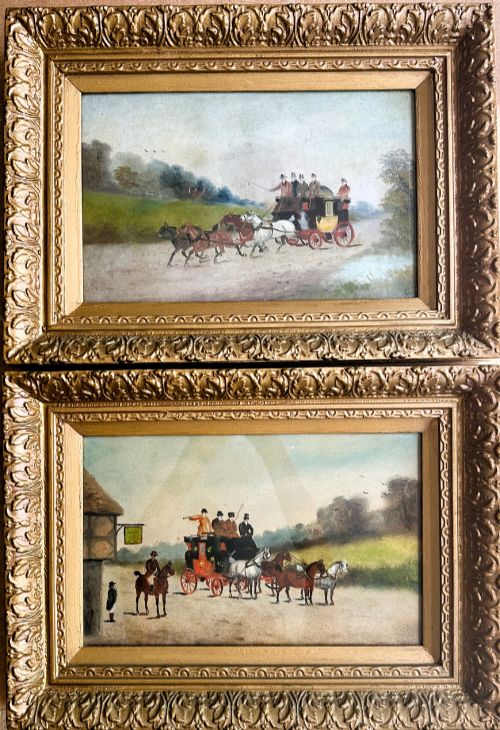
When you search for pair of oil landscapes, you discover dual works intended to hang together, spanning pastoral views, marine scenes, and rural subjects.
Pair of Oil Landscapes
A search for pair of oil landscapes brings together matching works designed to be displayed side by side as a balanced set. These complementary compositions often share a subject, such as sunrise and sunset, or depict paired views of river valleys, coastal waters, and mountain streams.
The selections span centuries of British and continental art production, with many examples originating from the nineteenth century and the Edwardian era. Buyers encounter formats executed on canvas, wood panels, and board supports, frequently retaining their period frames.
Subject matter ranges widely across the selection, including highland cattle grazing, architectural views, and classical ruins. These works reflect the enduring popularity of balanced topographical and pastoral imagery in domestic interiors.
How They Were Made
Artists painted these works using oil paint applied to canvas, wooden panels, or rigid boards, building up layers of pigment to achieve depth and texture. Canvas supports were typically stretched over wooden frames, while board and panel options provided a firm foundation for detailed brushwork.
Many surviving examples retain their original surrounds constructed from wood, embellished with gesso, and finished with gold leaf or giltwood. These ornate frames were specifically proportioned to complement the twin compositions and protect the edges of the painted surface.
Listings feature works executed on wood panels, canvas, and board supports.
What Varies in Quality
The distinction between standard works and exceptional pieces lies in the precision of the brushwork and the clarity of light captured within the composition. Masterful handling of atmospheric perspective and tonal balance elevates a matched set above routine decorative production.
The integrity of the original framing and the preservation of the paint surface contribute significantly to the standing of a pair. Pieces that retain their contemporary giltwood surrounds without extensive restoration offer a more complete historical record.
W Klombeck·B Nash·Robert Cleminson·Johann Friedrich Voltz·John Moore of Ipswich·Philip Rideout·John Grenville Fennell·Gustave De Bréanski·Franz van Severdonck·Pieter Cornelis Dommersen·John Bell·John Frederick Herring Jnr·Adrian Van Porten·Philip Henry Rideout·Giovanni Paolo Panini·Clarence Henry Roe·Frank Hider·Frederick James Knowles·Lewis J Wood·George Dodgson Callow·William Mellor·Jan Evert Morel·Karl Herrle·Sidney Pike·Ebeneezer Colls
The Pair of Oil Landscapes Glossary
- Oil on Canvas
- Pigments bound in a drying oil applied to a woven fabric support. This combination allows for flexible application and enduring colour richness.
- Giltwood
- Wood carved and coated with a thin layer of gold leaf or metallic powder. This technique provides a luminous border that enhances the framed artwork.
- Gesso
- A paint mixture consisting of a binder mixed with chalk, gypsum, or pigment. It serves as a smooth preparation layer on wooden frames before gilding.
- Tondo
- A Renaissance term for a circular work of art. In this context, it describes paintings executed on round boards or canvases.
Pair of Oil Landscapes: Frequently Asked Questions
Why were oil landscapes painted in pairs?
Artists produced these complementary works to create visual symmetry when hung in domestic interiors, often balancing morning and evening light or contrasting seasonal views.
This arrangement suited the formal hanging styles of nineteenth-century drawing rooms and parlours.
How do I know if the frames are original?
Original frames generally show consistent wear patterns and construction methods appropriate to the period of the paintings they enclose. They fit the dimensions and rabbet of the panels precisely without recent alterations.
Signs of age in the gesso and gold leaf also help confirm authenticity.
What is the difference between canvas and board supports?
Canvas provides a woven textile base that yields slightly under brush pressure and allows for larger compositions. Board offers a rigid, stable surface frequently utilised for smaller portable scenes.
Both materials were common throughout the Victorian era.