


Highland Cattle Art
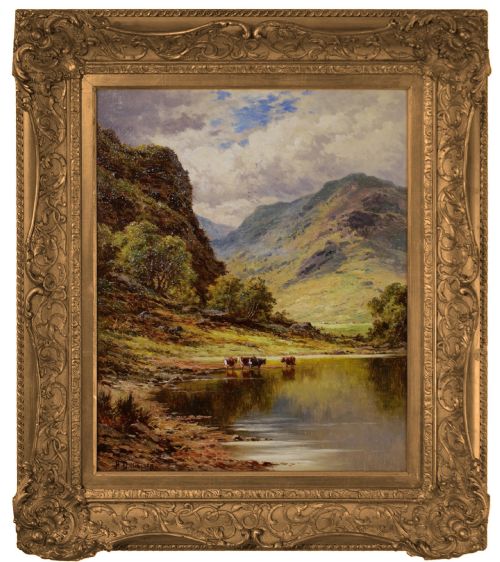
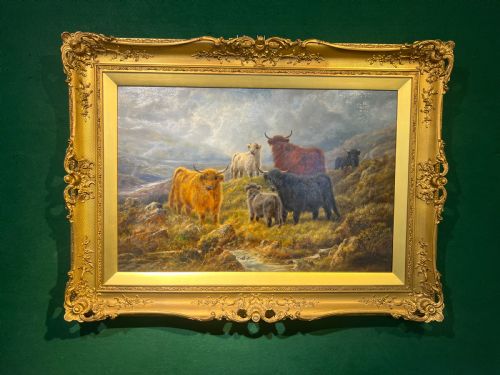
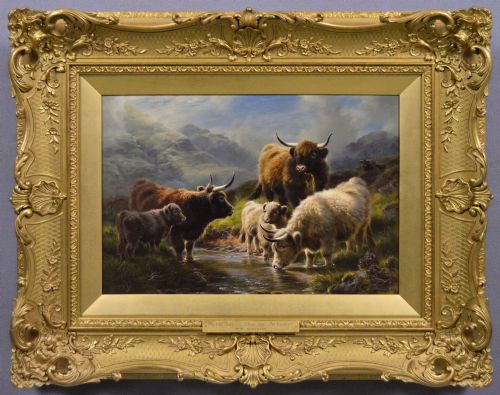
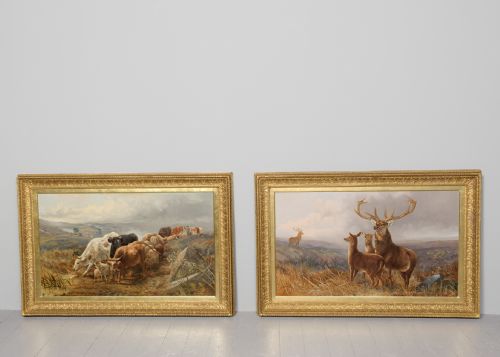
Highland cattle art captures the romantic majesty of nineteenth-century Scottish landscapes through oil paintings and ceramic plaques depicting horned cattle by misty lochs.
Highland Cattle Art
Highland cattle art encompasses nineteenth and early twentieth-century oil paintings and ceramic pieces depicting pastoral Scottish scenes. Buyers seek these works to bring the atmospheric grandeur of highland mountains and lochs into traditional interiors.
The most common pieces on this page are oil paintings on canvas, frequently framed in ornate giltwood and gesso. These works range from intimate depictions of streamside herds to vast mountainous panoramas featuring longhorned cattle.
How They Were Made
Artists painted primarily with oil paint on stretched canvas, layering pigments to capture the dense coats of the cattle and the shifting light over Scottish lochs. Many of these canvases remain set within heavy, moulded giltwood frames finished with gold leaf.
Ceramic pieces utilise porcelain or earthenware surfaces, painted by hand with fine brushwork before being glazed and fired. These decorative items, including spill vases and wall plaques, often bear the signatures of notable porcelain artists.
Highland cattle share the landscape with remarkably unbothered sheep grazing quietly in the snow.
What Varies in Quality
The distinction between ordinary and exceptional works rests upon the artist's ability to render the anatomy of the cattle and the depth of the Highland atmosphere with conviction. Superior paintings display confident brushwork and a subtle handling of mist and morning light.
Frame craftsmanship also dictates overall quality, with original period giltwood and gesso frames adding substantial architectural presence to the artwork. The clarity of hand-painted detail on ceramic plaques similarly separates standard studio output from master hand-signed pieces.
Henry H. Parker·Robert Watson·William Watson Jnr·Robert Cleminson·Henry Robinson Hall·Henry Hillier Parker·Sidney Yates Johnson·Sidney Pike·Charles Jones·George Turner·John W Morris·Daniel Sherrin·Alfred de Breanski Snr·Gustave De Brianski·Henry Birtles·Milton Drinkwater·Louis Bosworth Hurt·Aster Richard Chilton Corbould·Sidney Richard Percy·Royal Worcester·James Kay·J Gibb
The Highland Cattle Art Glossary
- Giltwood
- Wood carved and coated with gold leaf or a gold-coloured metallic finish. This material forms the ornate frames typical of Victorian and Edwardian oil paintings.
- Gesso
- A plaster-like mixture applied to wooden frames before gilding. It provides a smooth base for intricate moulded ornamentation.
- Spill vase
- A small ceramic or porcelain vessel designed to hold thin wooden spills used for lighting fires. These items often feature hand-painted pastoral scenes.
- Wall plaque
- A decorative ceramic panel intended for hanging rather than table use. They frequently depict detailed landscape and animal studies.
Highland Cattle Art: Frequently Asked Questions
What periods do these paintings come from?
The works primarily date from the nineteenth and early twentieth centuries, spanning the Victorian and Edwardian eras. Painters captured these rustic Scottish scenes extensively between eighteen-sixty and nineteen-twenty.
During this period, pastoral realism and Highland landscape painting flourished across Britain. Artists travelled north to document traditional farming life against dramatic mountain backdrops.
How should I clean a giltwood frame?
Giltwood frames require gentle dusting with a dry, soft brush to remove surface particles. Avoid liquid cleaners, water, or chemical solvents, which easily damage delicate gold leaf.
Older frames often feature fragile gesso mouldings that flake under pressure. Handle the framing with care and consult a professional conservator for deeper restoration.
Are these paintings signed by the artist?
Many oil paintings and ceramic plaques bear visible signatures or monograms from listed nineteenth-century artists. Signatures frequently appear in the lower corners of the canvas.
Some pieces also carry additional inscriptions, dates, or artist sketches on the reverse of the board or canvas. These markings help attribute the work to specific members of the Highland School.
Where were these ceramic pieces made?
The ceramic plaques and spill vases originate from prominent British factories such as Royal Worcester. Talented factory artists decorated these porcelain items by hand.
Specialist painters applied detailed animal studies directly onto the ceramic body before firing. These signed factory pieces complement larger oil paintings from the same era.