




Vintage Cattle Landscape Painting
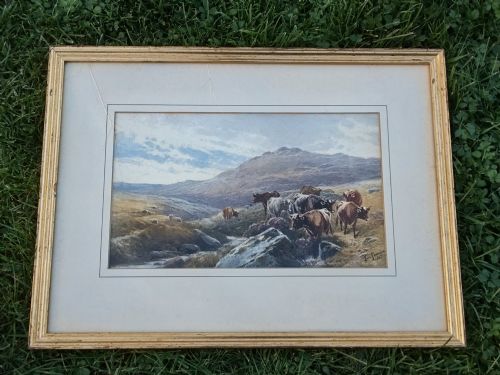
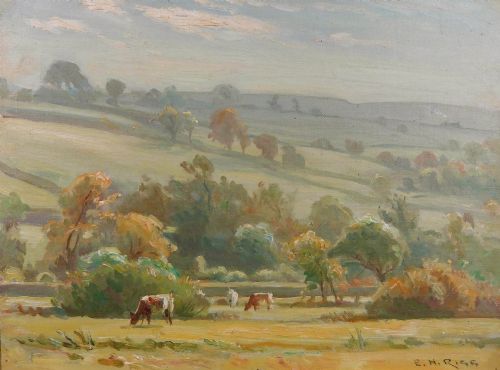
When you search for a vintage cattle landscape painting, you are looking at pastoral scenes rendered in oil and watercolour across the nineteenth and early twentieth centuries.
Vintage Cattle Landscape Painting
A vintage cattle landscape painting depicts rural scenes featuring cows, bulls, and calves integrated into British, Scottish, Welsh, or Irish countryside views. These works capture pastoral life through the lenses of Victorian Pastoral, British Impressionism, and 19th Century Realism.
The pieces on this page span from the late eighteenth century through the Edwardian period and the 1930s, encompassing oil paintings on canvas and panel alongside watercolours on paper. Buyers will also encounter related decorative items such as ceramic vases decorated with similar motifs.
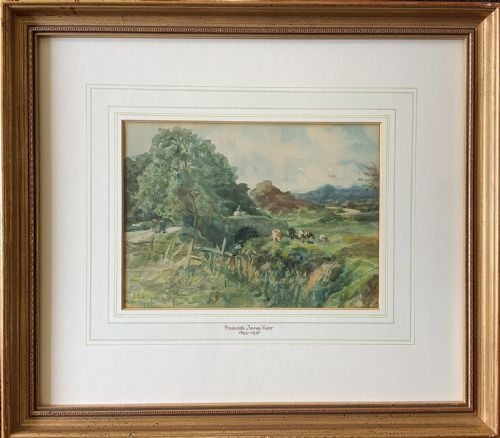
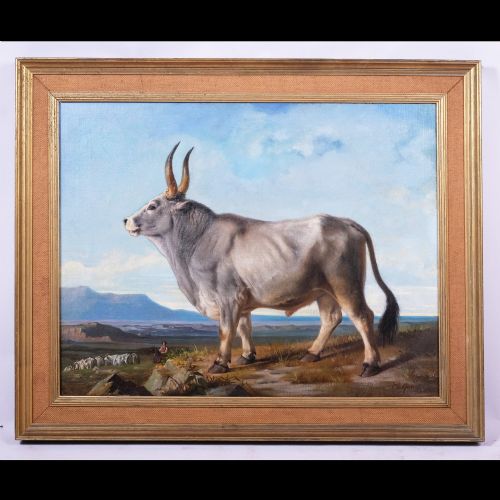
Compositions range from intimate watercolours in burr frames to substantial oils depicting Highland cattle by lochs or Shorthorn bulls in pastures. These artworks reflect a widespread historical fascination with agriculture, rural labour, and picturesque scenery.
How they were made
Artists typically applied oil paint onto stretched canvas or wooden panels, building up texture and depth to render the hide of the animals and the atmospheric conditions of the sky. Watercolours on paper offered a lighter medium for capturing swift impressions of light and weather in the countryside.
Finished works were housed in period frames constructed from wood and giltwood, which sometimes retain their original labels and inscriptions on the stretchers.
Several artists clearly spent hours negotiating with stubborn livestock before managing to capture them still on canvas.
What varies in quality
Quality rests upon the artist's ability to render the anatomy and weight of the cattle with anatomical conviction, rather than treating them merely as generic shapes in the landscape. Superior works demonstrate a sophisticated handling of natural light, shadow, and atmospheric perspective in the surrounding pasture or mountainous backdrop.
The cohesion between the animal subjects and the landscape scenery dictates the success of the composition, alongside the preservation of the original canvas, paint surface, and period frame.
William H Myers·Ernest Higgins Rigg·Frederick James Kerr·A M Gauci·Henry Robinson Hall·Frederick Septimus Lewis·Ernest Pile Bucknall·Frederick James Knowles·Eugene Verboeckhoven·Alfred Grey·William Greaves·John Inigo Richards·Claude Cardon·George Turner·William Traies·John R K Duff·John Percy Cooke·Frederick William Jackson·William Sidney Cooper·Walter J Watson·Owen Bowen·W A Clark·Alfred de Breanski Sr·Milton Drinkwater·Henry John Kinnaird
The Vintage Cattle Landscape Painting Glossary
- Oil on Canvas
- A painting technique where pigmented oil paint is applied to a woven fabric support stretched across a wooden frame. This method allows for rich colour blending and textured brushwork.
- Watercolour
- A painting method in which fine pigment is suspended in a water-based solution and applied to paper. It produces translucent washes of colour well suited to luminous skies and distant hills.
- Giltwood
- Wood that has been coated with a thin layer of gold leaf or gilt powder. It is commonly found on traditional frames surrounding 19th-century oil paintings.
- Pastoral Realism
- An artistic style focused on depicting rural life and agricultural workers with close attention to natural detail. It avoids idealized classical tropes in favour of observed truth.
- Stretcher
- The wooden framework that holds a canvas taut behind a painting. Inscriptions and dealer marks are frequently found written upon these wooden bars.
Vintage Cattle Landscape Painting: Frequently Asked Questions
What periods do these paintings come from?
The works originate primarily from the nineteenth century, the Victorian era, the Edwardian period, and the early decades of the twentieth century. Artists working during these times captured changing agricultural landscapes across Britain and Ireland.
Styles span from traditional realism and the Victorian pastoral to British impressionism, reflecting the evolving artistic approaches to rural subject matter over a century.
How were these pastoral scenes used?
These artworks were created as decorative pieces for domestic display, intended to bring the perceived tranquility and abundance of the countryside into Victorian and Edwardian homes. Wealthy patrons and landowners often commissioned or purchased them to celebrate prized livestock and rural estates.
Today, they function as historical windows into past agricultural practices, rural dress, and regional topography before the advent of modern mechanisation.
How should I live with an oil painting?
Oil paintings on canvas appreciate stable indoor environments away from direct sunlight and excessive humidity, which can cause the paint layer to crack or the canvas to slacken. Hanging them on interior walls helps preserve the integrity of the canvas and the original giltwood frame.
Dusting the surface and frame requires a soft, dry brush without applying moisture or cleaning chemical solutions that might damage the aged pigment.
How can I tell watercolours apart from oils?
Watercolours are painted on paper and are typically displayed beneath glass to protect the delicate pigment from airborne pollutants and moisture. They generally exhibit a luminous, translucent quality where the white of the paper shines through the thin washes of colour.
Oil paintings utilise heavier, opaque pigments on stretched canvas or wooden panels, offering visible brush texture and a richer build-up of paint layers that do not require glass for protection.