


Scottish Loch Painting
A scottish loch painting captures the dramatic topography, atmospheric weather and enduring romance of the northern highlands through period brushwork.
Scottish Loch Painting
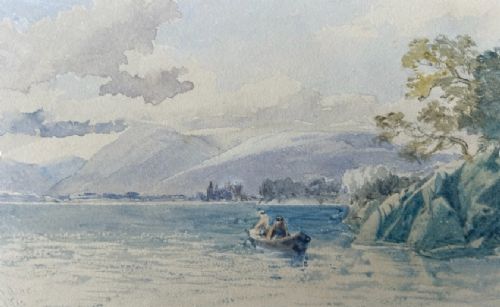
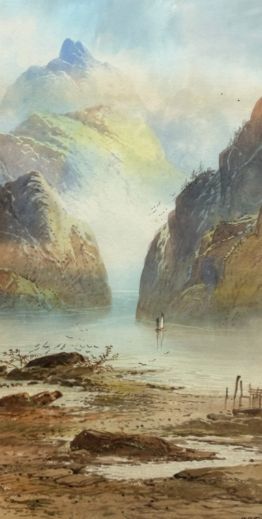
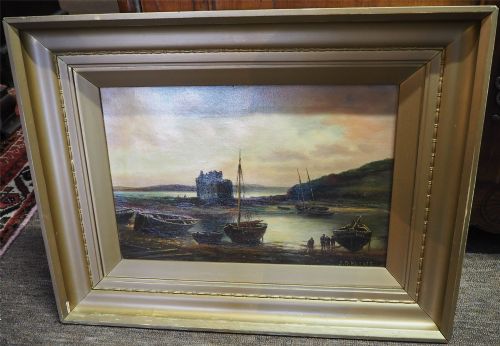
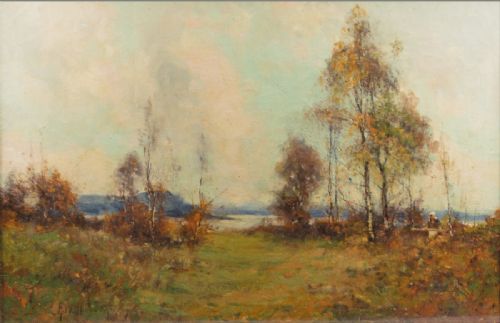
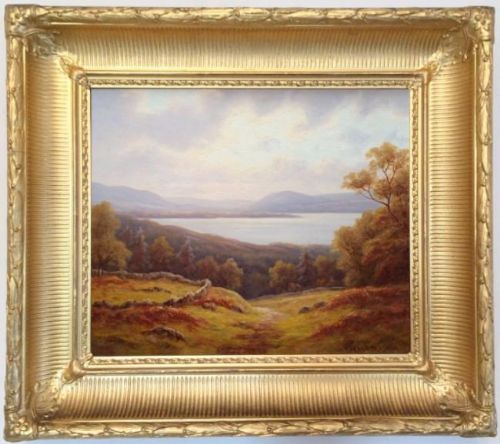
A scottish loch painting represents the natural scenery of Scotland, frequently featuring mountainous backdrops, tranquil waters and vernacular architecture such as ruined castles or wayside bothies. These works emerge predominantly from the nineteenth and early twentieth centuries, spanning Victorian landscape realism through to Scottish impressionism and romanticism.
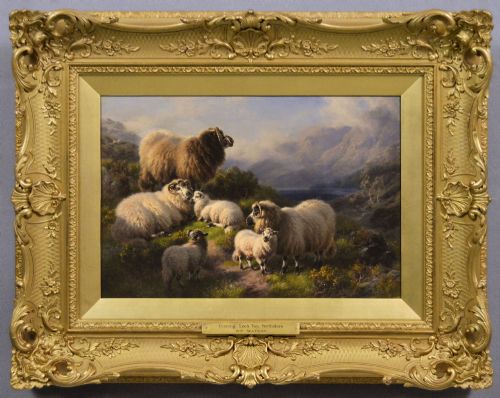
The compositions often incorporate specific water bodies and glens, including Loch Awe, Loch Tay, Loch Lomond and Loch Katrine. Figures such as Highland cattle, fishermen or sheep frequently populate the foreground, adding a sense of scale and rural life to the expansive vistas.
Buyers encounter both intimate watercolours on paper and large framed oil paintings on canvas or board. The selection ranges from atmospheric moonlight scenes to bright morning mists over water.
How They Were Made
Painters utilised oil paint on stretched canvas, wood panels or board to achieve rich textures and luminous skies, often sealing the work within heavy gilt frames. Alternatively, artists worked in watercolour and gouache on paper, capturing delicate washes of light across mountainous landscapes.
Support materials varied according to scale and medium, with substantial landscapes requiring reinforced canvas and smaller plein air studies utilising portable wood panels. Pigments were applied with varied brushwork, ranging from fine detailed linework in watercolours to thick, expressive impasto in oil.
Listings feature works spanning from the nineteenth century through to the mid-twentieth century, executed in oil and watercolour.
What Varies in Quality
Quality rests upon the artist's handling of natural light, atmospheric depth and topographical accuracy within the specific highland setting. Stronger examples demonstrate confident brushwork and a balanced composition that unites foreground livestock or ruins with distant mountain ranges.
The handling of the sky and water surfaces distinguishes accomplished works from more formulaic studio productions. Subtle tonal transitions in morning mists or dramatic contrasts in sunset scenes elevate the visual impact of the landscape.
Thomas Miles Richardson Jnr·William Henry Earp·William Watson Jnr·Alexander Wellwood Rattray·Everett Watson Mellor·Henry Robinson Hall·Henry Hillier Parker·Frank Hider·James Bell Anderson·Stanley Orchart·William Miller Frazer·Daniel Sherrin·Alfred de Breanski Snr·AJ Thornton·George Cole·Gustave De Breanski·George Melvin Rennie·E M Seaton·Alexander Nasmyth·Robert Houston·Louis F Flexman·George Stratton Ferrier·H M Krause·M E G Tyndall·T E Churnside
The Scottish Loch Painting Glossary
- Watercolour
- A painting method where fine pigment is suspended in a water-based, translucent solution applied to paper. This medium allows for luminous washes that suit misty loch atmospheres.
- Gouache
- An opaque water-based paint that includes white pigment to create solid, chalky areas of colour. Artists used this to highlight highlights on water and clouds.
- Impasto
- Paint applied thickly to a canvas or board, standing proud of the surface to catch the light. This technique adds texture to highland rocks and vegetation.
- Bothy
- A small stone shelter found in remote mountainous areas of Scotland. These structures frequently appear as picturesque focal points in regional landscape art.
- Monogram
- A motif made by overlapping or combining letters to form a single symbol used by an artist to sign a work. These assist in identifying the creator of unsigned or initialed compositions.
Scottish Loch Painting: Frequently Asked Questions
What subjects appear in these paintings?
These works depict Scottish lakes, mountains, glens and coastal inlets under various weather conditions. Common additions include grazing Highland cattle, sheep, small boats and ruined castles.
Artists focused on specific regions like the Trossachs and Perthshire, recording both tranquil morning mists and dramatic sunsets over the water.
How do I hang a large oil painting?
Large framed canvases require secure wall anchors and substantial picture wire fixed directly to the wooden stretcher frame. Position the piece at eye level where adequate ambient light can illuminate the brushwork.
Keep heavy oil works away from direct heat sources and strong direct sunlight to protect the canvas and gilt frame over time.
Are watercolours different from oil paintings?
Watercolours utilise water-soluble pigments on paper and generally require protective glass framing to prevent moisture damage. Oil paintings use suspended pigments in drying oils on canvas or board, presenting a textured surface that remains unglazed.
Both mediums capture atmospheric highland scenery, but they offer distinct visual textures and require different conservation care.
How can I identify the period of a landscape?
Stylistic clues, framing materials and artist signatures help establish the era in which a landscape was created. Victorian works often feature romantic compositions with rich tonal contrasts and ornate gilt framing.
Later twentieth-century pieces tend toward simplified forms and looser brushwork while maintaining the traditional focus on Scottish topography.