


Blue Lake Landscape
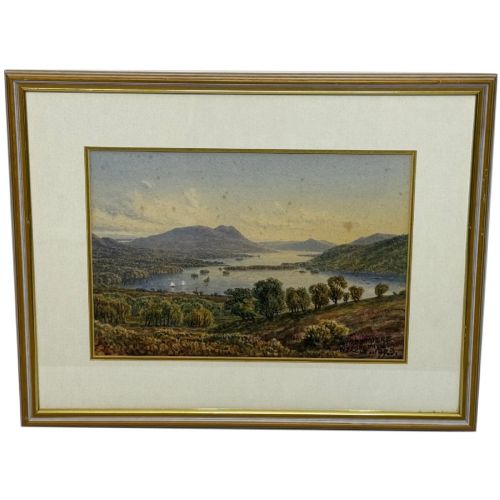
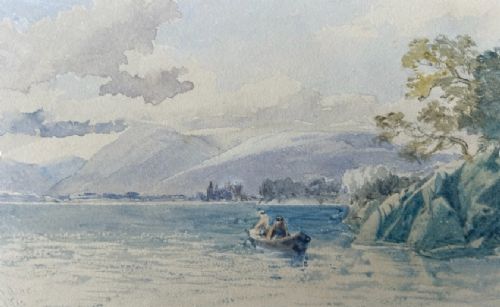
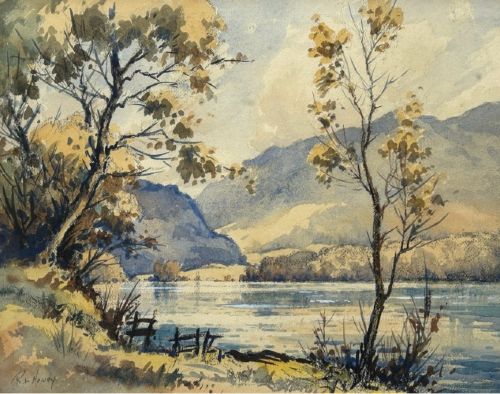
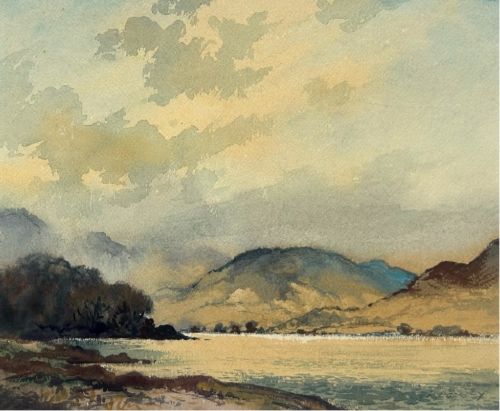
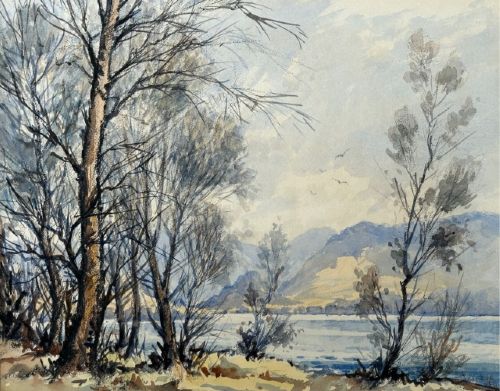
A blue lake landscape captures open water and shoreline scenery through watercolour, oil paint, and glass.
Blue Lake Landscape
A blue lake landscape centres on bodies of water rendered in paint, prints, and ceramics. The selection spans periods from the nineteenth century through to the mid-twentieth century, including Victorian and Edwardian works alongside mid-century pieces.
Watercolour paintings on paper form a significant portion of the works, often depicting specific locations such as Scottish lochs, the English Lake District, and Italian lakes. Oil paintings on canvas and wood, architectural prints, cabinet plates, and leaded glass panels provide alternative formats for this watery theme.
Artistic styles vary widely across these items, taking in nineteenth-century romanticism, impressionism, and mid-century British impressionism. Artists capture both British scenes in Cumbria and Lancashire and continental European views from France and Italy.
Materials and technique
Watercolour pigment on paper and oil paint on canvas dominate the execution of these lake scenes, alongside gouache, ink, and impasto applications. Artists utilise transparent washes for atmospheric skies and water, or build heavy texture with oils to capture light on lilies and waves.
Support materials range from stretched canvas and artist paper to porcelain plates, wooden panels, and leaded glass windows with hand-painted details. Frames often use period mouldings, complementing watercolours under glass and unglazed oil paintings.
Listings feature works spanning the nineteenth century, Edwardian era, and mid-century modern period, executed in watercolour, oil, and glass.
Distinctions in quality
Quality rests on the handling of light, atmospheric depth, and the confidence of the brushwork in capturing water and reflection. Stronger pieces demonstrate skilled control over pigment density, whether working in the delicate washes of a watercolour or the layered impasto of an oil painting.
Provenance and documentation influence the standing of a work, particularly when signed by known painters or associated with specific topographical locations and historical collections. The integration of original framing also affects the integrity of nineteenth-century and Edwardian pieces.
Thomas Miles Richardson Jnr RWS·Robert Leslie Howey·Helen Layfield Bradley·Claude Muncaster·Antoine Bouvard
The Blue Lake Landscape Glossary
- Impasto
- Paint applied thickly to a canvas or panel, leaving visible brush or palette knife strokes that stand out from the surface. This technique adds tactile dimension to water lilies and foliage.
- Gouache
- An opaque water-based paint that includes a white pigment filler, resulting in a heavier and more solid finish than traditional watercolour. It allows for bright highlights on water surfaces.
- Cabinet plate
- A decorative ceramic plate intended for display in a cabinet or on a wall rather than for daily dining. These often feature transfer-printed or hand-painted lake views.
- Leaded glass
- Individual pieces of glass joined together with lead cames to form a window panel. Hand-painted details are frequently fired onto the glass before assembly.
- Topographical landscape
- An artwork that depicts a specific, recognizable geographical location with factual accuracy. These pieces serve as visual records of identifiable lakes and buildings.
Blue Lake Landscape: Frequently Asked Questions
What periods do these paintings come from?
The works originate from several distinct eras, spanning the nineteenth century, the Edwardian period, and the mid-twentieth century. Mid-century examples and Victorian watercolours appear frequently alongside pieces from the nineteen-hundreds.
Each period brings its own characteristic palette and framing style, reflecting the shifting aesthetic preferences of landscape artists over time.
Are these works signed by the artists?
Many of the watercolours and oil paintings feature signatures, monograms, or attribution to specific painters. Signed works by artists such as Robert Leslie Howey and Thomas Miles Richardson Jnr are documented in the titles.
Unsigned pieces also appear, often attributed through style or period documentation to schools such as the nineteenth-century Italian school.
What mediums were used for these lake scenes?
Artists employed watercolour pigment on paper, oil paint on canvas, gouache, and ink. Some works utilise heavy impasto oil paint to create texture on the canvas.
Beyond traditional paintings, the selection includes porcelain cabinet plates, architectural prints and drawings, and hand-painted leaded glass windows.
How should I display a watercolour lake landscape?
Watercolours require protection from direct sunlight to prevent the pigments from fading over time. Standard framing behind glass with neutral mounts preserves the paper and the integrity of the painting.
Positioning them away from direct heat sources ensures the paper and historic frames remain stable in a domestic environment.