


Scottish Scene Wall Art
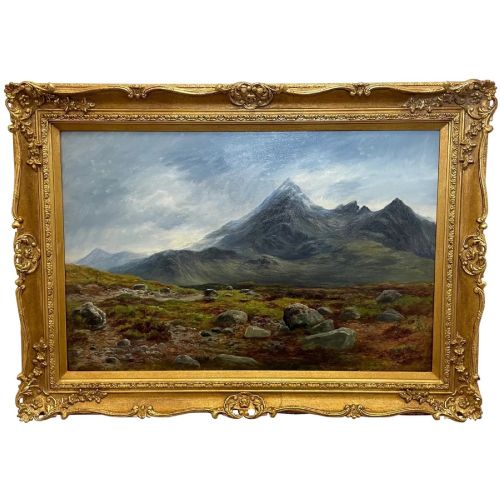
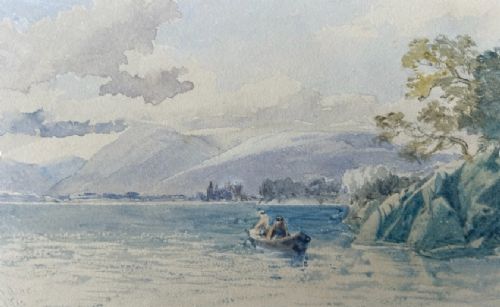
When you search for scottish scene wall art, you encounter oil paintings and watercolours depicting Highland landscapes and lochs.
Scottish Scene Wall Art
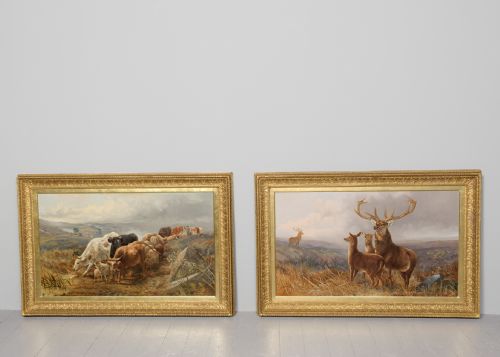
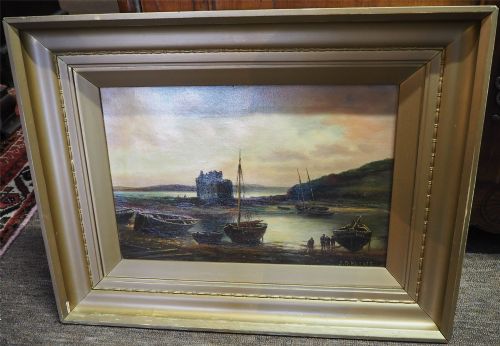
Scottish scene wall art comprises paintings and textile works centred on Highland landscapes, coastal views and rural subjects. These pieces capture lochs, mountains and moorlands through the eyes of artists working across the nineteenth and twentieth centuries.
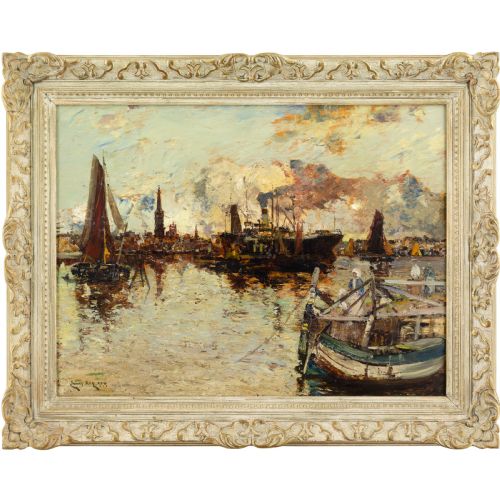
The selection here draws heavily on Victorian oils and watercolours alongside mid-century impressionism. You will find framed canvases and panels recording subjects from Skye to Loch Lomond.
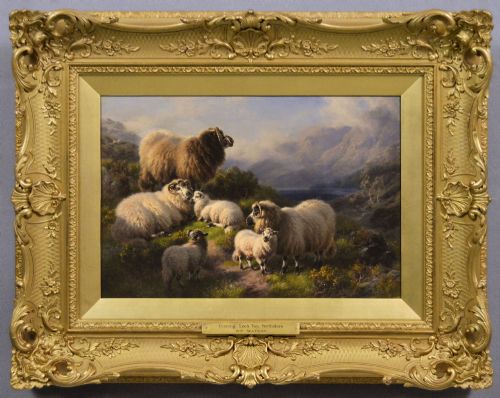
Makers and painters range from named Royal Scottish Academicians to regional artists working in traditional styles. Their subjects encompass Highland cattle, sheep, and figures in domestic or pastoral settings.
Materials and Technique
Works in this category rely primarily on oil paint applied to canvas, wood panels or board. Artists built up texture using brushwork and impasto, particularly in mid-century impressionist pieces.
Watercolour on paper and gouache appear frequently, often preserved behind glass within period frames. Textile art and tapestry needlepoint also represent the range of craft used to depict Scottish subjects.
Several Highland sheep and rogue ponies steadfastly refuse to rush their grazing.
What Varies in Quality
Quality rests upon the artist's handling of light, atmosphere and topography. Skilled painters capture the specific weather and mood of the Highlands rather than relying on formulaic compositions.
The execution of detail in figures, animals and landscape elements distinguishes finer works. Original framing, particularly gilt wood frames suiting the period, contributes to the integrity of the piece.
William Beattie-Brown·Thomas Miles Richardson Jnr·James Kay·William Watson Jnr·Robert Cleminson·Archibald Kay·Frank Hider·Donald McIntyre·William Grant Murray·John A. Houston·Sir David Murray·Robert Gemmell Hutchinson·Frederick Richard Lee·Thomas Sidney Cooper·Owen Bowen·Sir William George Gillies·Alfred de Breanski Sr·Benjamin Williams Leader·Louis Bosworth Hurt
The Scottish Scene Wall Art Glossary
- Impasto
- Paint applied thickly to a canvas or panel, standing out in relief. This technique adds tactile depth and movement to water, sky or foliage.
- Gilt wood
- Wood carved and covered with a thin layer of gold leaf or metallic gilt. It forms the decorative outer boundary for many traditional paintings.
- Gouache
- An opaque watercolour paint mixed with a binding agent. It creates solid, matte areas of colour in works on paper.
- Needlepoint
- Embroidery stitched onto a canvas mesh to form a pictorial design. This technique produced textile art depicting historical or landscape scenes.
- Panel
- A flat piece of wood or board used as a rigid support for oil painting. It provides a stable surface alternative to stretched canvas.
Scottish Scene Wall Art: Frequently Asked Questions
What periods do these pieces span?
The selections span the nineteenth and twentieth centuries, encompassing Victorian works, Edwardian pieces, and mid-century modern interpretations.
Dates range from the 1860s through to the 1960s, reflecting changing artistic approaches to the landscape over a century.
How do I care for antique oil paintings?
Keep paintings away from direct sunlight and dramatic fluctuations in temperature or humidity. This prevents the canvas, panel, and paint from cracking or warping over time.
Dust the surface gently with a soft, dry brush and avoid using liquid cleaners on the paint or frame.
What subjects are most common?
Highland landscapes dominate the selection, featuring lochs, mountains, and coastal views. Common motifs include Highland cattle, sheep, and fishermen working in rural settings.
Scenes from Skye, Loch Lomond, and the Scottish borders appear frequently across the different periods.
How do I identify a watercolour?
Watercolours are painted on paper and are typically displayed behind glass to protect the delicate medium from moisture and dust. They often display transparent washes of colour rather than the thick texture of oil paint.
Close inspection under good light will reveal the absorbent paper support beneath the pigment.