

Highland Landscape Art
Highland landscape art brings atmospheric lochs, rugged mountains and misty glens into an interior, capturing the remote terrain of Scotland through traditional painting.
Highland Landscape Art
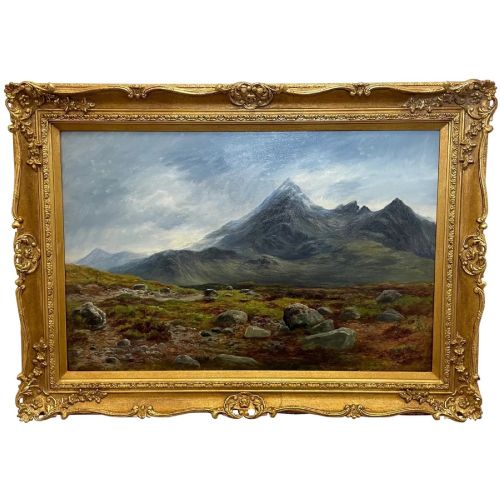
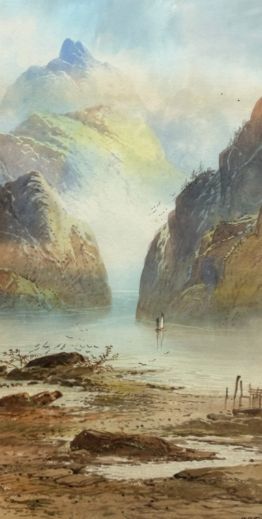
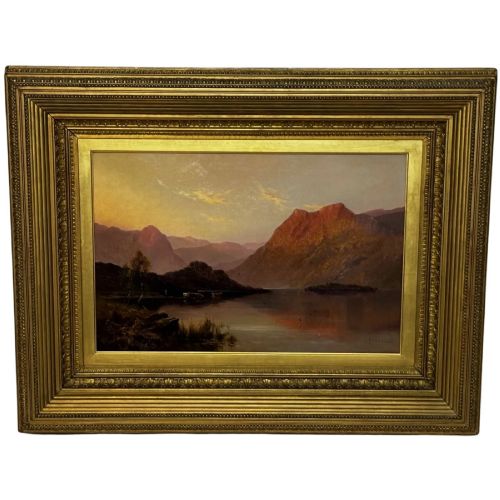
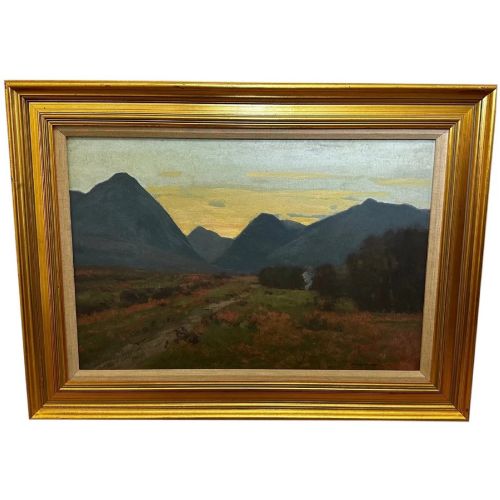
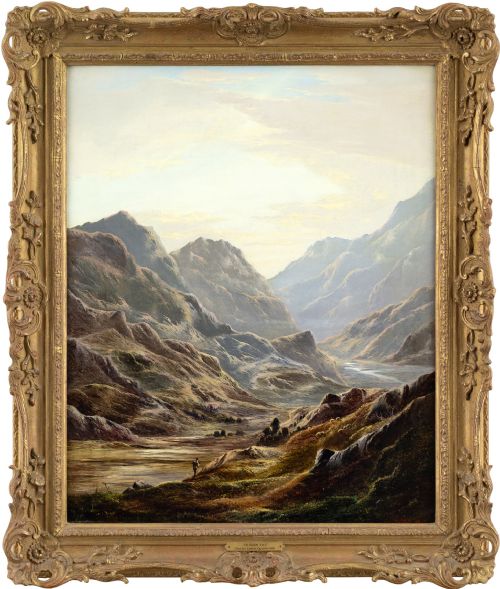
Highland landscape art captures the rugged terrain, dramatic lochs and mountainous vistas of Scotland, predominantly through traditional painting. These works record a romanticised view of remote country scenes that appealed to collectors from the Victorian era onward.
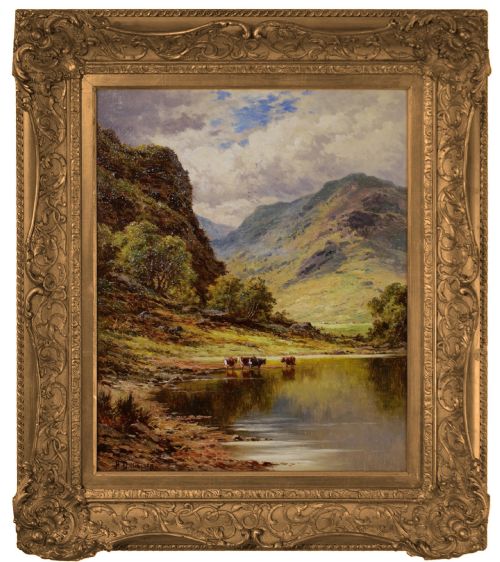
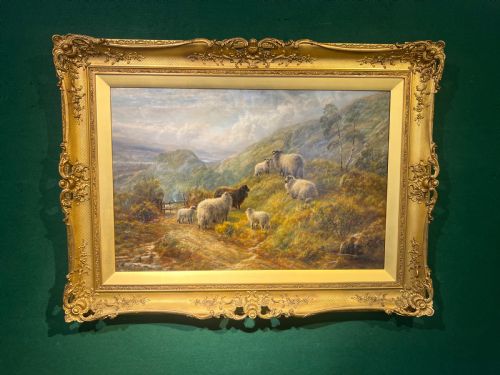
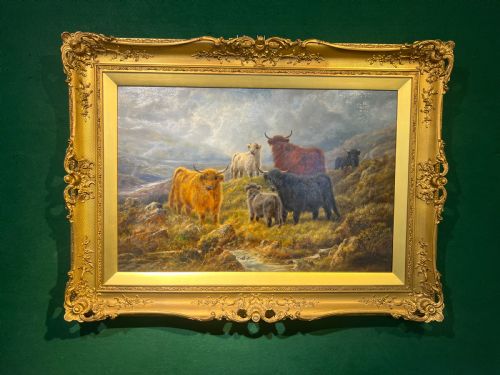
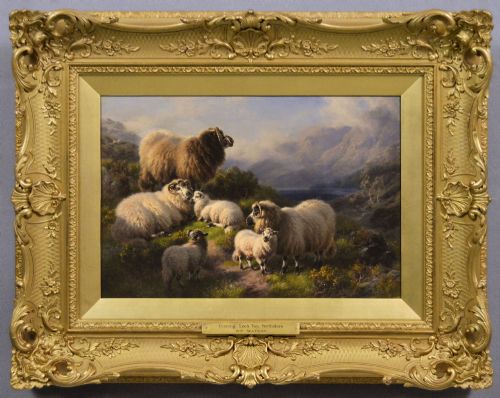
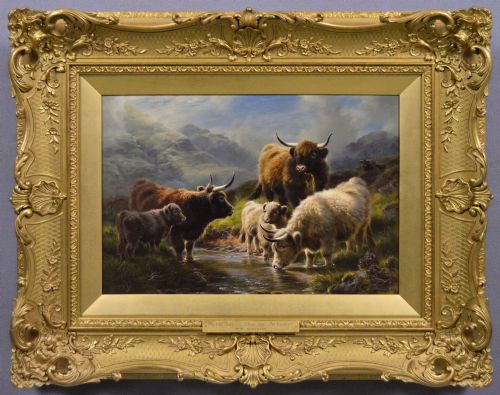
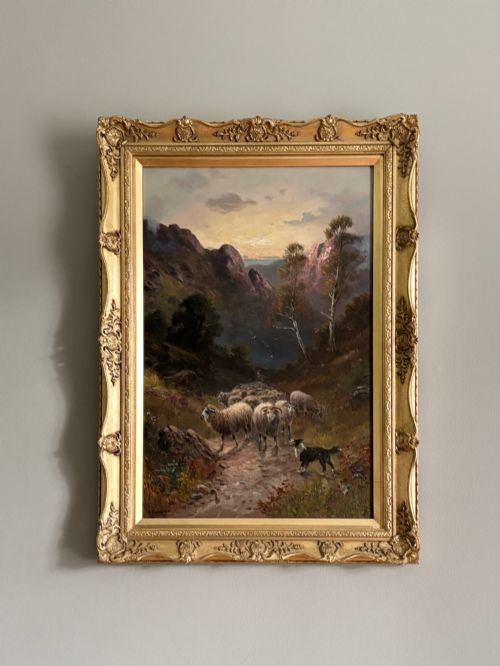
Pieces on this page largely originate from the nineteenth and early twentieth centuries, spanning periods from Victorian work to Edwardian and later interpretations. Common subjects include cattle or sheep grazing near water, misty morning passes and ancient castles under moody skies.
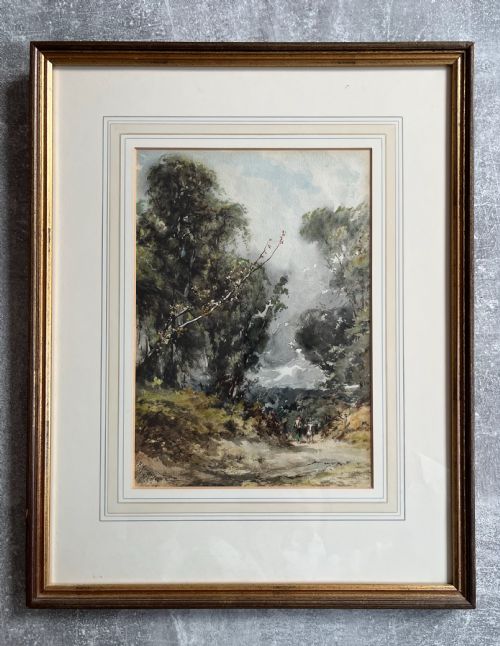
The objects take the form of oil paintings on canvas or wood panel, alongside watercolours and charcoal works on paper or canvas. Many retain their original frames, which often incorporate giltwood and gesso mouldings appropriate to their period.
Materials and methods
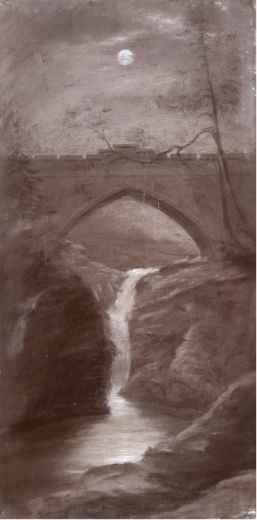
Artists utilised oil paint on stretched canvas or wooden panels to build up rich textures, occasionally employing charcoal, pastel or gouache for specific works on paper. Pigments were layered to create atmospheric effects such as passing showers, morning mist and moonlight over water.
Frames play a structural role in the presentation of these pieces, constructed from wood and finished with intricate giltwood and gesso embellishments. These traditional surrounds reflect the interior tastes of the Victorian and Edwardian periods.
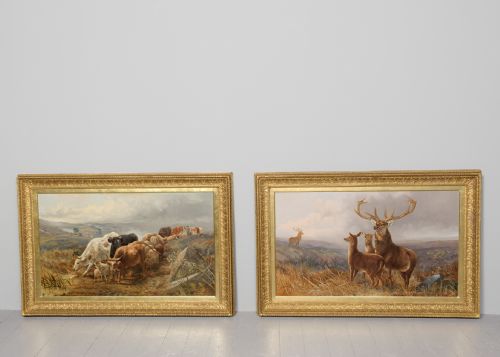
Several Highland cattle recorded on canvas appear determined to stare directly out at the viewer rather than graze.
Distinctions in quality
Quality rests upon the artist's ability to handle light and atmospheric depth, distinguishing accomplished depictions of mist and water from flat or formulaic compositions. The handling of animal subjects, such as Highland cattle or sheep, also varies significantly between skilled observation and generic repetition.
Condition and originality dictate the standing of a piece within its period, particularly the preservation of the painted surface and the retention of period-appropriate giltwood frames. Works that maintain their original canvas supports and signed attribution carry greater documentary weight.
William Beattie Brown·George Fotherly Hargitt·Thomas Miles Richardson Jnr·William Henry Earp·Tom Campbell·Alfred Fontville de Breanski·George Houston·Henry H Parker·Robert Watson·William Watson Jnr·Robert Cleminson·Douglas Cameron·Charles Leslie·Vernon DeBeauvoir Ward·Alexander Wellwood Rattray·Everett Watson Mellor·Joseph Knight·William George Tennick·Archibald Kay·Henry Robinson Hall·William Henry Mander·William Evans·Henry Hillier Parker·William Grant Murray·Tom Seymour
The Highland Landscape Art Glossary
- Giltwood
- Wood carved and covered with a thin layer of gold leaf or metallic powder. This finish is typical of traditional Victorian and Edwardian picture frames.
- Gesso
- A paint mixture consisting of a neutral binder mixed with chalk, gypsum or pigment. It is applied to wooden frames as a base before gilding.
- Oil on canvas
- A painting technique where pigmented oil paint is applied to a woven fabric support stretched over a wooden frame. This medium allows for deep blending of tones and colours.
- Scottish School
- A loose association of painters working in Scotland who shared regional subject matter and stylistic influences during the nineteenth and twentieth centuries.
- Watercolour
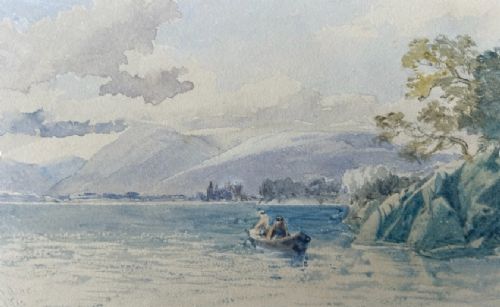
- A painting method where water-soluble pigments are used on paper. It produces transparent washes of colour suited to capturing shifting weather and light.
Highland Landscape Art: Frequently Asked Questions
What subjects appear in highland landscape art?
These works typically depict mountainous terrain, deep lochs, grazing Highland cattle and sheep, alongside remote glens and castles. Scenes often incorporate weather effects such as morning mists, passing showers and twilight.
The human element remains minimal, usually limited to a solitary figure collecting water, a drover with animals, or distant boats on the water, keeping the focus entirely on the natural environment.
How do I date a nineteenth century painting?
Dating relies on signatures, dates inscribed by the artist, exhibition labels on the reverse, and stylistic clues within the brushwork. Frame construction and materials such as gesso and giltwood also provide chronological context.
Comparative study of recorded working periods for specific artists helps narrow down the decade of creation when explicit dates are absent from the canvas.
How should I care for an oil painting on canvas?
Keep paintings away from direct sunlight, high humidity and dramatic temperature fluctuations to protect the canvas support and the oil paint layers. Dust the surface gently with a soft, dry brush without applying pressure.
Avoid using liquid cleaners or touching the painted surface directly, as oils and moisture can damage the historic pigments and varnish.