
Framed Country Landscape Art
Framed country landscape art brings rural scenery indoors through works that capture fields, farms and hills.
What framed country landscape art is
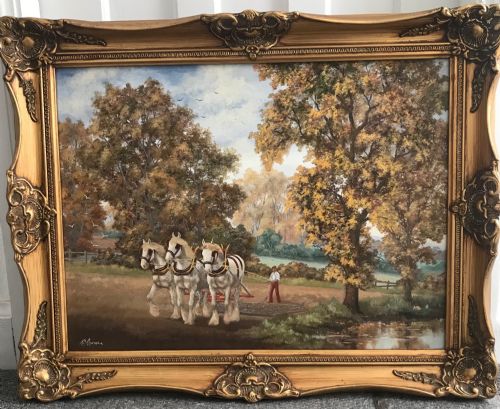
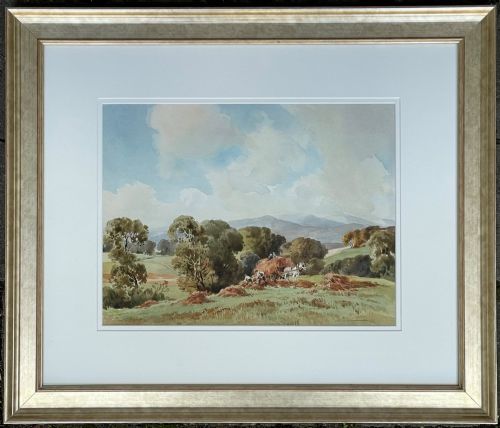
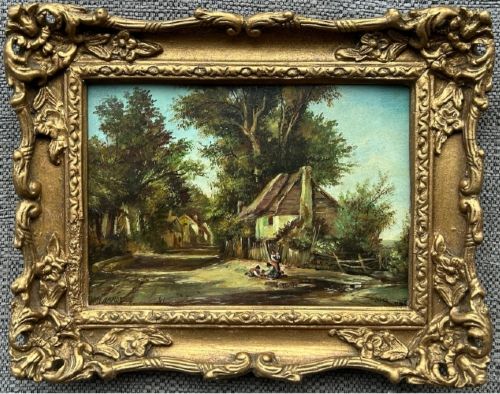
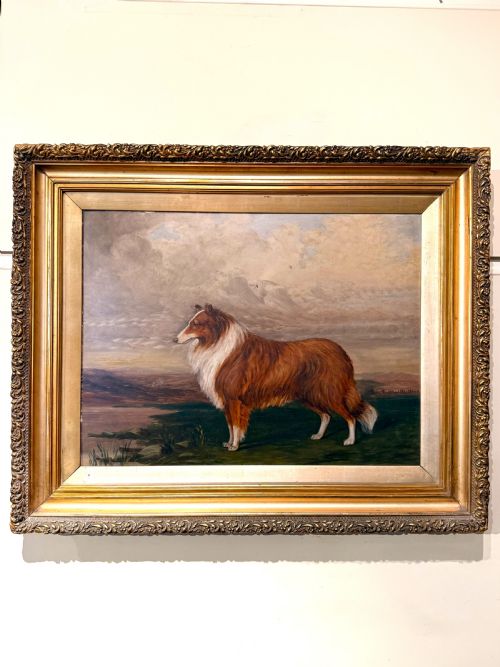
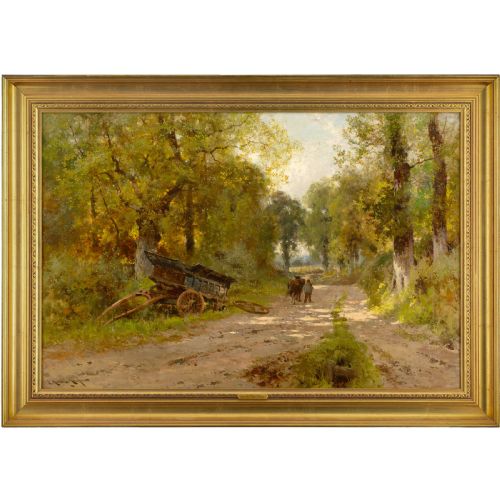
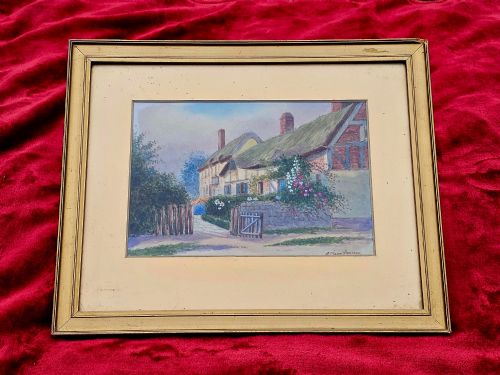
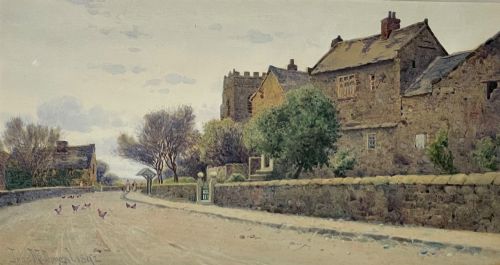
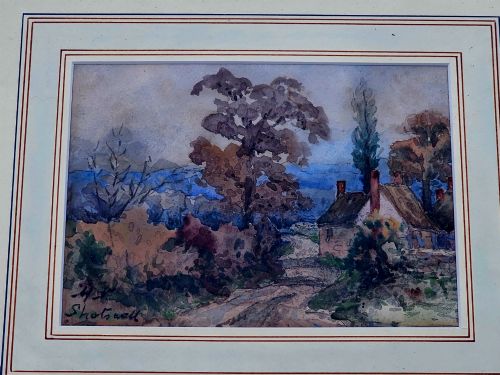
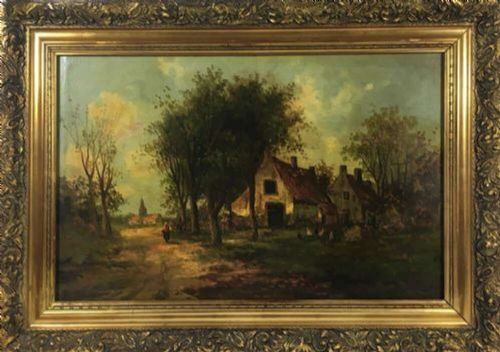
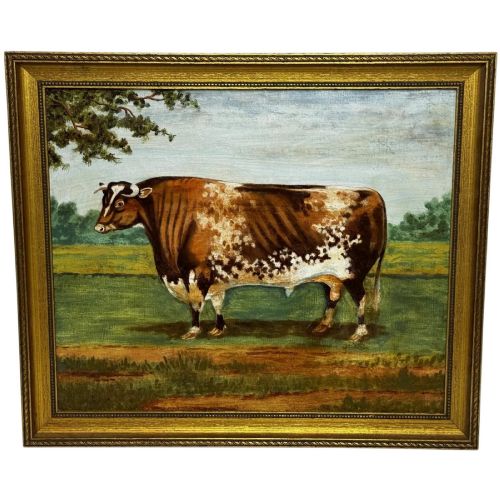
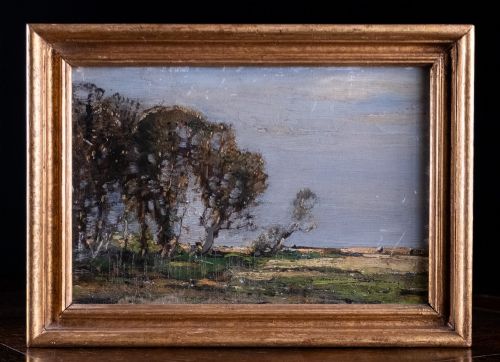
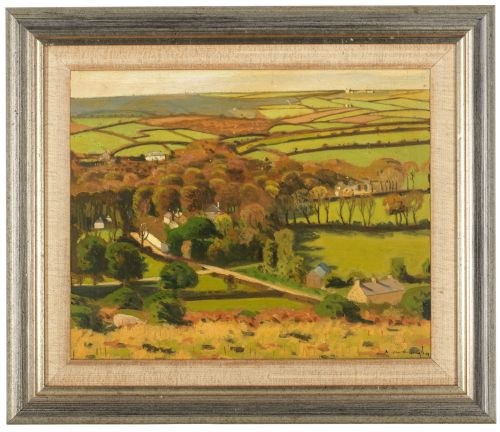
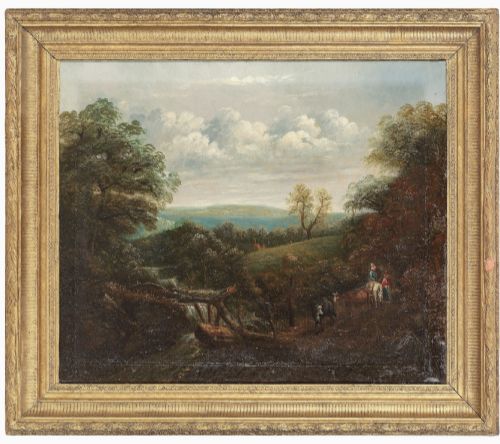
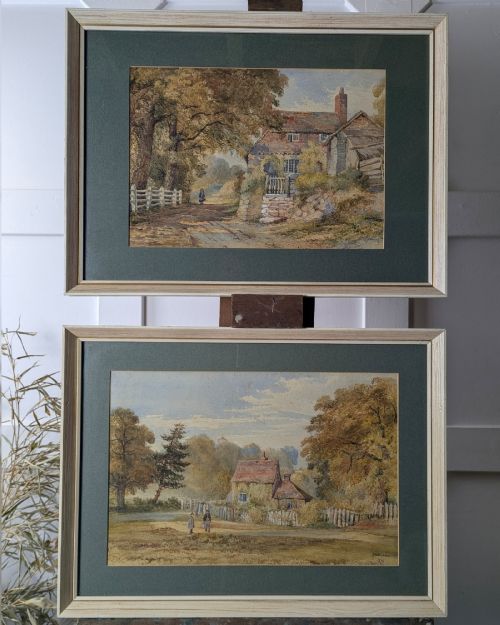
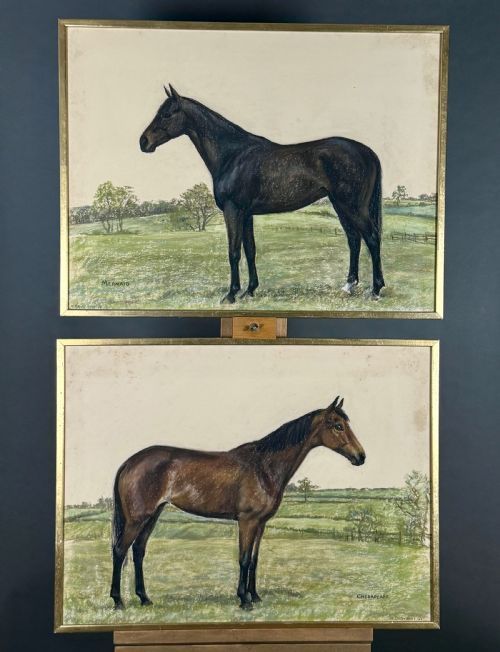
Framed country landscape art covers traditional rural scenes rendered across several periods including the Georgian era, the nineteenth century, and mid-twentieth century decades such as nineteen-ten, nineteen-fifty, and nineteen-sixty. These pieces take the form of wall art, paintings, oil paintings, and watercolours.
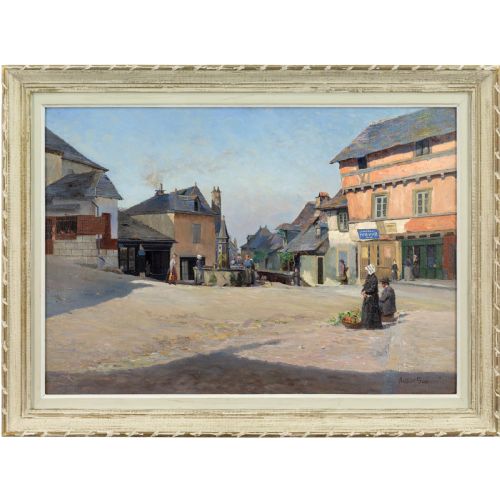
Buyers encounter works representing British Impressionism, Post-Impressionism, and nineteenth-century British styles. Common subjects span local views, orchards, farm life, and highland landscapes.
The selection ranges from early nineteenth-century board paintings to later twentieth-century canvases and paper works. Each piece comes set within its frame, ready to hang.
How framed country landscape art was made
Artists painted these rural scenes using oil paint, oil, and watercolour applied directly to canvas, board, or paper supports. These traditional mediums allowed painters to build texture and tone for skies, foliage, and earth.
Finished works are typically housed in frames constructed from gilt wood and protected behind glass in certain instances. The combination of painted surface and frame creates a complete display object.
Retail Price Guide 2026
Typical UK retail prices for framed country landscape art, calculated from the Sellingantiques database of over a million retail prices indexed since 2003. This retail price guide relies exclusively on Sellingantiques data; no external sources or auction records are used, so the figures do not describe the wider market.
This collection spans five distinct periods from the Georgian era through the mid-nineteenth and twentieth centuries, utilising oil, watercolour, canvas, board, and gilt wood.
What varies in quality
Quality rests in the handling of light, brushwork depth, and the specific skill demonstrated by named artists such as George Hilditch, William Hoggatt, Henry Birtles, or Arthur Bateman. Works by established nineteenth-century and twentieth-century painters show distinct observational clarity.
The relationship between the painted scene and its gilt wood frame contributes to the visual integrity of the piece. Materials like oil on board or canvas display different textural qualities compared to works on paper.
George Hilditch·William Hoggatt·Henry Birtles·Arthur Bateman
The Framed Country Landscape Art Glossary
- Oil painting
- A work created using pigments bound with a medium of drying oil, typically linseed, applied to canvas or board. This medium allows for rich colour blending and impasto texture.
- Watercolour
- A paint consisting of colour pigments suspended in a water-soluble vehicle, generally used on paper. It produces transparent washes of light and colour.
- Gilt wood
- Wood carved and coated with a thin layer of gold leaf or gilt paint, commonly used for traditional picture frames. It adds a reflective border that separates the artwork from the room.
- Post-Impressionism
- An art movement extending beyond Impressionism while retaining its use of vivid colours and thick application. It focuses on symbolic content and heavier brushwork.
- British Impressionism
- A style adopted by British artists influenced by the French movement, focusing on everyday rural scenes and natural light. It prioritises loose brushstrokes over strict academic finish.
Frequently Asked Questions
What periods do these landscapes cover?
The available selection spans the Georgian era, the nineteenth century, and mid-century dates from nineteen-ten to nineteen-sixty. Each period brings distinct stylistic approaches to rural subjects.
Buyers find both early nineteenth-century works and mid-twentieth-century examples represented.
What materials were used?
Artists utilised oil paint, oil, and watercolour on supports including canvas, board, and paper. Gilt wood frames and glass also appear across the pieces.
These traditional materials define the physical structure of each framed work.
Are these works signed by artists?
Several pieces are attributed to known painters such as George Hilditch, William Hoggatt, Henry Birtles, and Arthur Bateman. Signatures and attributions help place works within specific historical contexts.
Documentation on the piece often links the painting to a known hand.
How should I hang these artworks?
These framed pieces arrive ready for wall display using their existing gilt wood frames. Consideration should be given to lighting and placement away from direct moisture.
Wall art of this scale suits living spaces and studies alike.