




Green Highland Landscape Art
Green highland landscape art captures the rugged drama and quiet lochs of Scotland through nineteenth- and twentieth-century brushwork.
Green Highland Landscape Art
Green highland landscape art brings the topography of the British hills and glens directly onto canvas, board, and paper. Buyers seek these works for their atmospheric depth, capturing specific regions from Skye to Arran.
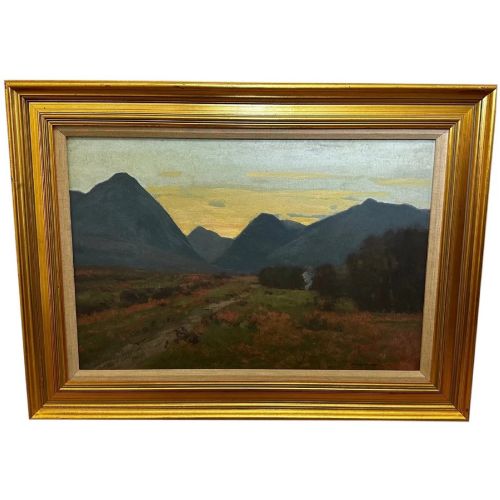
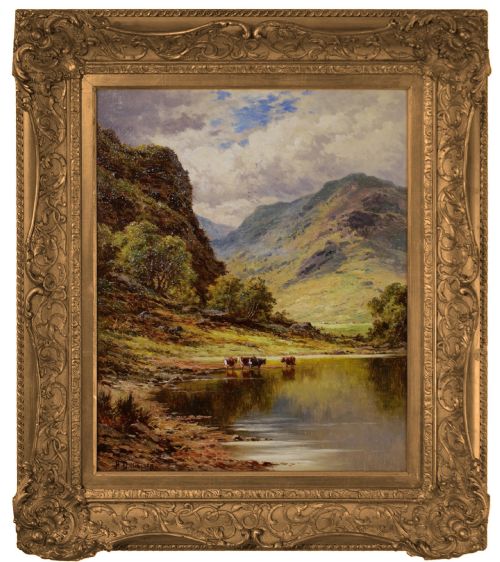
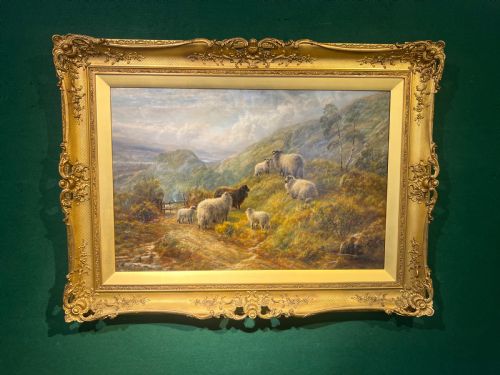
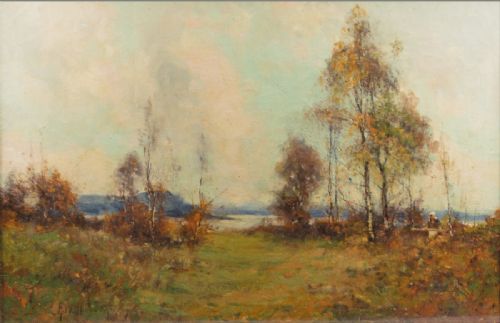
The pieces on this page are dominated by oils and watercolours spanning the Victorian era through the early twentieth century. Many showcase pastoral scenes, rural crofts, and mountainous horizons framed in original giltwood.
Scottish School and Impressionist traditions shape the majority of these compositions. Painters focus on natural light playing across heather, bracken, and rolling highland pastures.
Materials and technique
Artists applied oil paint and watercolour across canvas, wood panels, and heavy paper substrates. These pigments build up rich textures, particularly in depicting mountain crags and grassy moorland.
Framing relies heavily on period giltwood, which complements the earthen greens and browns of the painted scenes. Pastels and gouache also appear, adding a velvety density to broader landscape views.
Listings feature works in oil, watercolour, pastel, and gouache across canvas, wood, and paper.
Distinctions in quality
Quality rests on the certainty of attribution and the handling of atmospheric light. Master hands capture the shifting weather of the glens with confident, fluid brushwork rather than rigid formulas.
The integrity of the original surface and the retention of period framing dictate the desirability of each piece. Finer works display meticulous control over tone, balancing the deep greens of the foreground against distant misty peaks.
William Beattie-Brown·George Fotherly Hargitt·Tom Campbell·George Houston·Henry H. Parker·Robert Watson·Alexander Wellwood Rattray·Joseph Knight·William George Tennick·Archibald Kay·William Henry Mander·William Grant Murray·Stanley Orchart·George Melvin Rennie·Robert Cleminson·Daniel Sherrin·Frederick Richard Lee·Thomas Sidney Cooper·George Cole·Henry Birtles·Benjamin Williams Leader·A. De Breanski·Thomas Pritchard·James Kay
The Green Highland Landscape Art Glossary
- Giltwood
- Wood carved and covered with a thin layer of gold leaf. It provides traditional framing for nineteenth-century oil paintings.
- Scottish Impressionism
- A painting style influenced by continental movements but rooted in local light and landscape. It uses broken brushstrokes to capture transient weather effects.
- Wood Panel
- A rigid wooden support used instead of canvas. Artists often painted directly onto these prepared surfaces during the Victorian period.
- Gouache
- An opaque water-based paint. It produces dense, matte colour areas useful for highlighting skies and distant foliage.
Green Highland Landscape Art: Frequently Asked Questions
What periods do these paintings cover?
The works span from the nineteenth century through the mid-twentieth century. Victorian examples sit alongside Edwardian and later modernist interpretations.
Most pieces cluster around the late Victorian and early twentieth-century decades. This period coincides with a surge in Scottish landscape realism.
How should I care for an oil painting on wood panel?
Keep the artwork away from direct sunlight and sudden temperature shifts. Wood panels expand and contract with humidity changes.
Dust the surface gently with a dry, soft brush. Avoid using any liquid cleaners on the paint or the giltwood frame.
What subjects typically appear in these artworks?
Common subjects include remote Scottish glens, lochs, and mountain ranges like Ben More. Rural scenes often feature sheep, Highland ponies, and solitary crofts.
Artists frequently recorded specific locations such as Arran, Skye, and Pitlochry. The focus remains on natural topography and changing rural light.
How do I identify a Scottish School painting?
Look for characteristic handling of muted greens, grey skies, and damp moorlands. Signatures often connect to known regional artists and exhibiting societies.
Subject matter provides a strong clue, focusing on recognisable highland geography. Many pieces retain period framing that points to contemporary Scottish provenance.