
High Backed Settle
A high backed settle offers solid timber seating designed to block draughts in older rooms.
High Backed Settle
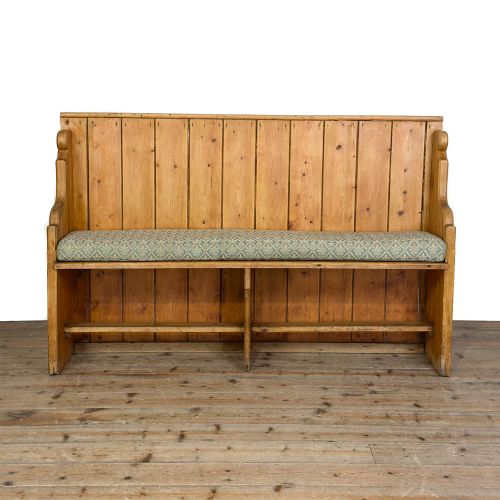
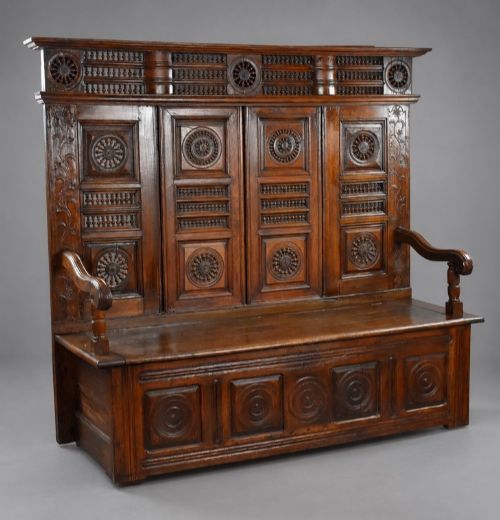
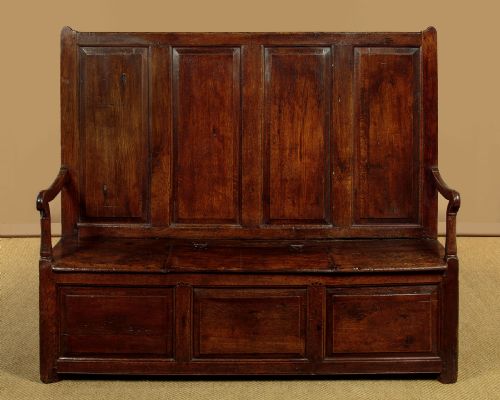
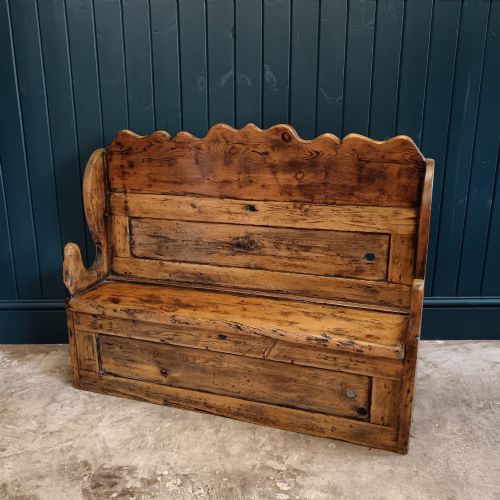
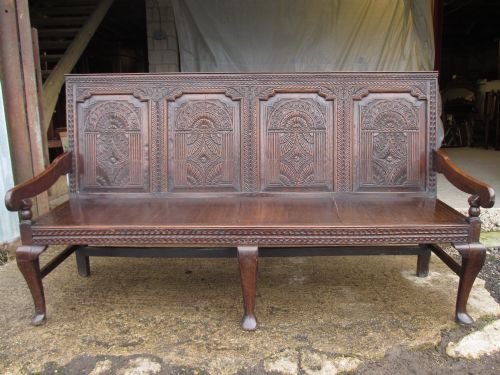
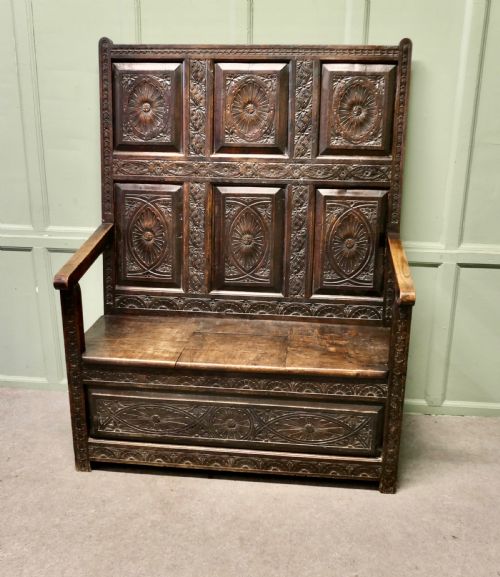
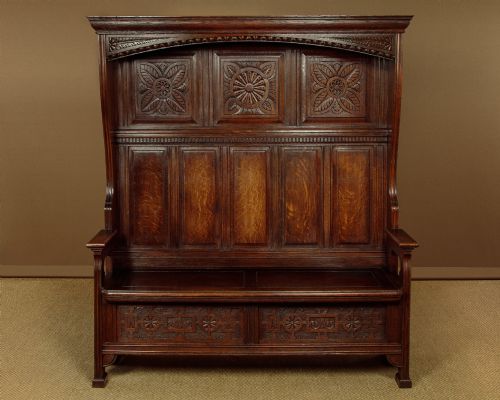
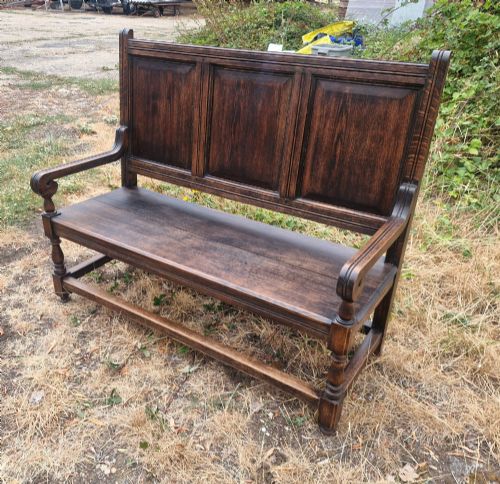
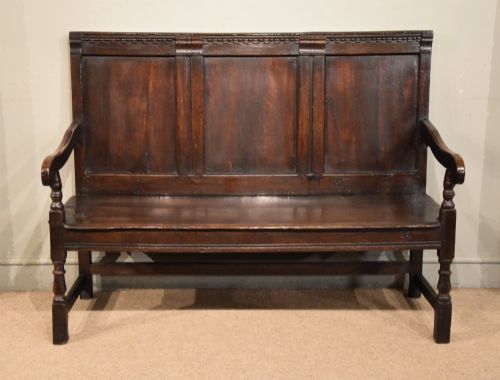
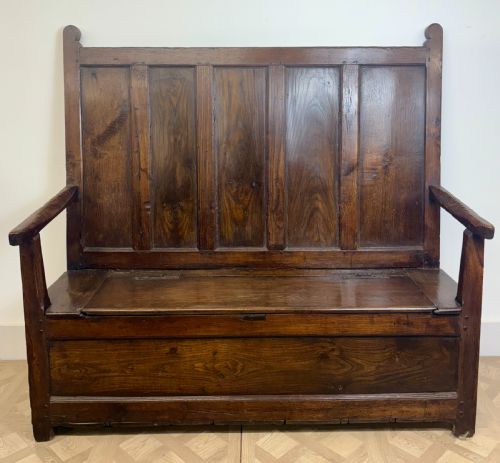
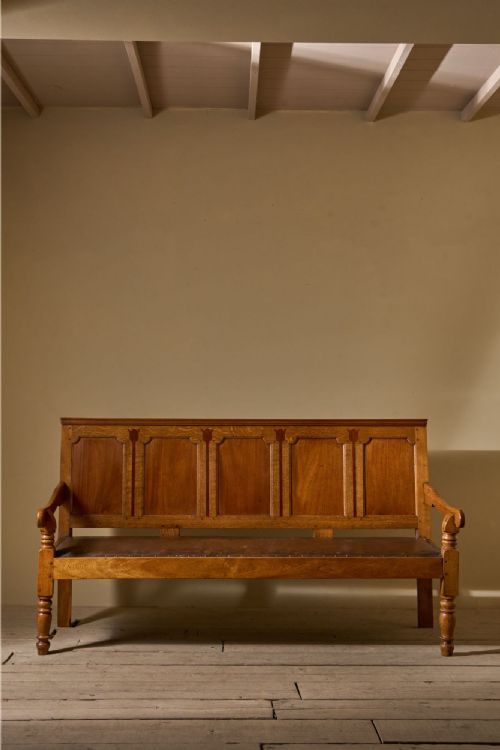
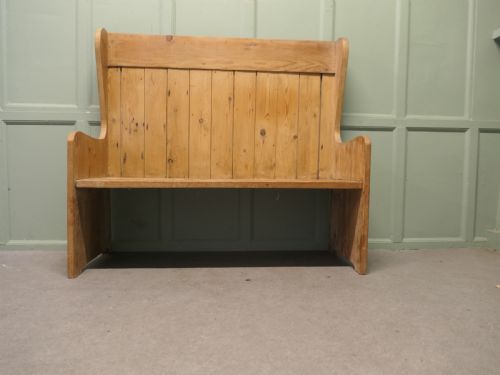
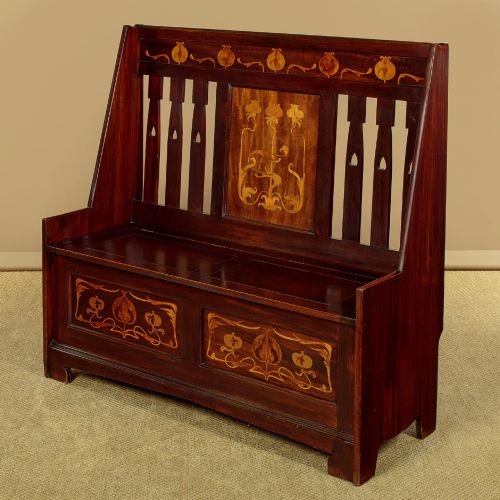
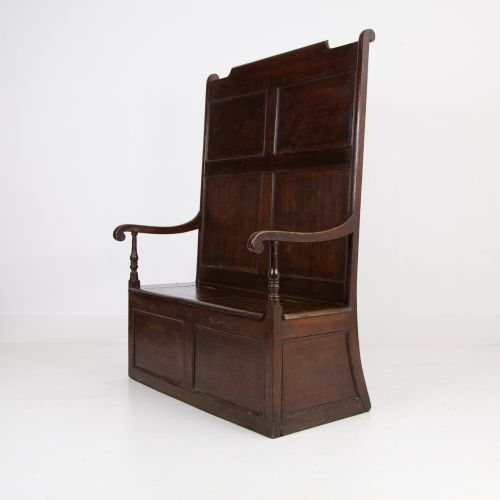
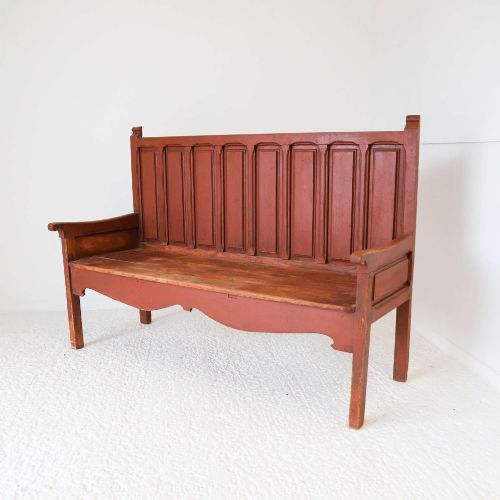
A high backed settle provides traditional seating built primarily from timber, appearing in various forms such as box settles with integrated storage, panel-backed seats, and barrel-backed designs. These pieces date across several periods, including the seventeenth, eighteenth, and nineteenth centuries, along with later Arts and Crafts interpretations.
The version most frequently met on this page is the oak box settle from the eighteenth century, often featuring carved panels and a hinged seat. Pine and elm examples also appear regularly, originating from English, Welsh, and continental European workshops.
Makers and regional styles shape these forms, yielding everything from rustic farmhouse benches to decorative hall seats and functional fireside seating.
Materials and construction
Carpenters built these benches using native hardwoods and softwoods, predominantly solid oak, pine, elm, and ash, sometimes complemented by walnut, iron hardware, and applied paint or wax finishes. Construction relied on pegged joints, solid panels, and boarded box compartments beneath the seats.
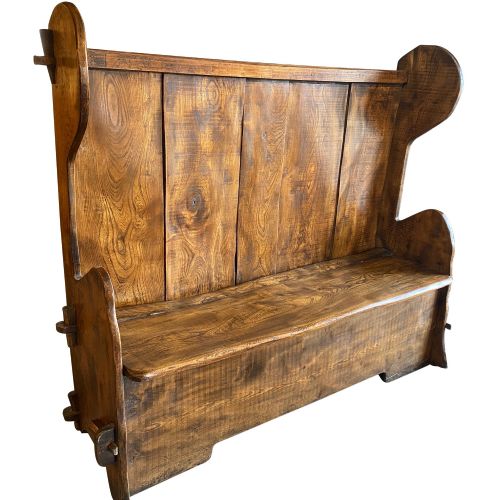
Design variations include high panelled backs, canopy tops, and winged sides intended to trap heat from hearth fires. Craftspeople shaped the wood using hand tools, producing pegged frames and pegged joints that held together heavy timber components.
Listings feature oak, pine, elm, and walnut woods across pieces dating from the seventeenth century through to the early twentieth century.
Evaluating the standard
Quality rests on the integrity of the timber, the depth and execution of period carving, and the retention of original structural elements such as boards, arms, and hinges. Pieces retaining an authentic surface patina or original paint finish stand apart from heavily restored or altered examples.
The sophistication of regional joinery and the balance of proportions dictate the standing of a piece within its period, distinguishing utilitarian farmhouse benches from refined cabinet-made examples.
James Shoolbred and Co·Liberty
The High Backed Settle Glossary
- Settle
- A wooden bench with a high back and solid arms, designed to seat multiple people. These pieces typically feature panelled timber construction and enclosed storage beneath the seat.
- Box settle
- A form of bench incorporating a lidded box beneath the seat for storing household goods. The enclosed base prevented draughts from reaching the floor.
- Barrel back
- A curved wooden back that wraps around the seated person in a semi-circle. This form offered maximum protection against cold air in draughty rooms.
- Bacon settle
- A specialised tall wooden piece equipped with rails or hooks inside the upper structure for curing and storing meat. Elm and oak served as the primary timbers for these rural items.
- Panelling
- Wooden boards fitted within a framework to form decorative backrests and sides. Joiners utilised tongue-and-groove or pegged joints to secure these panels.
High Backed Settle: Frequently Asked Questions
What is a high backed settle?
A high backed settle is a rigid wooden bench featuring a tall backrest designed to block cold air in large rooms. They served as primary seating before upholstered sofas became common.
Craftspeople built them primarily from oak, pine, and elm, incorporating solid seats and high panels.
How were settles used in homes?
Families placed settles near fireplaces to trap heat and shield occupants from draughts. The enclosed base often held firewood, blankets, or household stores.
They also functioned as hallway benches for greeting visitors and storing outdoor gear.
How do I tell oak settles apart by period?
Seventeenth-century examples display heavy framing, geometric mouldings, and dark patination. Eighteenth-century pieces often feature raised wooden panels, carved crest rails, and box storage bases.
Arts and Crafts versions from later eras exhibit simpler lines with exposed pegged joinery.
Where did regional settle styles originate?
Makers across England, Wales, France, and Spain produced distinct regional variations using local timber. Welsh and English country pieces favoured sturdy oak and elm.
Continental examples often incorporated painted finishes or walnut construction.