


Small Wooden Settle
A small wooden settle offers compact seating with traditional character, fitting narrow hallways and modest spaces.
Small Wooden Settle
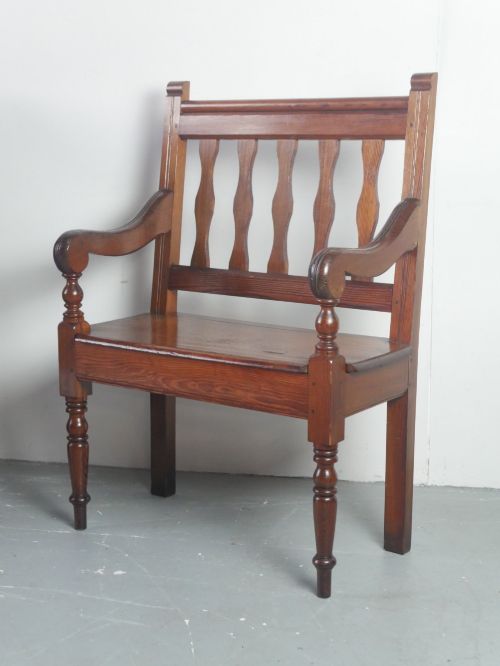
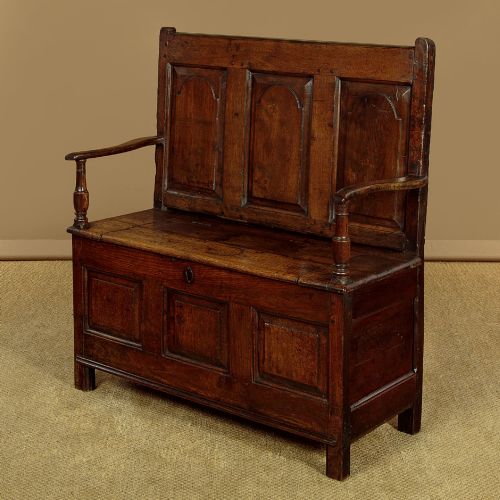
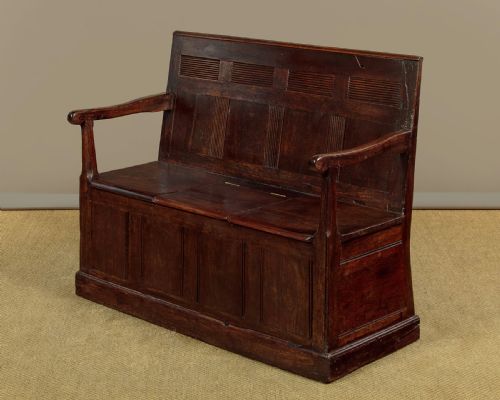
A small wooden settle provides compact seating designed for hallways, porches, and smaller rooms, functioning as a bench with high backs and solid sides to block draughts. These pieces range from simple country benches to refined provincial seating.
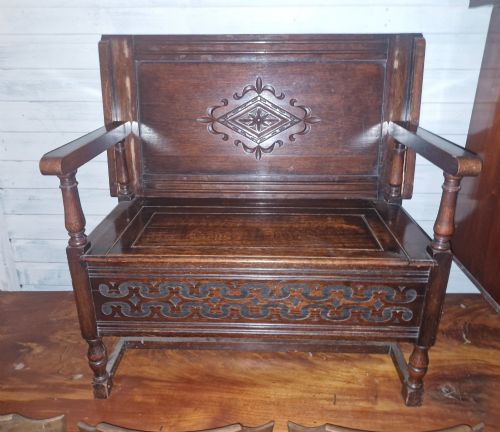
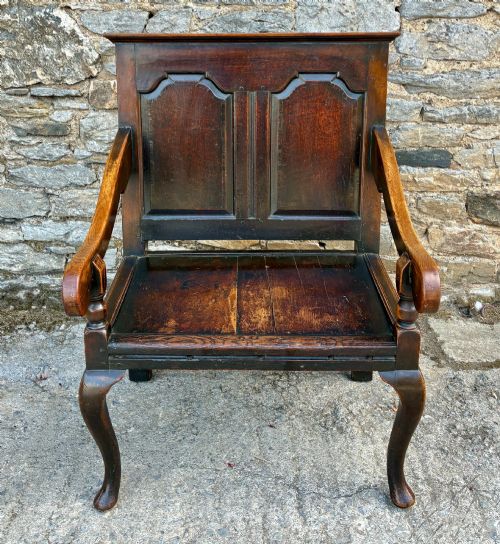
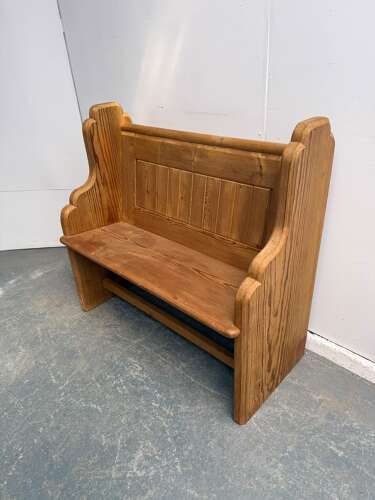
The versions most commonly met on this page span the eighteenth, nineteenth, and early twentieth centuries, drawing on Georgian, Victorian, and Arts and Crafts styles. They appear as two-seater oak benches, box settles with lift-up lids, and pine church pews.
Makers shaped these utilitarian seats for domestic and institutional use, employing local timbers and vernacular designs. Examples include Welsh box settles, Swedish children's beechwood benches, and neat oak hall seats with fold-over tops.
Materials and construction
Makers built these pieces primarily from sturdy native hardwoods and softwoods such as oak, pine, pitch pine, and beechwood. Timber selection depended on regional availability and the intended function of the seat, whether for a grand hall or a rural chapel.
Joinery techniques involved solid board construction, panelled backs, and traditional pegged joints designed to withstand heavy daily use. Surfaces received simple wax finishes, paint, or retained raw patination accumulated over generations of service.
Swedish children's benches bring miniature proportions to nineteenth-century seating, offering tiny seats built with the same sturdy care as full-sized furniture.
Distinctions in quality
Quality rests upon the integrity of the timber, the crispness of the original proportions, and the survival of untouched surfaces. Pieces retaining their early wax polish or period paint display a greater depth of character than those altered over time.
The skill of the joiner dictates the balance between structural robustness and refined domestic scale. Finer examples maintain harmonious proportions in restricted dimensions, combining practical storage solutions like lift-up seats with well-executed panel work.
The Small Wooden Settle Glossary
- Box settle
- A traditional seat featuring a hinged lid beneath the cushion or bench top, creating a concealed storage compartment for blankets and household goods. This dual-purpose form remained popular in domestic interiors for centuries.
- Hall seat
- A compact piece of furniture positioned near an entryway to provide temporary seating when removing outdoor footwear and garments. These items often incorporate narrow depths to suit restricted hallway spaces.
- Church pew
- A long wooden bench historically utilised in places of worship, adapted in domestic settings for communal seating. Pine examples often display a utilitarian construction and extensive surface wear.
- Pitch pine
- A durable softwood utilised for nineteenth-century seating, known for its distinct grain pattern and resinous content. This material provided robust performance in heavy-use environments.
Small Wooden Settle: Frequently Asked Questions
Where should I place a small wooden settle?
These compact seats suit narrow hallways, boot rooms, and small dining areas where floor space is limited. Their high backs provide a decorative boundary against walls while offering practical daily seating.
Positioning them away from direct heat sources helps preserve the stability of the timber and prevents the dry wood from splitting over time.
How do I clean antique wood surfaces?
Dust the surfaces regularly with a soft, dry cloth to prevent the accumulation of grit that can scratch old finishes. Avoid using modern silicone polishes, which leave a synthetic film and attract dust.
Applying a traditional beeswax occasionally helps nourish dry timber and maintains the natural lustre built up over centuries of handling.
What is a box settle used for?
The hinged seat top opens to reveal a concealed compartment originally intended for storing boots, linens, and household provisions. This clever design kept draughts away from the user while maximising storage in smaller rooms.
Today, the internal space remains useful for stowing away shoes, umbrellas, and everyday clutter out of sight.
How can I tell different periods apart?
Eighteenth-century examples often feature solid oak construction with hand-planed panels and pegged joinery. Victorian pieces frequently utilise pine or pitch pine, sometimes showing simpler construction or applied decorative mouldings.
Later Arts and Crafts items display simplified forms with painted finishes and honest structural details, reflecting the design reforms of the early twentieth century.