



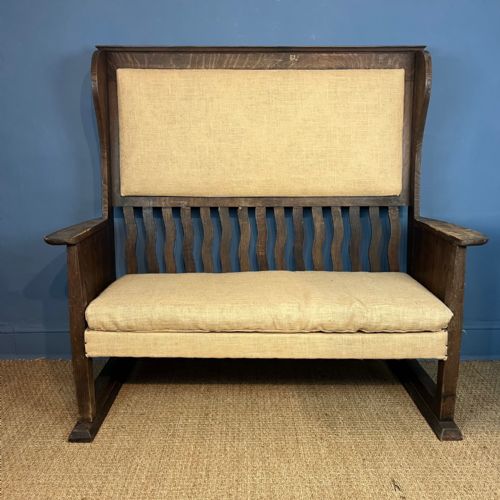


High Back Sofa
When you search for a high back sofa, you are looking at substantial seating designed to offer support and privacy, spanning periods from the seventeenth century to the twentieth.
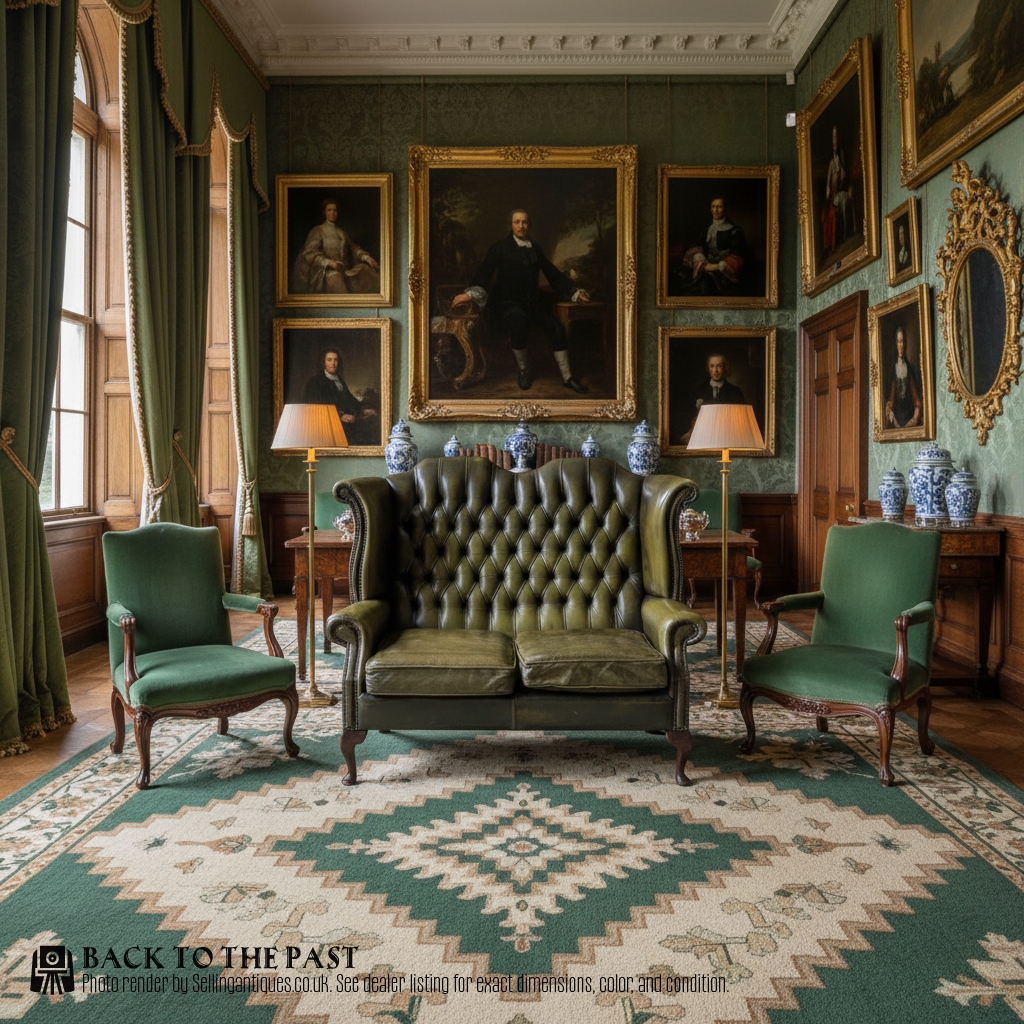
High Back Sofa
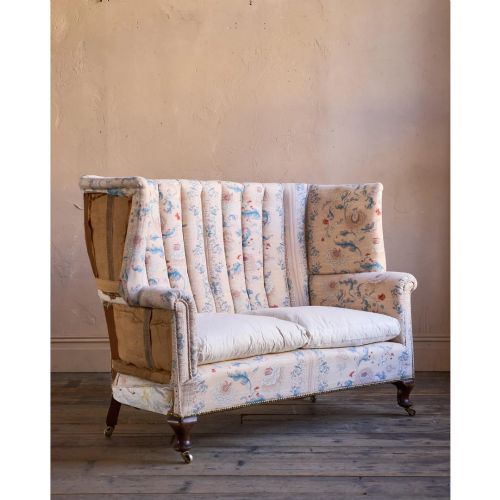
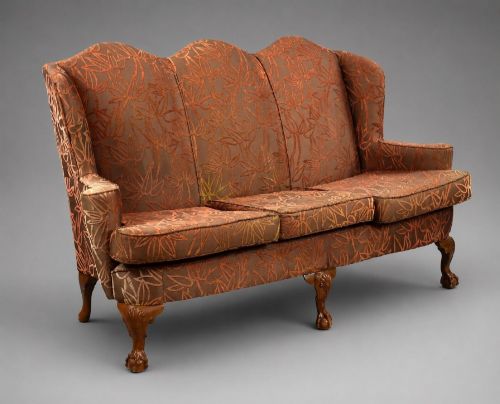
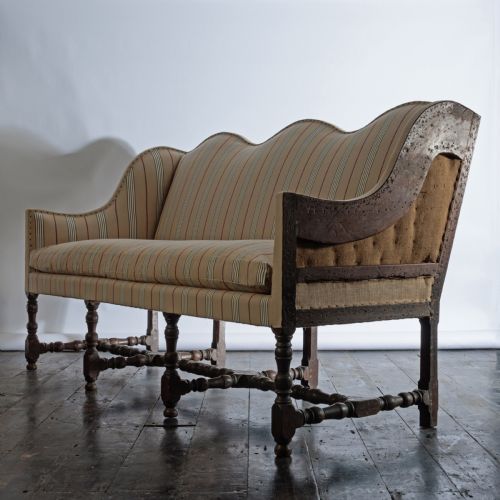
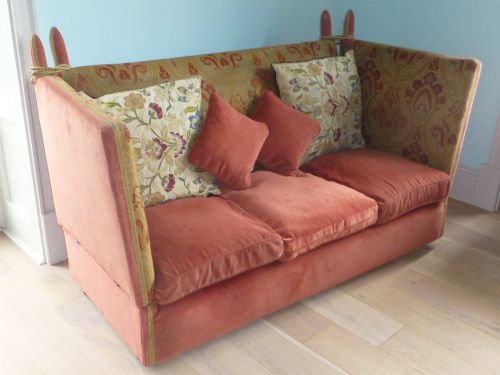
A high back sofa brings vertical presence and formal seating to a room, drawing on long traditions of British, French, and Dutch furniture design. The search phrase covers diverse forms, from seventeenth-century oak settlers and Baroque walnut settees to Victorian wingbacks, Knole sofas, and Edwardian two-seaters.
You are most likely to meet nineteenth-century and Edwardian examples on this page, often upholstered in leather, damask, velvet, or ticking fabric. These pieces frequently incorporate traditional elements such as scroll arms, carved frames, and turned wooden legs.
The selection ranges from large country house suites and corner configurations to petite two-seat settees and narrow benches. Each variation serves different spatial requirements while maintaining the characteristic elevated rear support.
How they were made
Makers constructed the structural frames of these high back sofas from hardwoods such as walnut, mahogany, oak, and other timbers, often shaping them with carved details, bobbin turnings, or giltwood finishes. Joinery methods relied on traditional pinned mortise and tenon joints or sturdy internal framing designed to bear the weight of upright upholstery.
Upholstery techniques combined internal stuffing with durable outer coverings including leather, damask, velvet, and woven textiles. Buttoning, hand-dyeing, and tacking secured the fabrics to the wooden armature, creating firm backrests and seat cushions intended for sustained use.
Several pieces include hidden box seats beneath the cushions, offering early domestic storage disguised as a bench.
What varies in quality
The distinction between ordinary and exceptional pieces rests upon the integrity of the timber frame and the depth of hand-carved detail. Superior examples display crisp joinery, richly figured walnut or mahogany, and substantial structural weight that resists movement.
Upholstery execution further separates the tiers of quality, visible in the precision of buttoning, the selection of textile grades such as silk damask or hand-dyed leather, and the preservation of original frame components through successive periods of use.
Howard and Sons
The High Back Sofa Glossary
- Wingback
- A chair or sofa featuring projecting panels on the upper sides designed to shield the occupant from drafts. These wings transition smoothly into the arms and tall back.
- Knole sofa
- A historic settee design characterised by high, adjustable or hinged arms tied with cords or braids. It derives its name from the Kent estate where the primary prototype remains.
- Settle
- An early wooden bench featuring a high solid back to block cold air, often incorporating a box seat beneath the cushion. These pieces predate fully upholstered sofas.
- Damask
- A reversible figured fabric woven on a jacquard loom, typically featuring floral or architectural patterns. It appears frequently as the primary upholstery on formal period seating.
High Back Sofa: Frequently Asked Questions
What periods do these sofas cover?
The listings span from the seventeenth century through the Victorian and Edwardian eras up to the 1930s. You will encounter styles ranging from early Baroque walnut settees to later country house seating.
Design characteristics shift across these centuries, moving from rigid carved oak frames to deeply upholstered leather and fabric suites.
How do I identify a Knole sofa?
A Knole sofa is defined by its characteristic high back and hinged or adjustable arms held in place by decorative braids and tassels. This historic form provides an enclosed seating area.
Many examples found today date from the Victorian and Edwardian periods, often upholstered in rich damask or velvet.
Were these sofas used in dining rooms?
High back settees and settles originated primarily for halls, parlours, and drawing rooms where tall backs helped block cold draughts from stone walls. They served as formal seating rather than everyday lounging furniture.
Over time, forms like the wingback and small sofa transitioned into more intimate living spaces.
What woods were used for the frames?
Makers relied on sturdy hardwoods including walnut, mahogany, oak, and various regional timbers. These woods provided the necessary strength to support tall backs and heavy upholstery.
Exposed wooden elements often show decorative turning, carving, or giltwood finishes depending on the period and style.