
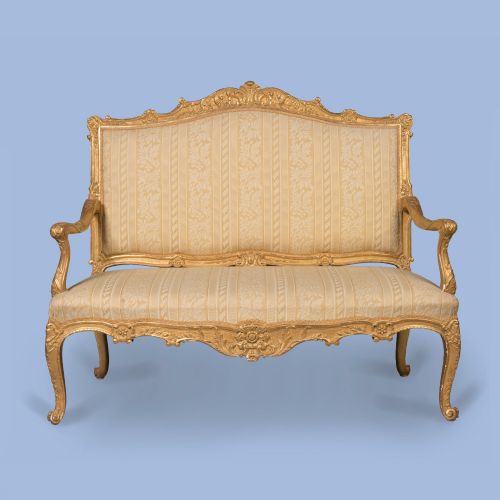
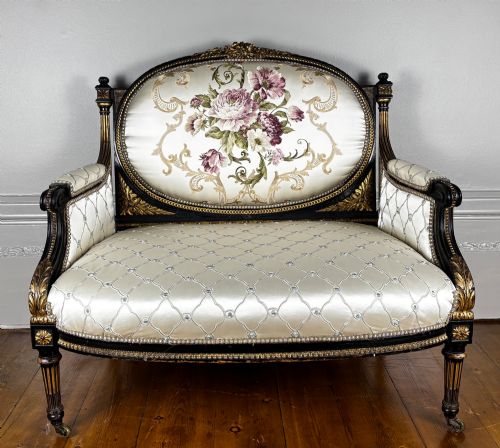


Carved Wood Canape
A carved wood canape offers deep seating framed in decorative timber, bringing continental elegance and generous proportions to a reception room.
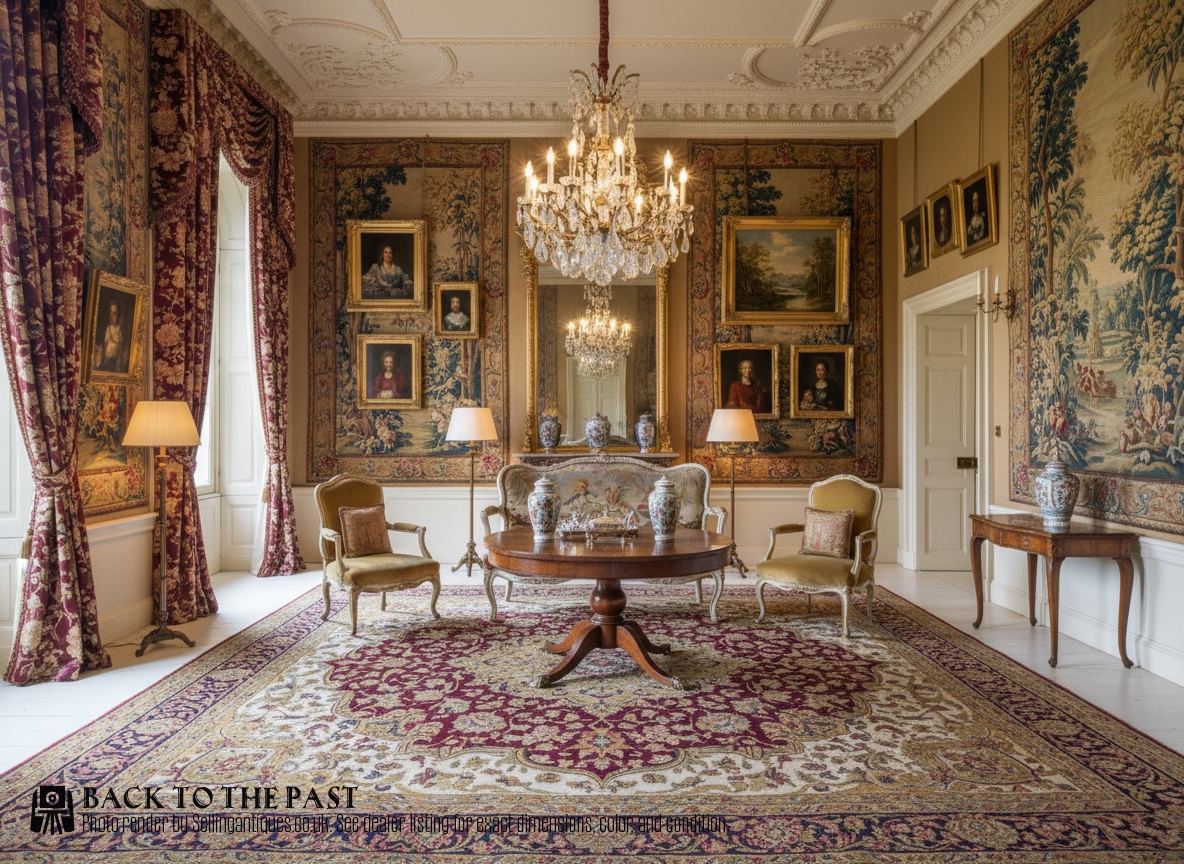
Carved Wood Canape
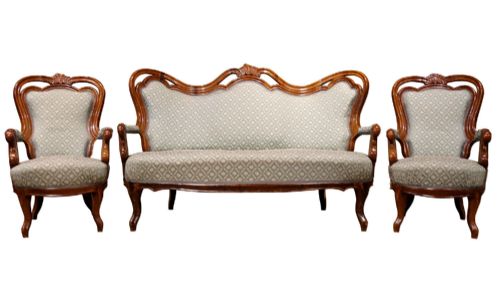
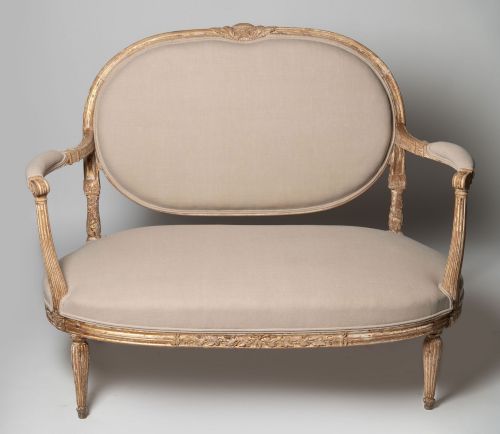
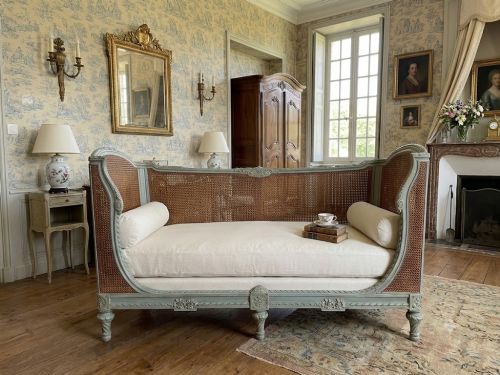
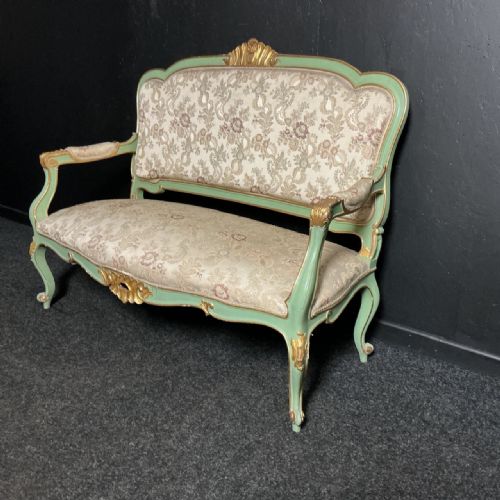
A carved wood canape is an upholstered settee or sofa built with an ornamental wooden frame, most frequently appearing in nineteenth-century French revival styles such as Louis XV and Louis XVI. These seating pieces span various forms, including corbeille sofas, daybeds, and salon suites originating from the eighteenth through the early twentieth centuries.

Distinctions in quality
Quality rests primarily in the crispness and depth of the timber carving, where hand-chiseled detail outshines shallow or mechanical shaping. The choice of primary material also dictates grade, with genuine fire-gilded giltwood and dense walnut framing commanding higher standing than simple painted finishes.
Proportion and structural integrity define the superior examples, showing balanced armrests, harmonious back rail curves, and tight joinery that resists movement under weight.
Some nineteenth-century makers squeezed grand palace proportions into compact townhouses, creating tiny settees designed strictly for end-of-bed lounging.
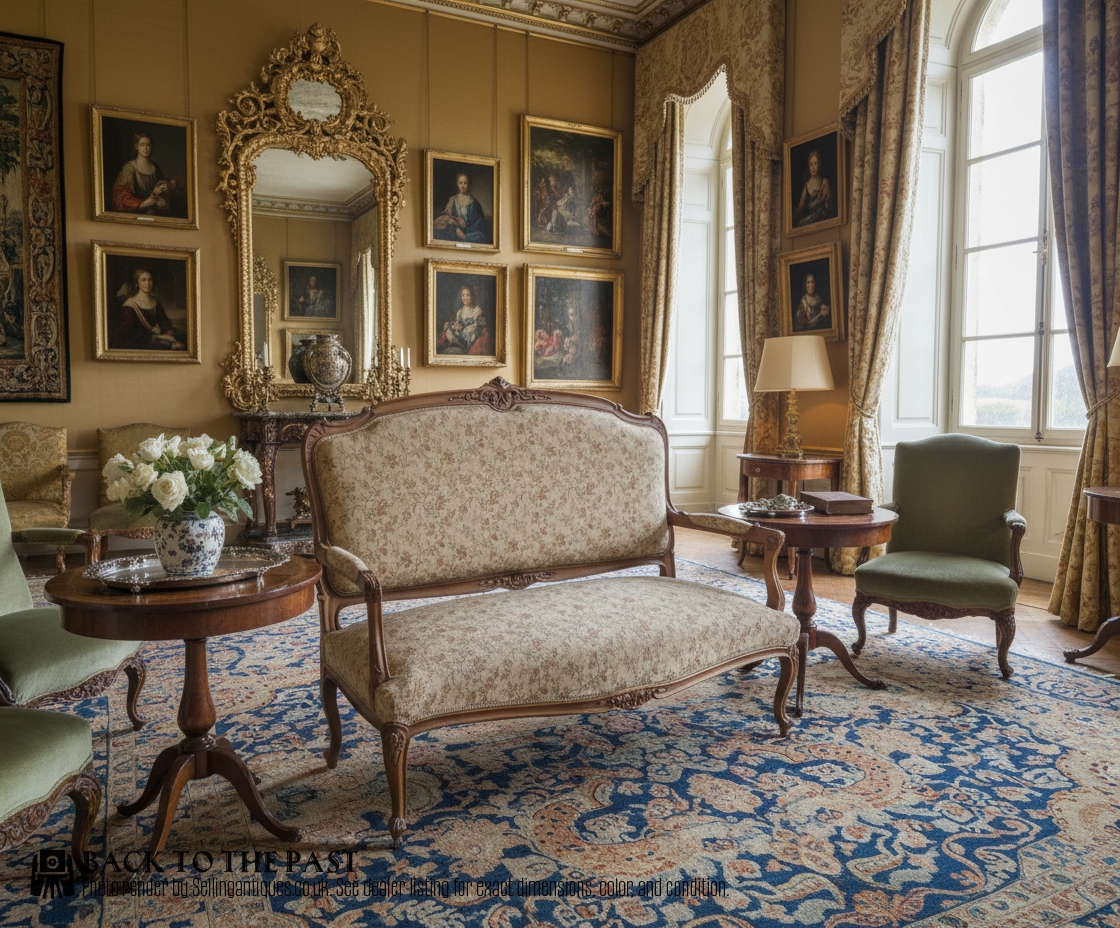
The Carved Wood Canape Glossary
- Canapé
- An upholstered French settee or sofa featuring an exposed wooden frame. This form provides formal seating for multiple occupants.
- Giltwood
- Timber coated with a thin layer of gold leaf over a prepared gesso ground. It creates a brilliant reflective surface on formal eighteenth and nineteenth-century frames.
- Corbeille
- A basket-shaped frame style where the back and arms curve continuously into a rounded enclosure. This design wraps the sitter for added comfort.
- Louis XVI Style
- A neoclassical design vocabulary characterised by straight tapering fluted legs, geometric symmetry, and rectilinear frames. It contrasts with the asymmetrical curves of earlier rococo work.
- Salon Suite
- A matched set comprising a central canapé accompanied by matching armchairs or smaller seating units. These groupings furnished formal nineteenth-century reception rooms.
Carved Wood Canape: Frequently Asked Questions
Where were carved wood canapes placed?
These settees served primarily in formal drawing rooms, parlours, and salons for entertaining guests or lounging in comfort. Their decorative backs allowed them to sit prominently against walls or within spacious interior layouts.
Today, they function similarly in large living spaces, bedrooms, or entrance halls as statement seating that anchors a room's decorative scheme.
How do I identify a Louis XV style canape?
A Louis XV style canape is distinguished by flowing asymmetrical curves, cabriole legs, and carved floral or leaf motifs along the crest rail and apron. The framework avoids straight lines in favour of organic serpentine shapes.
Makers working in the nineteenth-century revival periods copied these eighteenth-century French forms closely, incorporating similar cartouche-shaped backs and scroll armrests.
What is the difference between a settee and a canape?
While both terms describe multi-seat upholstered furniture with a backrest and arms, canape specifically denotes a formal French-style settee with an exposed decorative wooden frame. Standard settees may encompass simpler English or vernacular forms with less elaborate woodwork.
In marketplace listings, the two terms often overlap, though a canape typically highlights continental carving traditions and exposed wood rails.
Can I use an antique canape daily?
Antique canapes are built with solid timber frames and durable joinery that withstand regular domestic use when properly maintained. Consideration should be given to the age of internal webbing and stuffing, which may require professional reinforcement.
Placing the piece away from direct sunlight and excessive heat protects both the delicate wood finishes and the historic textile upholstery.