

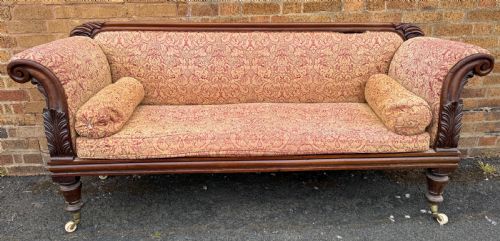


Antique Damask Couch
An antique damask couch brings tactile weight and period presence to a room, offering deep cushioned comfort wrapped in patterned silk or wool.
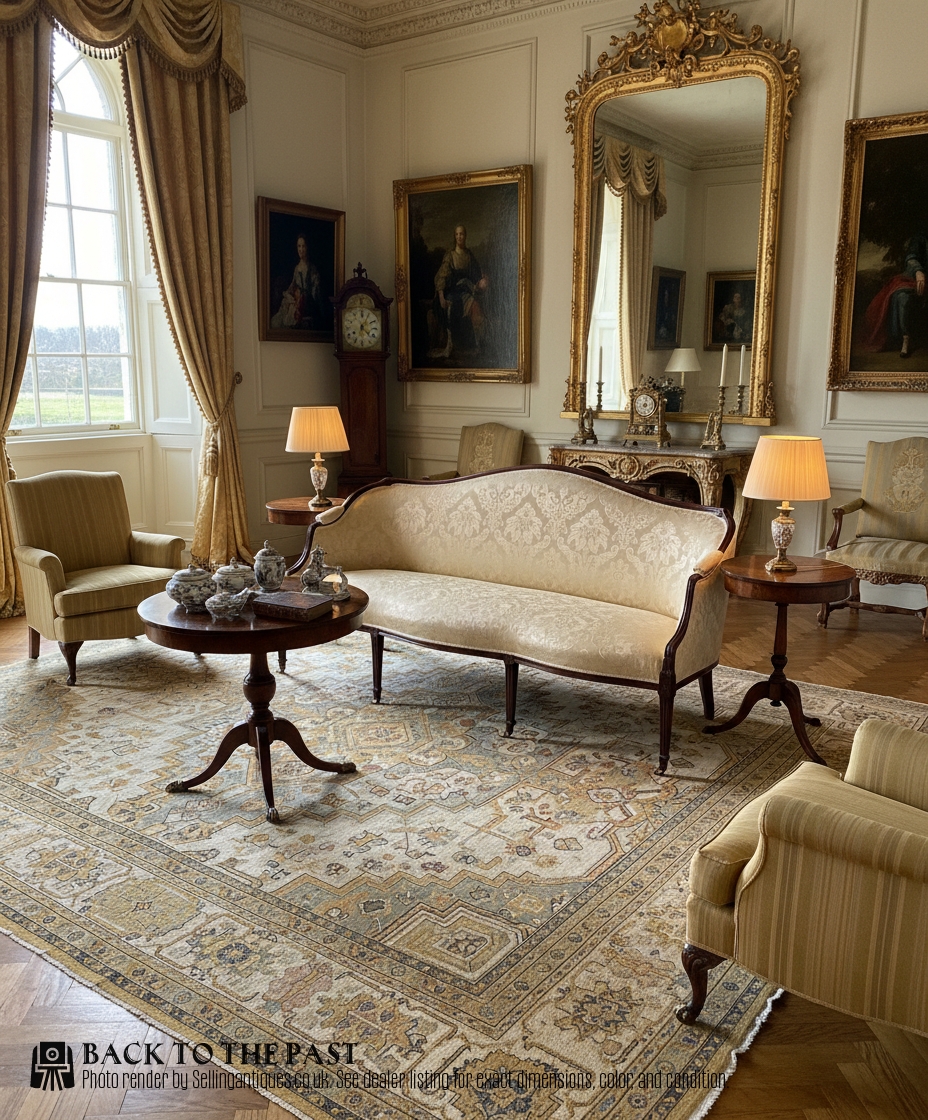
Antique Damask Couch
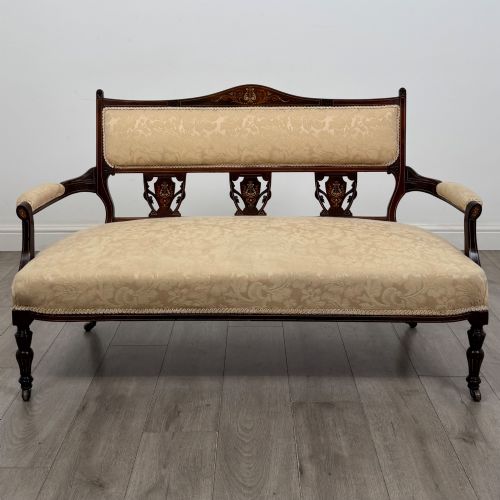
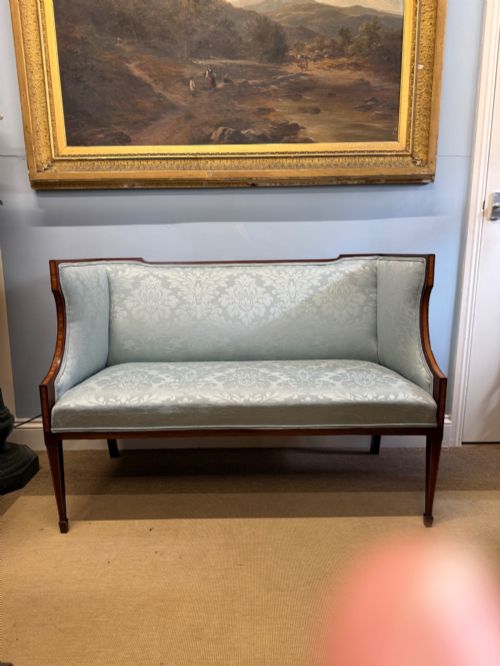
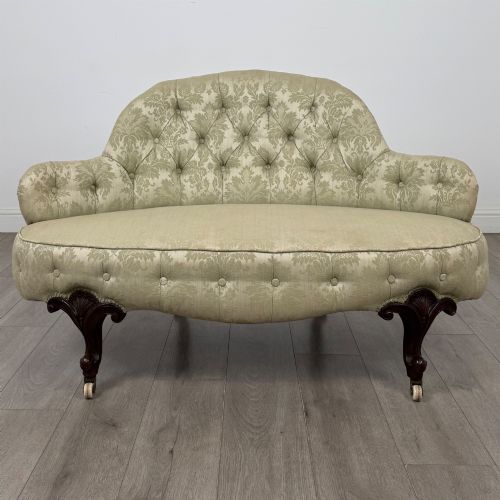
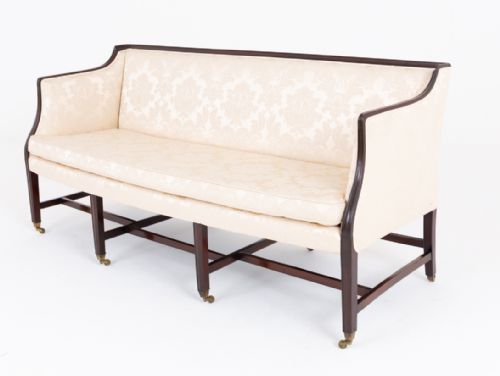
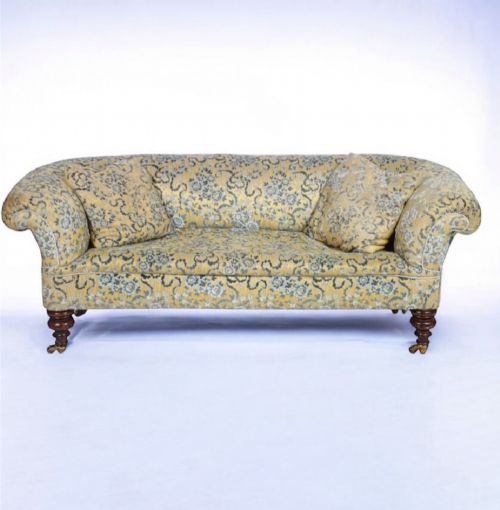
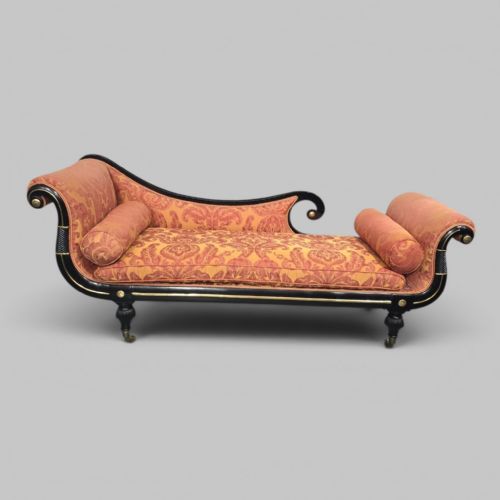
When you search for an antique damask couch, you encounter a variety of nineteenth-century and early twentieth-century seating forms, from scroll-end settees to chaise longues and Chesterfield sofas. The Victorian and Edwardian periods provide the majority of these pieces, alongside Regency and William IV examples that display architectural frames and scrolling woodwork.
The evidence shows that these frames take the form of double-ended settees, camel-back sofas, and day beds upholstered in damask or damask fabric. English country house pieces and French revival styles also appear, bringing varied silhouettes from serpentine fronts to show-frame drawing room seats.
Woods and upholstery techniques
Makers built the structural frames of these couches using dense timbers such as mahogany and walnut, occasionally incorporating satinwood inlay, brass fittings, or ormolu mounts. These hardwoods provided the rigid skeletal support necessary to withstand the tension of traditional upholstery springs and heavy stuffing.
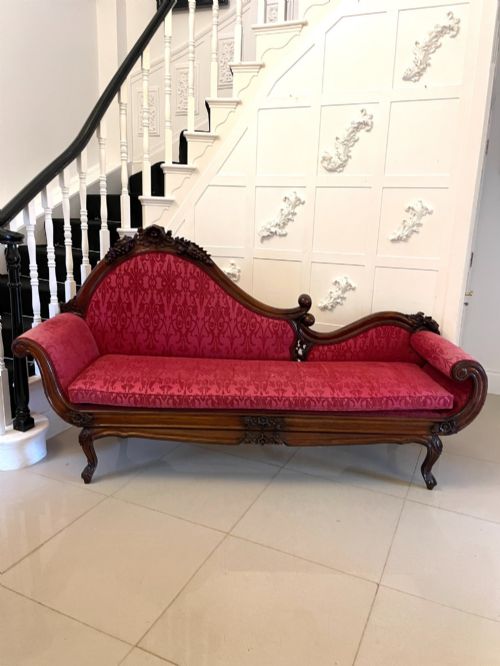
Textiles like damask were stretched across sprung or stuffed foundations, secured with careful tacking to highlight the woven patterns of the fabric. Carved details on the wooden show-frames, from scroll ends to cabriole legs, reveal the hand-chiselled work of period cabinet-makers.
Listings feature seating from the Georgian, Regency, Victorian, and Edwardian periods, constructed in mahogany, walnut, and brass.
Distinctions in construction and material
Quality rests in the crispness of the timber carving and the architectural proportion of the frame, where substantial mahogany or walnut supports carry domestic weight without bulk. Finer pieces demonstrate precise joinery in the show-frame and sophisticated turning or inlay work on the legs.
The integrity of the underlying frame construction and the fidelity of the period upholstery style dictate the standing of a piece. Original woodwork combined with sympathetic textile choices distinguishes superior examples from heavily altered or later utility furniture.
Miles & Edwards
The Antique Damask Couch Glossary
- Damask
- A reversible figured fabric with patterns formed by contrasting warps and wefts, traditionally woven in silk, wool, or linen. It catches the light differently depending on the angle of the weave.
- Chaise Longue
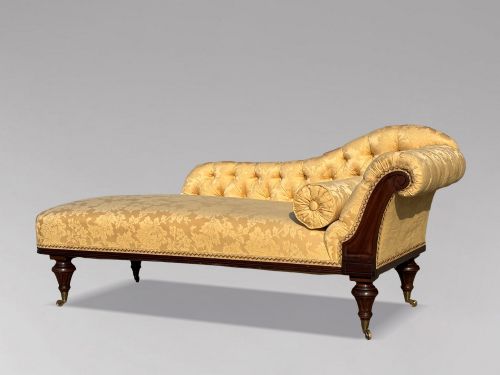
- An upholstered long chair or day bed designed for reclining, featuring one raised end or backrest. Nineteenth-century examples often display ornate carved mahogany or walnut frames.
- Chesterfield Sofa
- A deep-buttoned upholstered couch with arms and back of the same height. It remains a staple of Victorian drawing rooms and country house interiors.
- Show-Frame
- A wooden structural frame left partially exposed around the upholstered elements of a couch. It displays the carved mahogany, walnut, or satinwood craftsmanship.
- Double Ended Settee
- A sofa featuring two matching raised scroll ends or backrests allowing a person to recline at either side. They are frequently found in William IV and Victorian inventories.
Antique Damask Couch: Frequently Asked Questions
What is an antique damask couch?
An antique damask couch is a nineteenth or early twentieth-century upholstered seat covered in patterned damask fabric. These pieces include Victorian settees, Regency day beds, and Edwardian sofas.
They serve as both functional seating and decorative centrepieces, reflecting the prevailing furniture styles of their respective decades.
How do I identify a Victorian sofa?
Victorian sofas often feature dark hardwoods like mahogany or walnut, substantial sprung upholstery, and ornate carved details. Styles range from button-backed Chesterfields to serpentine-fronted drawing room settees.
Look at the turning of the legs and the heft of the timber frame to gauge the period characteristics.
Where were these couches used?
Original owners placed these couches in formal drawing rooms, libraries, and country house parlours. Chaise longues and day beds were often kept in private chambers for resting.
Today, they function well in living rooms or studies as statement seating.