

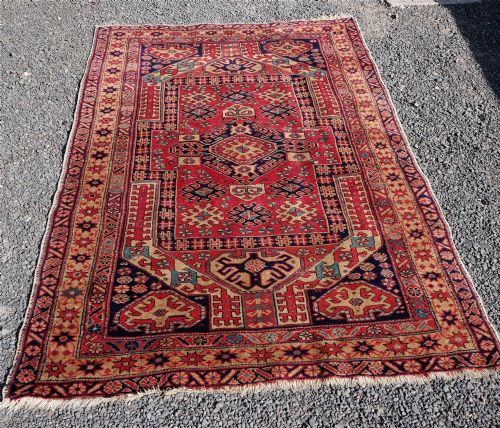
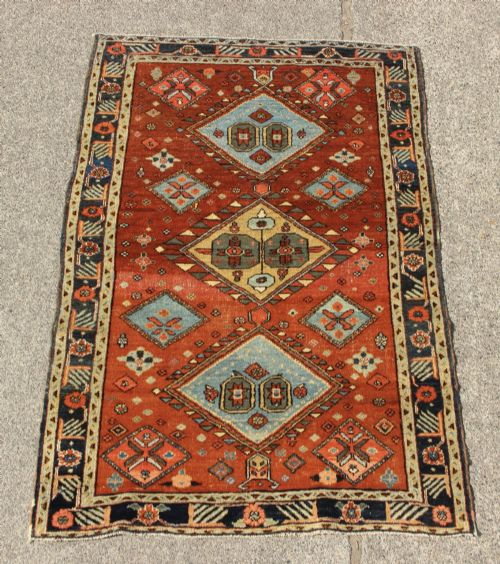
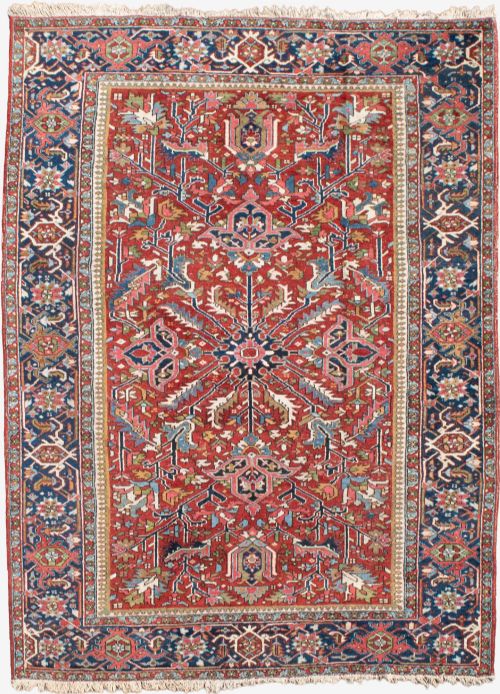
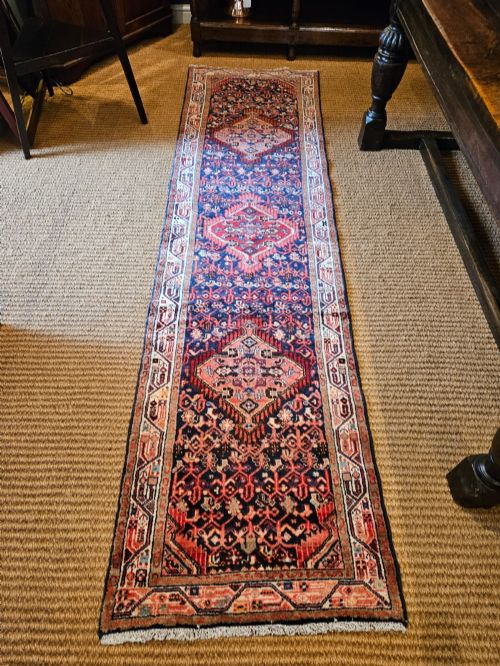

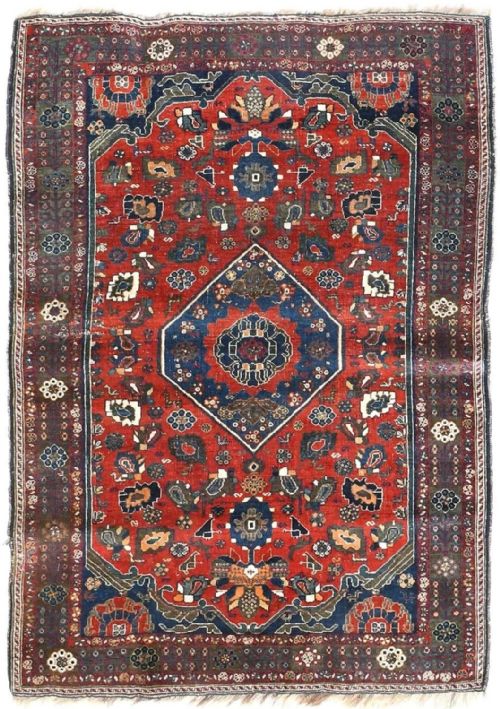

Heriz Geometric Medallion Carpet
A heriz geometric medallion carpet brings robust North-West Persian knotting and architectural symmetry to a floor, grounding a room with centuries of village weaving tradition.
Heriz Geometric Medallion Carpet
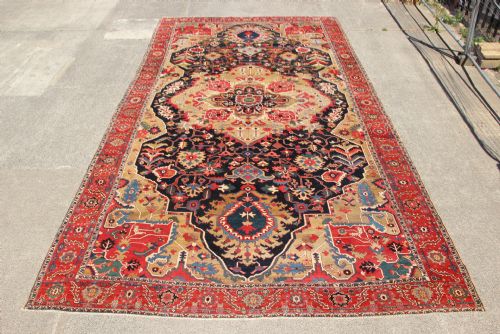
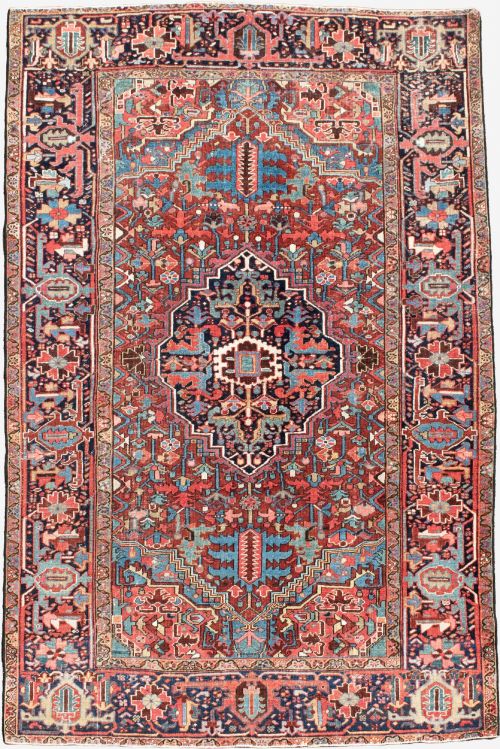
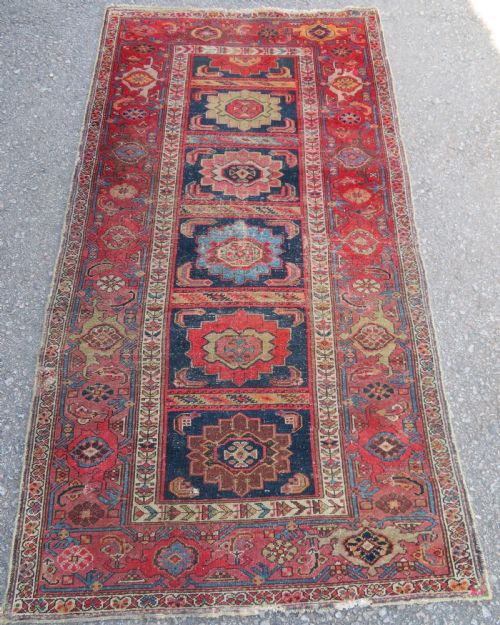
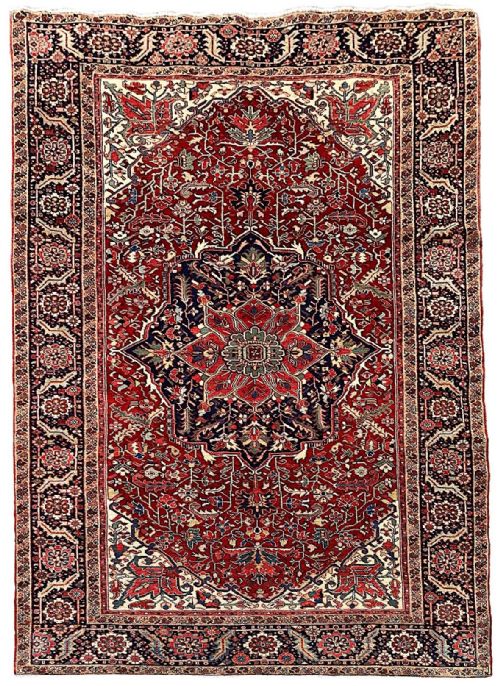
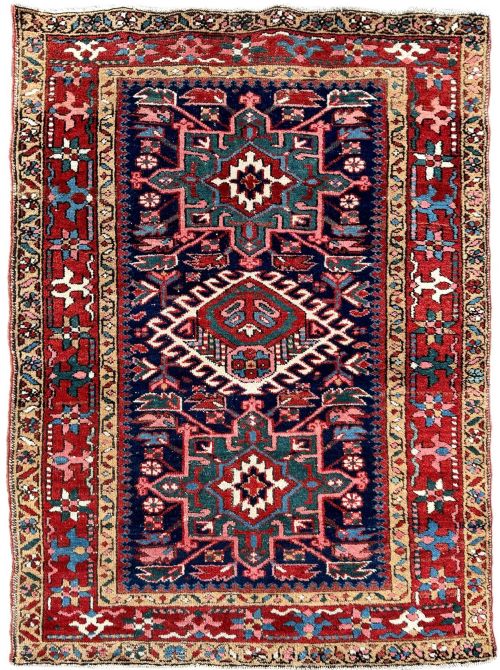
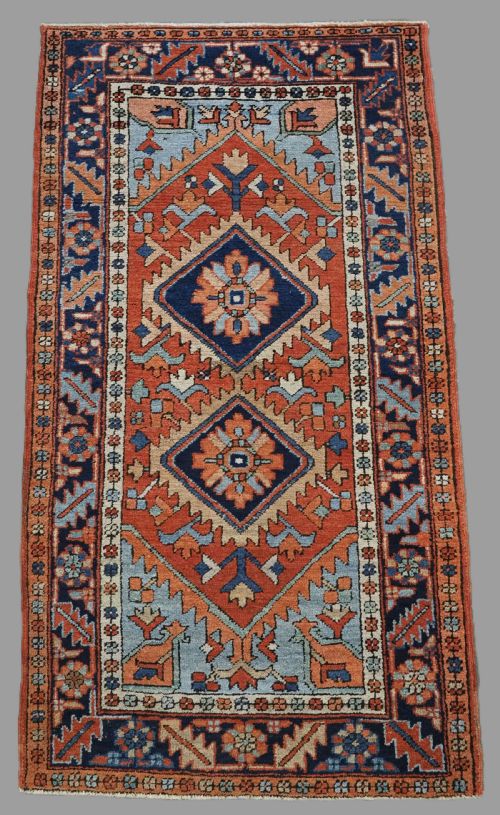
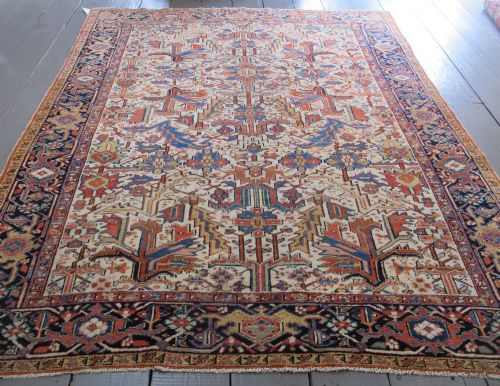
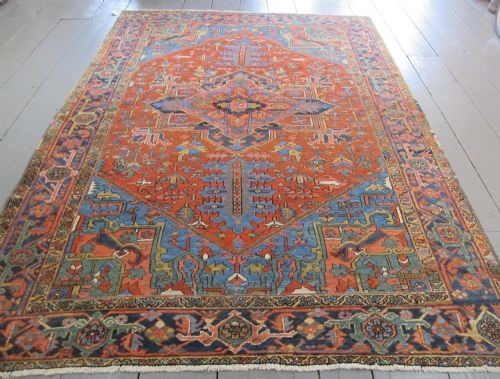
A heriz geometric medallion carpet is a heavy wool floor covering originating from the villages and towns of North-West Persia. These pieces are defined by their bold central motifs and durable construction, designed to withstand generations of daily foot traffic.
The versions most commonly met on this page date from the late nineteenth century through to the early twentieth century. They range from small mats and narrow runners to large room-sized carpets carrying distinctive angular designs.
How they were made
Weavers constructed these carpets using resilient wool pile tied onto sturdy cotton warps, often employing hand-spun wool for the surface yarns. This combination provides the heavy handle and substantial weight characteristic of the region.
The structural foundation relies on geometric plotting rather than flowing curves, executed with a robust knot count that supports the architectural layouts seen across the surviving pieces.
Listings span production dates from eighteen-fifty through to nineteen-thirty, predominantly utilising wool pile on cotton warp foundations.
What varies in quality
The distinction between standard examples and the finest works rests upon the crispness of the drawing and the clarity of the palette. Superior pieces display a harmonious balance in the central medallion and well-defined corner spandrels.
Material selection also dictates overall grade, with variations in the quality of the wool and the precision of the knotting altering the crispness of the geometric lines.
The Heriz Geometric Medallion Carpet Glossary
- Medallion
- The prominent central ornament set into the field of the carpet. It anchors the entire geometric composition.
- Warp
- The vertical threads stretched lengthwise on the loom that carry the foundation of the rug. Cotton warp provides dimensional stability.
- Spandrel
- The triangular corner areas situated between the central field and the outer borders. They frequently echo the motifs found within the central medallion.
- Pile
- The upright wool surface formed by the cut ends of the knots. This forms the tactile wear layer of the carpet.
Heriz Geometric Medallion Carpet: Frequently Asked Questions
How do I place a large carpet?
Position the piece centrally in a reception room or study, allowing the furniture to rest either fully upon it or just off the outer borders to display the field.
Ensure the heavy wool pile is protected from direct, prolonged sunlight to preserve the depth of the natural dyes over time.
What is a Serapi?
A Serapi is a sub-type associated with the Heriz region, typically dated to the nineteenth century and noted for a more open field design.
These older village pieces often carry a distinctive palette and a slightly coarser, highly artful geometric rhythm.
How do I clean an antique wool rug?
Surface dust should be removed regularly through gentle suction vacuuming without using a rotating beater brush along the pile direction.
Professional specialist washing is required for deeper cleaning to protect the cotton foundations and the hand-spun wool fibres.
How do I identify a Karadja?
Karadja rugs originate from a nearby weaving centre in North-West Persia and often feature smaller formats or repeating medallion formats.
They share technical similarities with Heriz carpets but frequently display more compact village motifs suited to smaller floor spaces.