


Hepplewhite Style Desk
A hepplewhite style desk or desk chair brings refined mahogany proportions and shield-back elegance to a room.
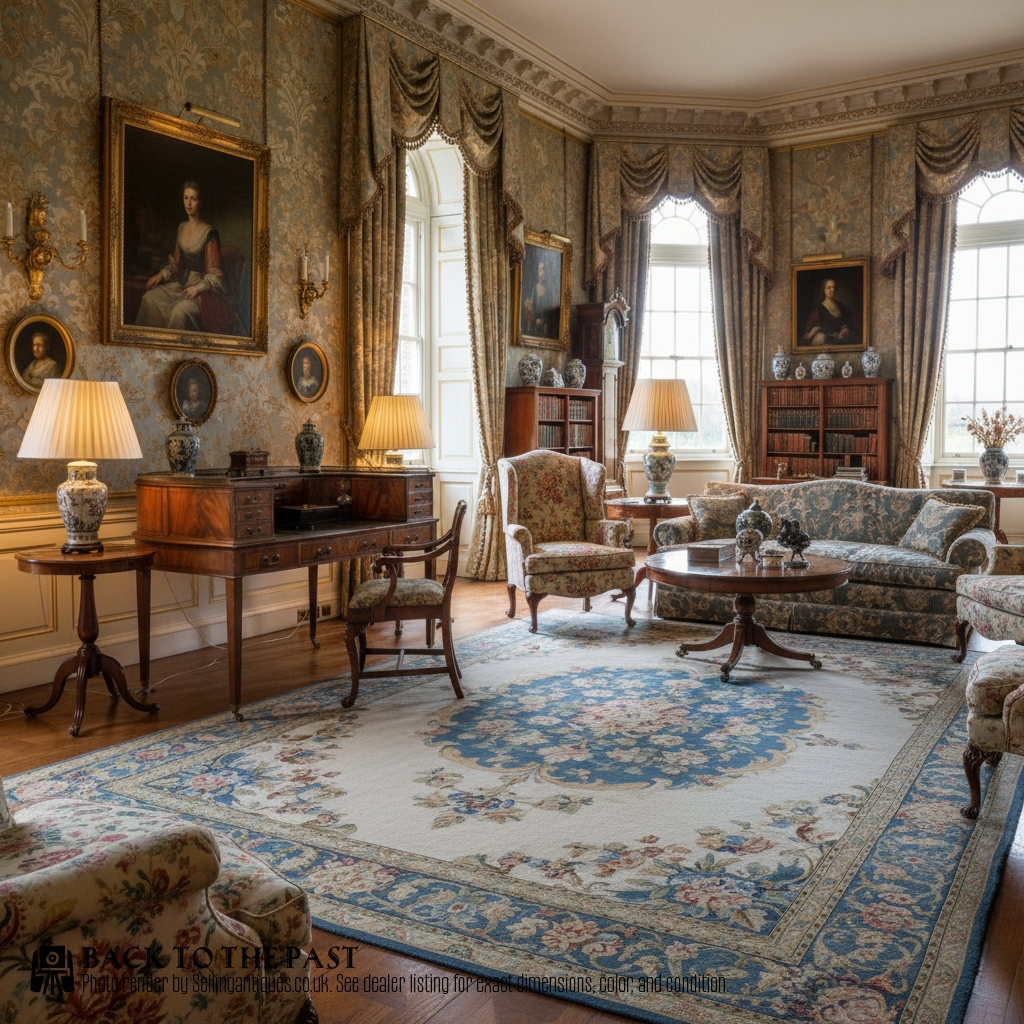
Hepplewhite Style Desk
When you search for a hepplewhite style desk, you encounter writing tables, card tables, and companion desk chairs dating from the eighteenth century through the Victorian era and the revivals of nineteen hundred. The selection spans authentic Georgian pieces alongside later nineteenth-century interpretations built to echo the same classic forms.
Armchairs, carvers, and side chairs frequently accompany these desks in the listings, alongside writing tables and Pembroke tables. Buyers most often meet mahogany frames, sometimes inlaid with satinwood and boxwood, reflecting the enduring influence of George Hepplewhite's cabinet-making designs.
How they were made
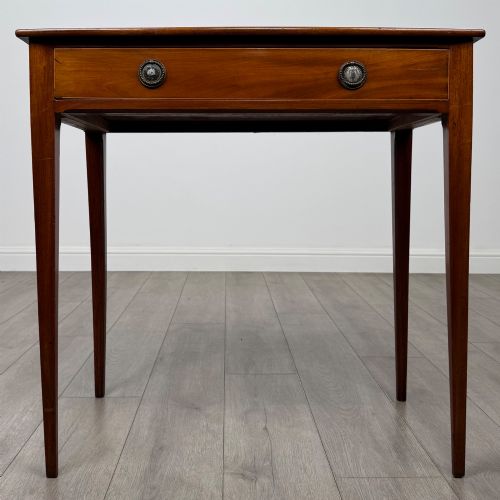
Makers relied primarily on solid mahogany, shaping the wood into distinct shield backs for chairs and sturdy legs for writing tables and card tables. Cabinet-makers incorporated boxwood and satinwood for delicate inlay work, adding subtle contrast to the dark timber grains.
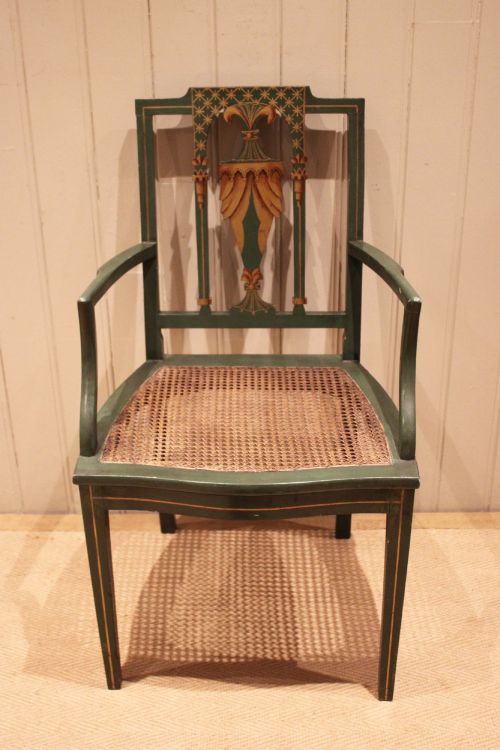
Upholstery fabrics, velvet, and leather featured heavily on seats and desk inserts, secured with traditional brass detailing. Structural integrity relied upon careful joinery, carved arm supports, and sturdy cane seating in specific lighter chair variations.
Object types include armchairs, side chairs, writing tables, card tables, Pembroke tables, and specialised desk chairs.
What varies in quality
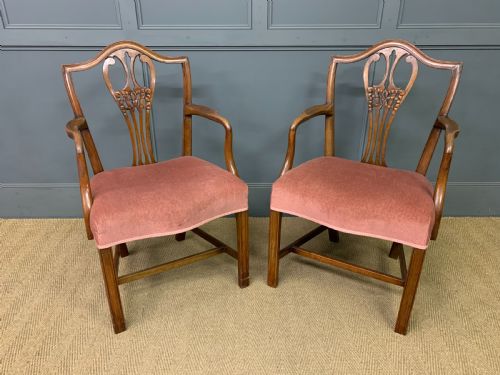
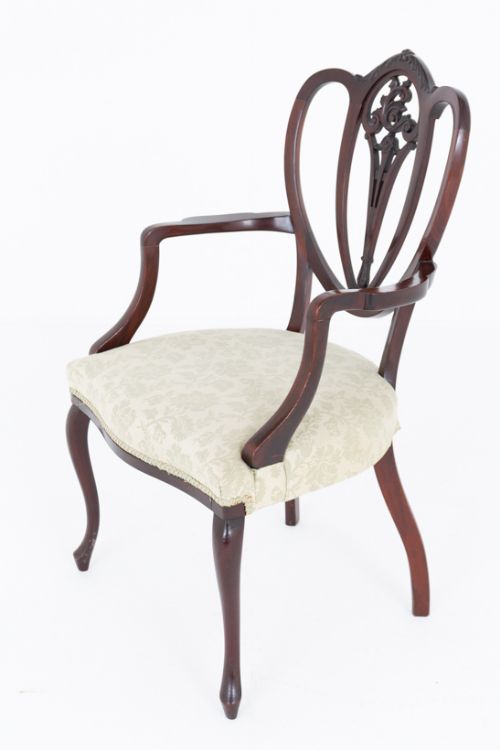
The standard of carving on the shield backs and arm supports determines much of the visual distinction between examples. Crisp, deeply defined details and well-proportioned legs separate superior pieces from simpler later reproductions.
The choice of timber figure and the precision of satinwood or boxwood inlay dictate the refinement of the surface. Original leather inserts, intact brass fittings, and cohesive upholstery contribute to the overall integrity of a desk or chair.
The Hepplewhite Style Desk Glossary
- Shield back
- A chair back shaped like a classic heraldic shield, which serves as a defining characteristic of Hepplewhite seating designs.
- Carver
- A term for an armchair, often used at the head of a dining table or paired with a writing desk.
- Pembroke table
- A small, drop-leaf table with hinged flaps on either side, useful as a compact writing surface or occasional table.
- Satinwood
- A durable, yellowish timber prized for its smooth grain and used extensively for contrasting inlay work on mahogany furniture.
- Card table
- A foldable table designed for playing games, featuring a hinged top that opens to reveal a baize or wood surface.
Hepplewhite Style Desk: Frequently Asked Questions
What is a hepplewhite style desk?
A hepplewhite style desk encompasses writing tables and associated desk chairs inspired by the eighteenth-century design lexicon of George Hepplewhite. These pieces incorporate classical proportions, mahogany construction, and refined decorative details.
They appear in genuine Georgian iterations as well as later nineteenth-century revival pieces, offering functional workspace paired with distinct period aesthetics.
How do I identify a hepplewhite chair?
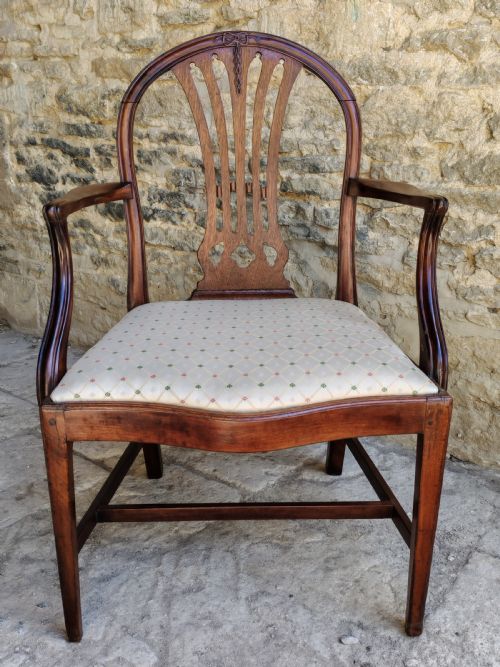
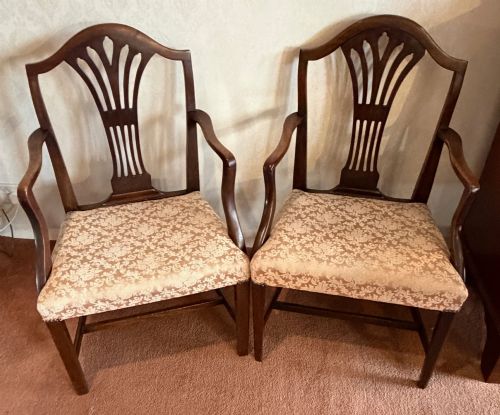
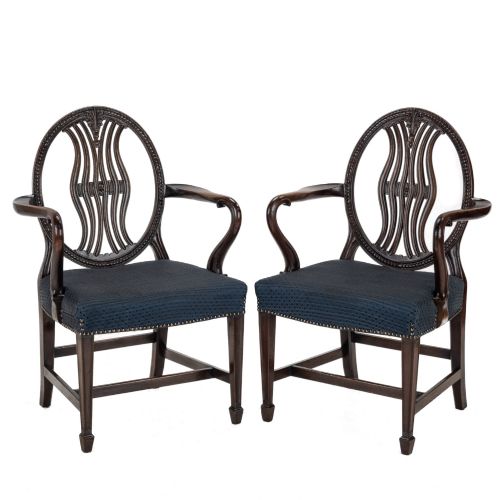
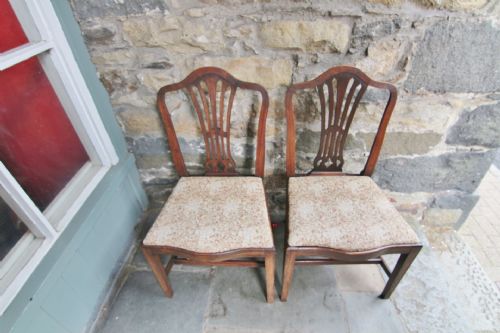
Hepplewhite chairs are most easily recognised by their distinctive shield-shaped backs, frequently decorated with carved splats, wheat ears, or subtle drapery motifs. They stand on tapered straight legs or delicate spade feet rather than heavier cabriole supports.
Many examples also feature open arms curving outward from the seat rail, complementing the graceful geometry of the upper back.
What woods were used?
Mahogany forms the primary structural timber across the vast majority of these desks, tables, and chairs, valued for its strength and rich dark colour. Cabinet-makers also utilised contrasting woods such as satinwood and boxwood for decorative stringing and inlay.
Lesser quantities of birch and elm appear in specific regional chair variations, while secondary timbers were used for interior drawer linings.
How do I care for mahogany?
Mahogany furniture requires protection from direct sunlight and excessive heat sources to prevent the timber from drying out or fading. Regular dusting with a soft, dry cloth preserves the polished surface.
A light application of traditional beeswax feeds the wood and maintains its natural lustre without building up sticky residue over time.