



Hepplewhite Pembroke Table
A Hepplewhite pembroke table brings ingenious folding-leaf utility and refined Georgian elegance to any room.
What a Hepplewhite pembroke table is
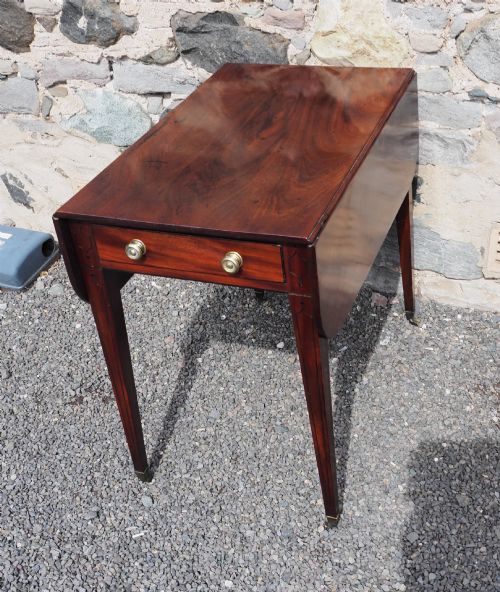
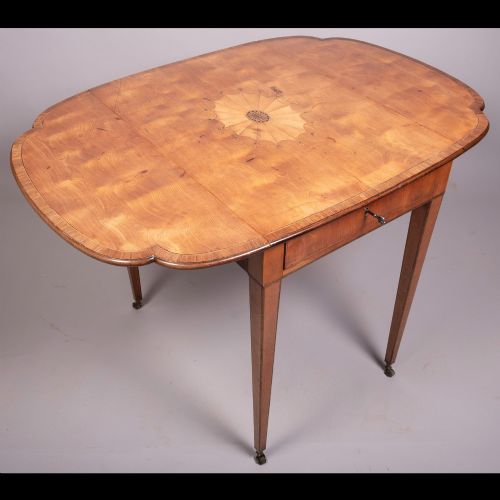
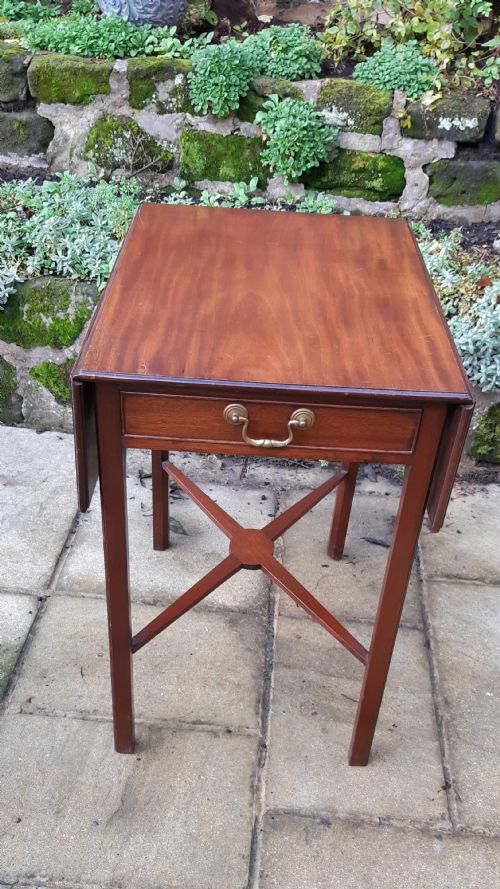
A hepplewhite pembroke table is a versatile drop-leaf design originating in the Georgian era, most frequently encountered in rich mahogany with delicate proportions. These pieces combine slender tapering legs with hinged flaps that expand the surface area when extra space is required.
The examples recorded here span the eighteenth and nineteenth centuries, including items from around eighteen hundred and the wider Georgian period. Oval and rectangular formats predominate, often finished with subtle boxwood inlay or marquetry details.
How they were made
Cabinet makers utilised select timbers such as mahogany, satinwood and rosewood, frequently incorporating boxwood inlay for contrasting linear detail. Brass hardware secures the hinges and internal drawer mechanisms where fitted.
Construction relies on precise joinery to support the drop leaves, ensuring the hinged flaps remain stable when raised. Marquetry and surface veneers add ornamental distinction to the structural frame.
Retail Price Guide 2026
Typical UK retail prices for hepplewhite pembroke table, calculated from the Sellingantiques database of over a million retail prices indexed since 2003. This retail price guide relies exclusively on Sellingantiques data; no external sources or auction records are used, so the figures do not describe the wider market.
What varies in quality
Quality rests in the subtlety of the timber selection, from plain mahogany up to figured fiddleback surfaces and smooth satinwood. The refinement of the inlay work and the delicacy of the tapering legs separate standard examples from finer commissions.
Proportion and execution define the hierarchy of these tables, where crisp detailing on oval tops and well-balanced flap supports indicate superior craftsmanship. The integrity of the original brass fittings and hinges also influences the overall standard.
The Hepplewhite Pembroke Table Glossary
- Pembroke table
- A small drop-leaf table with hinged flaps on opposite sides, designed for occasional use in Georgian interiors. It usually includes a single drawer and slender legs.
- George III
- The period spanning seventeen sixty to eighteen twenty, noted for refined domestic furniture styles. Pieces from this era display classical restraint and balanced proportions.
- Marquetry
- The art of applying decorative pieces of veneer to a structure to form intricate designs. Cabinet makers used contrasting woods to create geometric or floral patterns.
- Satinwood
- A lustrous tropical timber with a golden sheen, highly prized for fine Georgian cabinet work. It provides a bright, reflective surface finish.
- Fiddleback
- A figured timber grain displaying ripples that resemble the back of a violin. This specific figure occurs in maple and mahogany and adds visual depth to table tops.
Frequently Asked Questions
What is a pembroke table used for?
These tables served various domestic purposes in Georgian rooms, acting as occasional writing desks, breakfast tables or side stands. The drop leaves allowed them to sit compactly against a wall until extra surface space was needed.
When unfolded, the flaps provided ample room for writing or serving refreshments without dominating the floor area.
How do I identify a Georgian pembroke table?
Identification relies on observing the proportions, timber choices and joinery characteristic of the eighteenth century. Look for tapering legs, mahogany or satinwood construction and subtle boxwood stringing.
Tables from this period typically feature hinged flaps supported by pivoting wooden brackets known as fly brackets.
Are all these tables made of mahogany?
While mahogany is the most common timber found in these listings, makers also utilised satinwood and rosewood for distinctive visual effects. Boxwood inlay frequently appears as a contrasting border element.
Some examples combine primary mahogany structures with decorative marquetry or figured veneers on the top surface.
Where should I place a pembroke table at home?
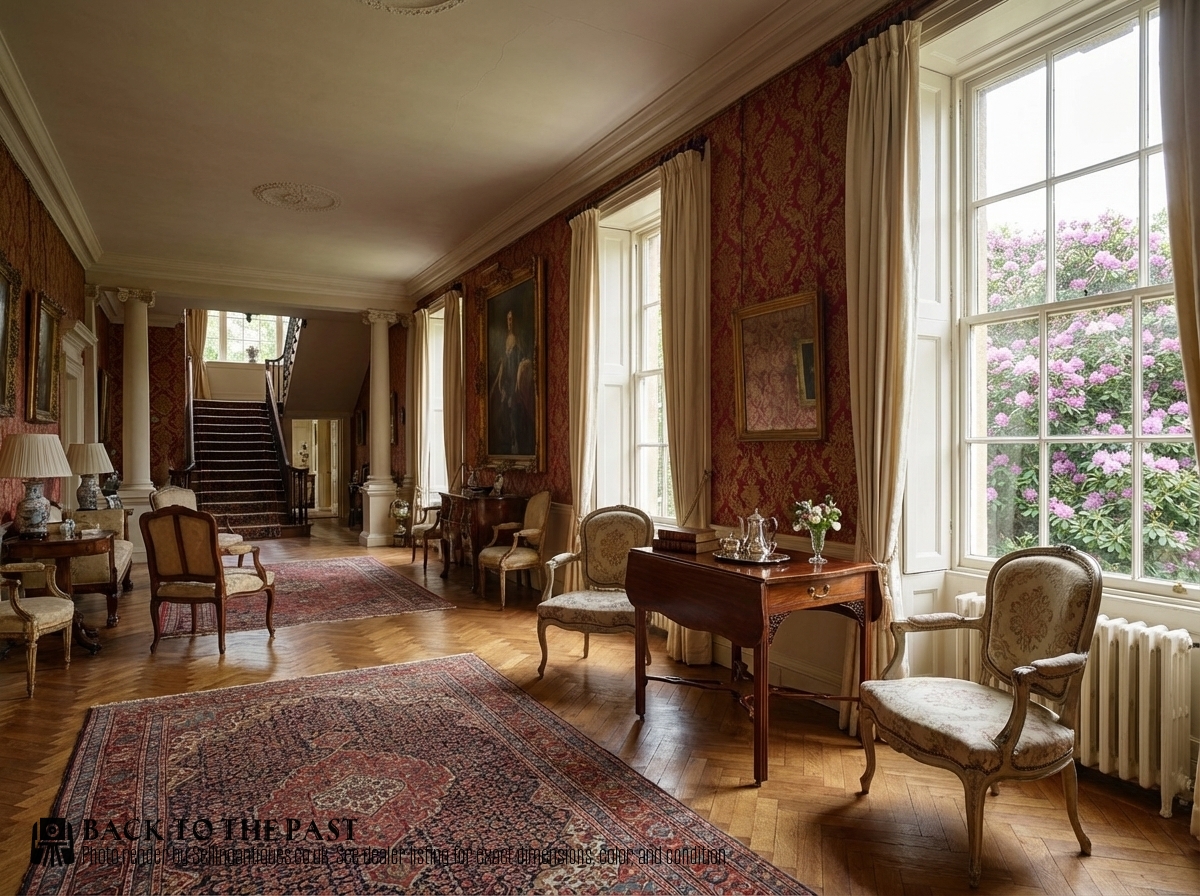
A pembroke table fits easily beside a sofa, beneath a window or against a hallway wall when the leaves are dropped. Opening one or both flaps creates an immediate workspace or display surface in smaller rooms.
Their light framing makes them straightforward to reposition as domestic needs change throughout the day.