





Hepplewhite Mahogany Bureau
These hepplewhite mahogany bureau pieces bring enduring Georgian elegance and practical writing surfaces into modern rooms.
Hepplewhite Mahogany Bureau
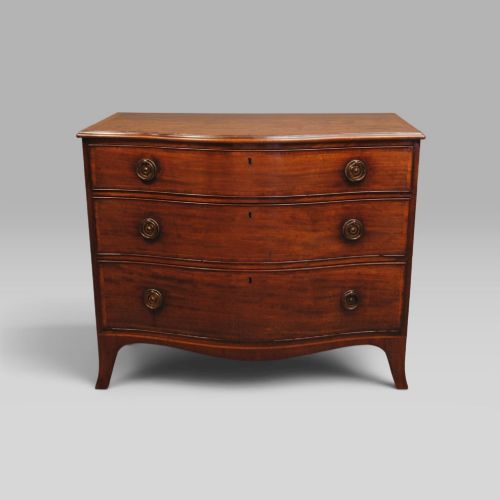
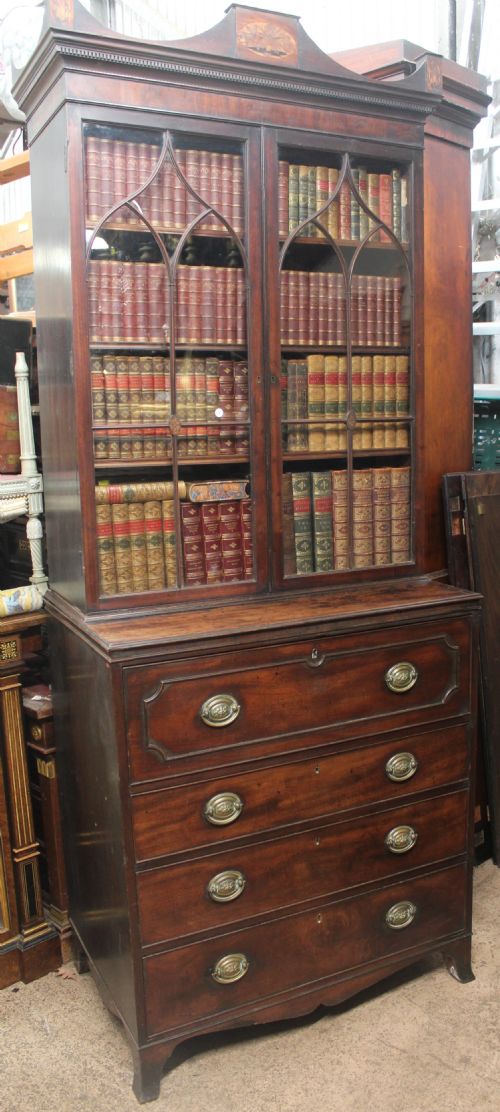
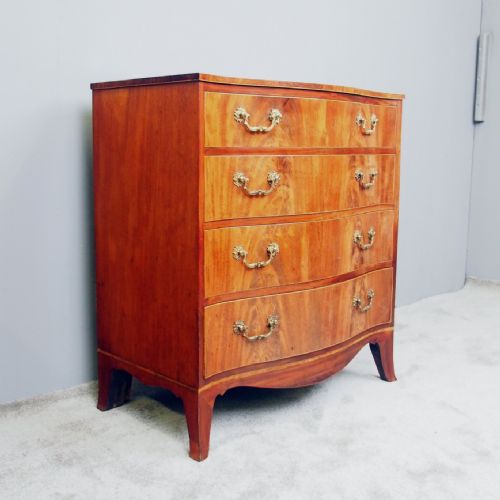
When you search for hepplewhite mahogany bureau, you find items spanning the eighteenth century to the early twentieth century, alongside Victorian interpretations and later revivals. The forms here encompass writing desks, secretaire bookcases, and serpentine chests of drawers.
The version you are most likely to meet on this page is an eighteenth century or Georgian example in solid mahogany, often featuring characteristic serpentine shaping or delicate inlay.
Makers and workshops of the period utilised timber of rich grain and warm tone, establishing the classic aesthetic that collectors still seek today.
How they were made
Cabinet makers constructed these pieces primarily from solid mahogany, often selecting dense boards with deep figures for the principal facades. They incorporated secondary timbers for internal drawer linings and structural framing.
Craftsmen applied contrasting stringing and boxwood inlay to articulate the drawer fronts and borders, introducing pale linear detail against the dark mahogany body. Brass handles and escutcheons completed the hardware scheme, secured directly through the timber doors and drawers.
Hepplewhite Mahogany Bureau Retail Price Guide 2026
Typical asking prices for hepplewhite mahogany bureau among the pieces listed under this phrase on Sellingantiques today, from the lower quarter to the upper quarter. They describe what is for sale here now, not the wider market.
The furniture forms recorded here include chests of drawers, estate writing desks, and secretaire bookcases from Georgian and Victorian periods.
What varies in quality
Quality rests in the precision of the cabinetwork and the selection of the timber figures across large flat surfaces. Superior examples display seamless mitres and crisp serpentine shaping that maintains structural integrity without warping over time.
The refinement of the inlay work separates standard workshop production from finer pieces. Sharp, clean execution in the boxwood lines and well-matched grain patterns indicate the hand of a more skilled maker.
The Hepplewhite Mahogany Bureau Glossary
- Serpentine
- A front contour characterised by a convex centre flanked by concave curves. This undulating profile requires expert joinery to shape the solid timber correctly.
- Tambour
- A sliding door made of narrow vertical strips of wood glued to a canvas backing. It runs in concealed grooves to close off small compartments on a writing desk.
- Secretaire
- A desk or chest of drawers featuring a fitted drop front that opens to reveal a writing surface and small pigeonholes. It combines storage with a pull-out writing space.
- Stringing
- Thin inlay lines of contrasting wood used to edge panels and drawer fronts. It frames the primary timber with a subtle decorative border.
Hepplewhite Mahogany Bureau: Frequently Asked Questions
How do I identify a true Georgian piece?
Examine the timber species, construction joints, and secondary woods used inside the drawers. Eighteenth-century examples rely on hand-cut dovetails and native framing timbers rather than modern fasteners.
Look closely at the finish and wear patterns around the handles and keyholes. Genuine age shows in the softening of edges and the natural oxidation of the mahogany over centuries.
Where should I place a bureau in my home?
Position your writing desk away from direct sunlight and strong heat sources to prevent the mahogany timber from drying out and splitting. A stable indoor climate preserves the polish and structural joints.
Allow enough clearance around the piece for drop-fronts or cabinet doors to open fully without striking walls or surrounding furniture.
How do I care for mahogany surfaces?
Dust the timber regularly with a soft, dry cloth to prevent grit accumulation on the polished finish. Avoid silicone-based polishes, which can build up and dull the grain over time.
Feed the wood occasionally with traditional beeswax to maintain its moisture and deep lustre. Apply the wax sparingly and buff it thoroughly to a soft sheen.