
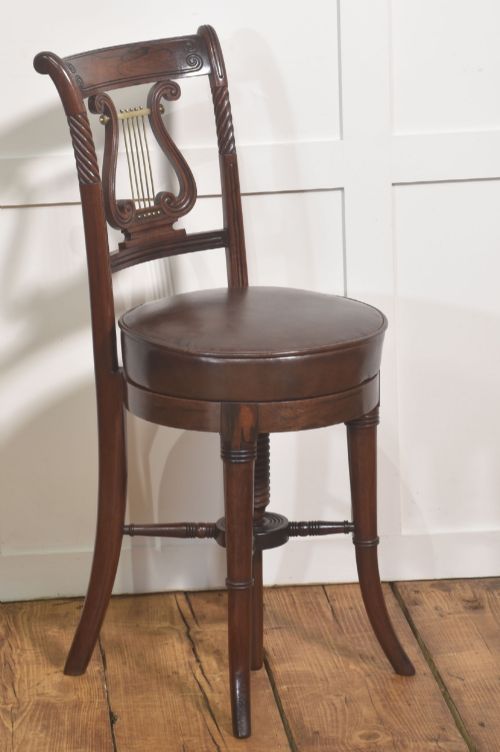
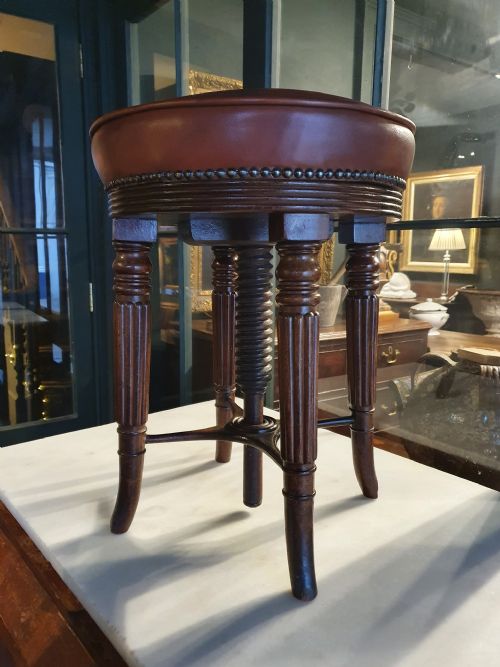


Height Adjustable Music Stool
A height adjustable music stool combines mechanical ingenuity with domestic comfort, offering a versatile seat designed for the piano or dressing table.
Height Adjustable Music Stool
When searching for a height adjustable music stool, buyers encounter a specialised seating form engineered to suit musicians and dressing tables alike. These pieces span several eras, with Victorian and nineteenth-century examples appearing most frequently across the inventory.
The objects take various forms, including revolving stools, swivel top designs, rise and fall mechanisms, and chairs with backs. Mahogany and walnut dominate the structural woods, frequently paired with fabric, leather, or velvet upholstery.
Origins stretch from the Georgian and Regency periods through to the Edwardian era and early twentieth century. Makers such as Gillows and James Shoolbred occasionally contribute pieces, alongside unbranded English and international workshops.
Materials and construction
Cabinetmakers utilised dense hardwoods like mahogany, walnut, and rosewood for the frames, ensuring stability for moving internal components. Satinwood and ebonised finishes also occur, alongside carved hardwood and oak.
Adjustment relies on robust mechanical elements including brass fittings, screw top mechanisms, and swivel bases that permit the seat to rise and fall. Upholstery materials range from plain leather to patterned fabric, velvet, and needlework.
Listings feature mahogany, walnut, and rosewood structures, frequently paired with brass mechanics and leather or velvet upholstery spanning the nineteenth and early twentieth centuries.
Factors in quality
The refinement of the adjustment mechanism distinguishes superior examples from simpler ones. Smooth action in a revolving screw or rise and fall system reflects careful engineering by the maker.
Timber selection and carving detail also set pieces apart. Fine specimens feature richly figured mahogany or walnut, crisp brass inlay, and sophisticated upholstery rather than plain secondary woods.
Gillows·James Shoolbred
The Height Adjustable Music Stool Glossary
- Rise and fall
- A mechanical system allowing the seat height to be adjusted up or down. This action is typically operated by rotating the seat itself.
- Revolving
- A top designed to turn full circle on a central pivot or screw thread. This allows the player to pivot easily towards music stands.
- Swivel base
- A lower support assembly that permits the upper portion of the stool to rotate independently. It offers similar functionality to a revolving top.
- Aesthetic Movement
- A late nineteenth-century design style focusing on art for art's sake. Pieces from this period often display simpler lines and distinct decorative motifs.
- Sheraton Revival
- An Edwardian style drawing inspiration from eighteenth-century neoclassical designs. It frequently incorporates delicate mahogany frames and satinwood.
Height Adjustable Music Stool: Frequently Asked Questions
How do I adjust the seat height?
Most models feature a central wooden screw mechanism concealed beneath the upholstery. Turning the seat clockwise or anti-clockwise raises or lowers the sitting platform.
Some variants utilise a rise and fall lever system or a locking pin to secure the desired position.
Were these stools only used for pianos?
While primarily designed for musicians requiring a specific seating height at the keyboard, many were also utilised at dressing tables. The form frequently doubles as a dressing chair or accent seat in period interiors.
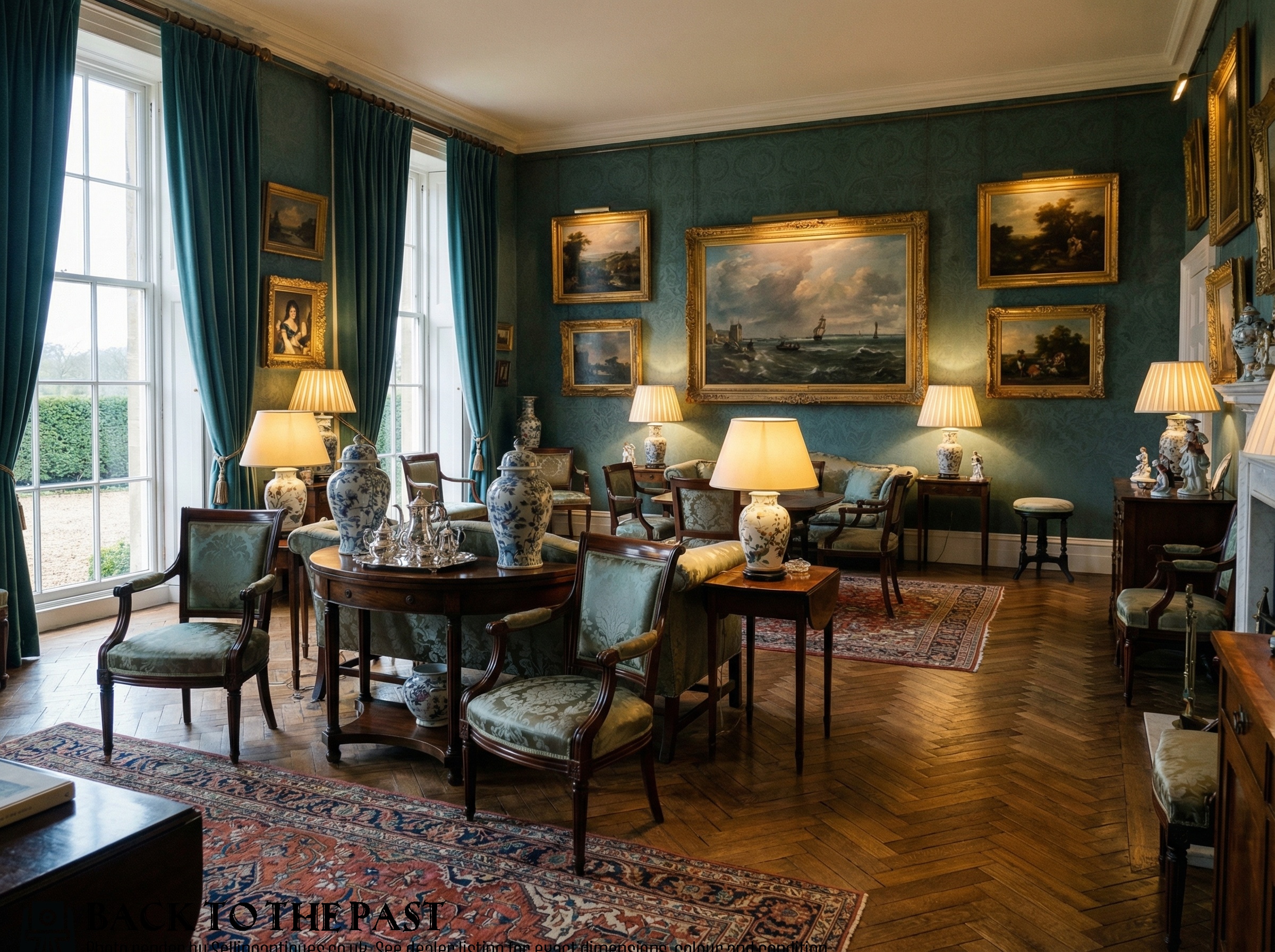
Their compact dimensions made them versatile additions to nineteenth-century drawing rooms and parlours.
How can I tell a Victorian stool from a Regency one?
Regency and Georgian pieces typically display crisp classical proportions, sabre legs, and occasionally brass inlay. Woods from this earlier era lean heavily towards rich mahogany and rosewood.
Victorian and later nineteenth-century examples often introduce heavier carvings, walnut frames, and more complex cast-iron or brass swivel mechanisms.
Can I use these stools with modern furniture?
The warm tones of mahogany, walnut, and rosewood integrate easily into contemporary schemes alongside mid-century or antique pieces. Their modest scale allows them to function as piano seats, vanity stools, or low accent chairs.
Modern buyers often place them in living spaces as occasional seating with built-in character.