




Heavy Oak Sideboard
A heavy oak sideboard brings substantial presence and deep timber grain to a room, offering serious storage built to last.
Heavy Oak Sideboard
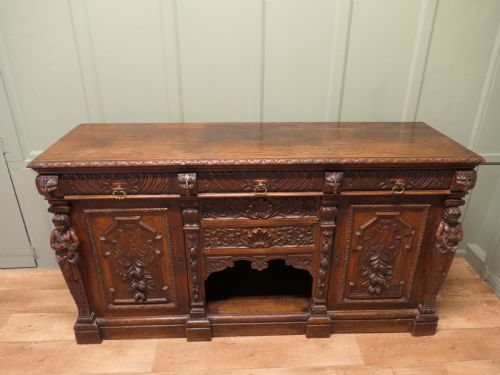
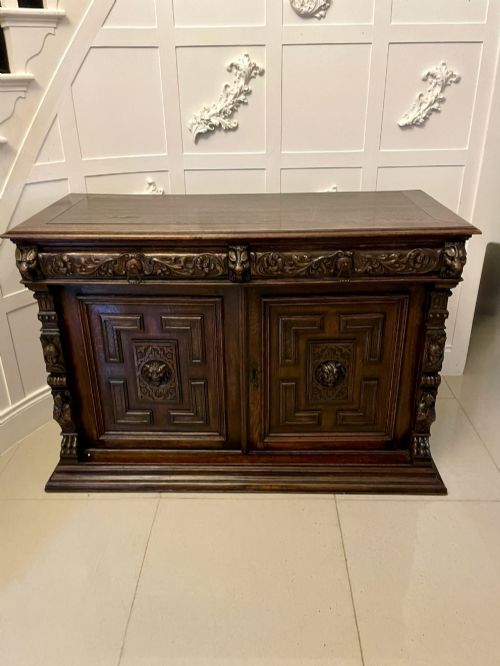
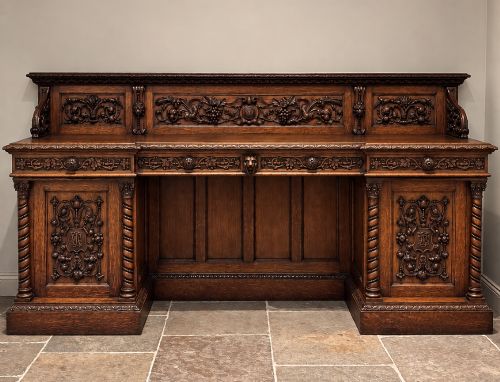
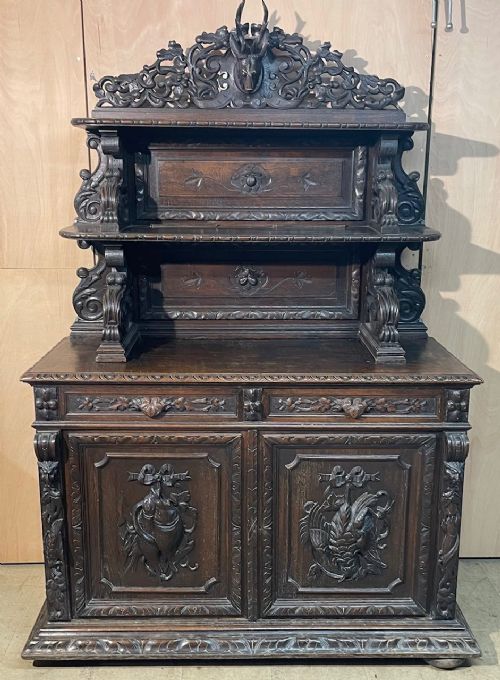
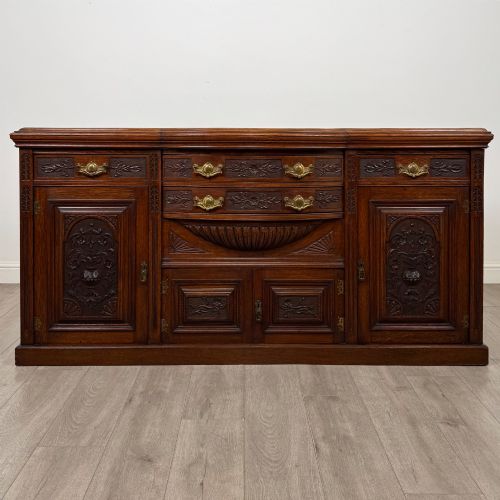
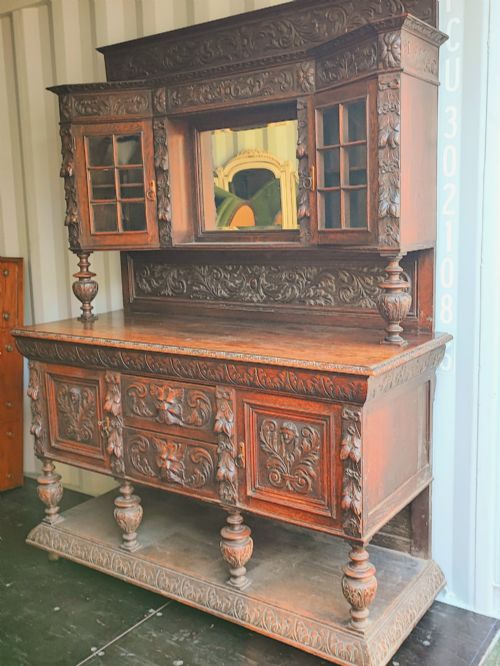
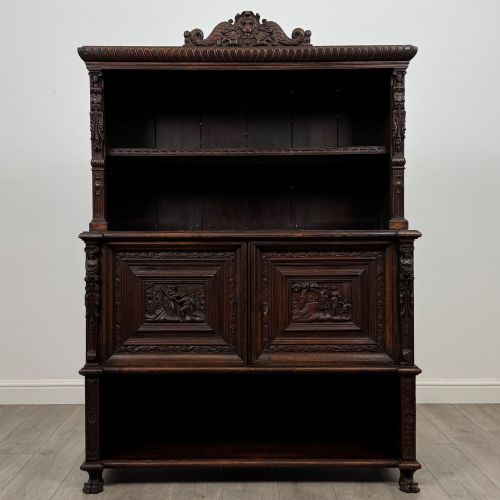
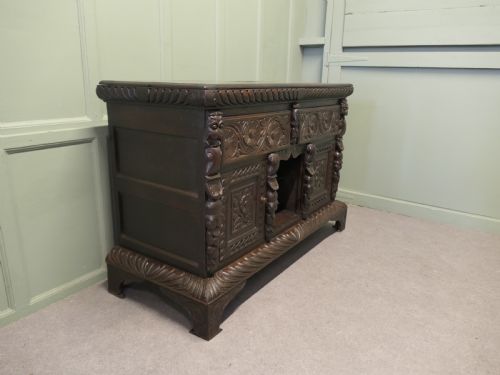
A heavy oak sideboard serves as a commanding storage piece, frequently encountered in Victorian and nineteenth-century designs adorned with deep carving and architectural details. These substantial items function effectively in dining rooms and large hallways, providing ample capacity within cupboards, drawers, and sometimes mirrored backs.
The selection ranges from revivalist Jacobean and Gothic styles to French hunting cupboards and simpler country house dresser bases. Buyers frequently encounter pieces displaying elaborate Green Man carvings or panelled doors that reflect the revival tastes of the nineteenth century.
Construction and materials
Makers utilised solid oak alongside secondary timbers, employing traditional joinery methods such as mortise and tenon frames to support the considerable weight of the timber. Surfaces often featured extensive hand-carving, moulded panels, and applied decorations.
Hardware typically included brass handles, iron hinges, and occasionally bevelled mirror glass or glass panels set into cabinet doors. Some examples incorporated specialist woods like pollard oak, snakewood, and fruitwood for decorative contrast.
Factors influencing quality
Quality rests primarily upon the crispness of the hand-carving and the selection of the timber figures, where rich grain and pollard sections elevate the visual impact. The depth of the architectural mouldings and the proportion of the hardware also distinguish finer workshop output from simpler utility pieces.
Structural integrity depends on the original soundness of the timber and the retention of matching fittings, as replacement brassware or extensive timber shrinkage alters the character of the piece. Superior examples maintain balanced proportions despite their massive scale.
The Heavy Oak Sideboard Glossary
- Green Man
- A sculptural motif depicting a human face entwined with foliage and vines, frequently found carved into nineteenth-century woodwork.
- Court cupboard
- A traditional enclosed cabinet with upper and lower sections, often utilised for displaying plate or storing provisions.
- Renaissance Revival
- A nineteenth-century design movement drawing inspiration from sixteenth-century European architecture, characterised by heavy symmetry and bold relief carving.
- Pollard oak
- Timber taken from trees that were cut back to encourage a dense cluster of branches, producing a heavily knotted and highly figured grain pattern.
- Buffet
- A serving table or low sideboard designed for holding dishes and food service items during large meals.
Heavy Oak Sideboard: Frequently Asked Questions
Where should I place a heavy oak sideboard?
These large pieces demand generous wall space and structural floor support due to their substantial weight and solid timber construction.
They anchor dining rooms, large hallways, or spacious living areas effectively, acting as both a focal point and functional storage.
How do I care for antique oak furniture?
Maintain the timber by applying natural beeswax periodically to nourish the grain and protect the surface from drying out.
Keep the sideboard away from direct heat sources and radical humidity shifts to prevent the solid oak panels from splitting.
What styles are common in these sideboards?
Nineteenth-century revival styles dominate, incorporating Gothic, Jacobean, and Flemish architectural motifs into the heavy carved frames.
French hunting designs and country house pieces also appear, featuring characteristic relief carvings and prominent panelled doors.
How do I distinguish different periods?
Examine the hardware, tool marks, and carving styles, noting that Victorian pieces often display deep revivalist relief work.
Earlier items from the seventeenth or eighteenth centuries typically exhibit simpler moulded fronts and pegged joinery rather than mass-produced fastenings.