




Heavy Copper Cooking Pot
A heavy copper cooking pot brings centuries of kitchen utility and warmth into a modern home.
Heavy Copper Cooking Pot
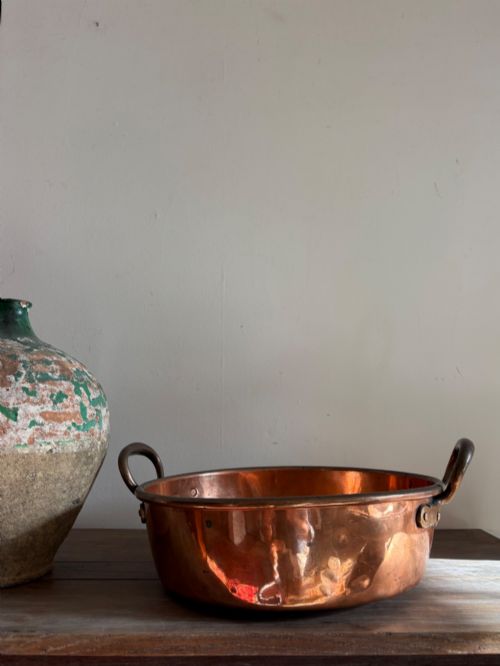
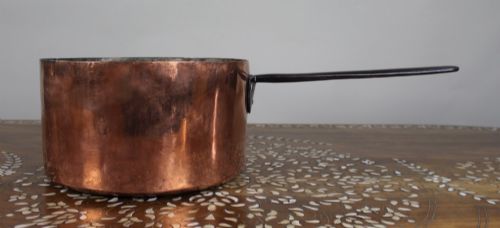
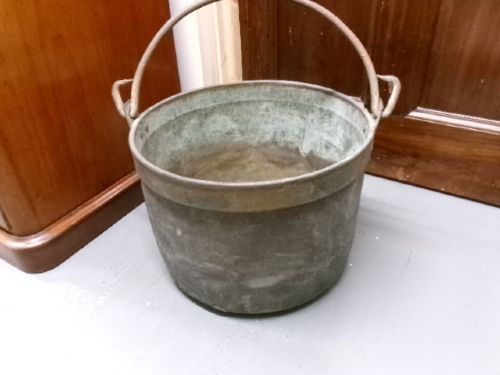
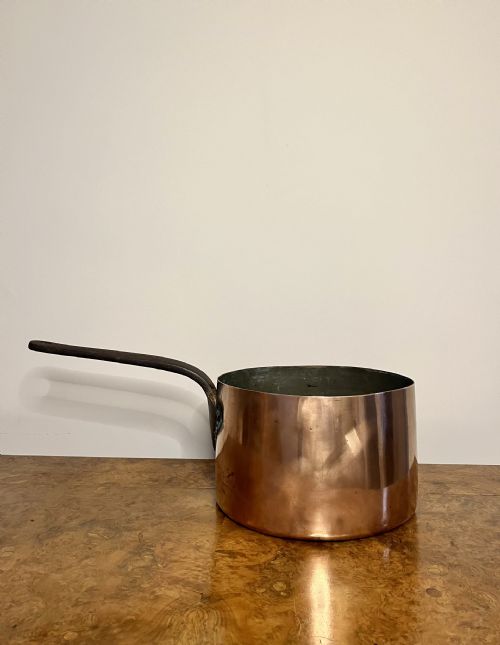
A heavy copper cooking pot represents the robust culinary vessels used across centuries in British and European kitchens. When searching for a heavy copper cooking pot, buyers encounter diverse forms ranging from large preserve pans to lidded saucepans and swing-handled cauldrons. The pieces seen on this page span the Georgian and Victorian eras, frequently showing substantial weights, riveted construction, and sturdy brass or iron handles.
Most examples originate from the nineteenth century, including French sets, George III pieces, and utilitarian kitchenware designed for heavy daily use. Forms such as preserve pans and saucepans dominate the selection, often retaining original patinas developed through decades of service. These vessels combine functional metalwork with decorative presence, suiting traditional and rustic interiors alike.
Materials and construction
The construction relies on thick sheets of hammered or sheet copper joined with heavy rivets, paired with handles fashioned from brass, cast iron, or wrought iron. Makers secured handles using robust rivets to support the substantial weight of the contents during cooking.
Vessels frequently feature hand-finished surfaces, rolled rims, and interior linings of tin applied to prevent direct contact between food and the reactive copper. Iron and brass attachments provide structural strength, while natural patinas develop on the exterior through exposure to heat and air.
Original patinas on these pots record centuries of simmering fruit, bubbling stews, and the occasional enthusiastic hearth fire.
Distinctions in quality
Quality in these vessels rests on the thickness of the metal gauge, the integrity of the riveted joints, and the balance of the handles. Heavier walls and substantial weight indicate superior commercial or domestic grade metal intended for rigorous work.
Maker marks, such as stamps by firms like Hodges & Sons or Liptons, elevate a piece alongside refined shaping and tight, even riveting. Original handles, preserved patinas, and intact linings separate standard utility items from finer surviving kitchen antiques.
Hodges & Sons·Liptons
The Heavy Copper Cooking Pot Glossary
- Preserve pan
- A wide, open vessel with a rounded base designed for boiling fruit and sugar. These pans often feature a single long handle or dual brass handles for lifting.
- Saucepan
- A deep cooking vessel with a single handle and often a fitted lid. Georgian and Victorian examples show thick copper walls and heavy bases.
- Cauldron
- A round cooking vessel featuring a swing handle and three or more feet or a rounded bottom. These pieces were suspended over open fires or hearths.
- Patina
- The surface layer and coloration acquired by metal over decades of use and oxidation. Original patinas show natural wear and ageing without excessive polishing.
- Riveted
- A method of joining metal plates using metal pins hammered flat at the ends. This technique secures handles and seams firmly on heavy copper vessels.
Heavy Copper Cooking Pot: Frequently Asked Questions
How do I clean a heavy copper cooking pot?
Maintenance depends on whether you intend to use the vessel for cooking or display. Traditional copper cleaners remove tarnish, though many collectors prefer preserving the darker patinas accumulated over centuries.
For functional use, ensure the interior tin lining remains intact. Avoid harsh abrasives on the exterior to protect the historical surface.
Were these pots used on open fires?
Many nineteenth-century and Georgian vessels were built for hearth cooking, featuring thick copper bases and sturdy iron or brass handles designed for direct heat.
Cauldrons and preserve pans frequently show the signs of open fire use. Modern induction or glass cooktops require flat bases, so check the profile before attempting daily cooking.
How can I tell a Georgian pot from a Victorian one?
Georgian pieces often display simpler, heavier forging with distinctive handle shaping characteristic of the late eighteenth and early nineteenth centuries. Maker stamps and specific handle rivets also help distinguish the period.
Victorian kitchenware frequently includes a wider variety of specialised forms, such as lidded saucepans and matched sets of pans with standardised brass fittings.
Why do some pots have tin inside?
Copper reacts with acidic foods, which can taint flavours and cause toxicity if ingested in large quantities. Lining the interior with a thin layer of tin provides a safe barrier for cooking.
Historic pots often retain remnants of this lining, while pieces intended solely for decorative display may show bare copper inside.