


Copper Preserve Bowl
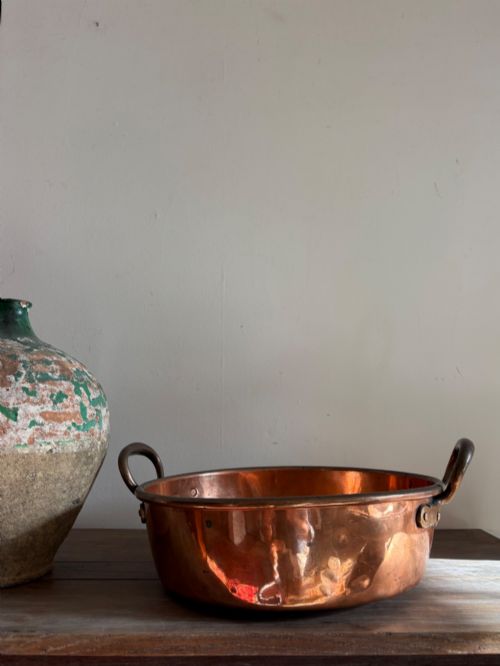
A copper preserve bowl brings warmth to a kitchen workspace through heavy-gauge metal and practical domestic utility.
Copper Preserve Bowl
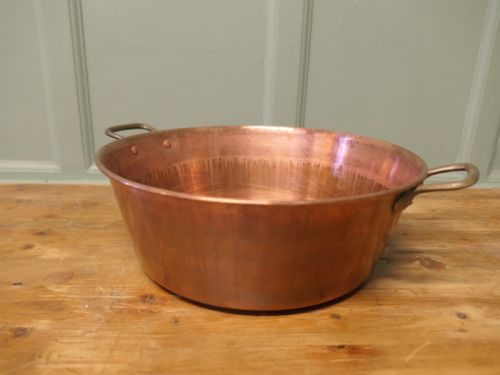
A copper preserve bowl is a deep kitchen pan or preserving pan designed for fruit boiling and jam making across the Georgian, Victorian and later periods. These items include large jam pans, kitchen pans, and cream setting pans shaped as heavy bowls and basins.
Most examples found here date from the nineteenth century, alongside earlier George III pieces and twentieth-century items. They appear in styles such as Victorian, Victorian Country, Rustic Farmhouse, and Georgian, reflecting their origins in traditional domestic cookery.
How they were made
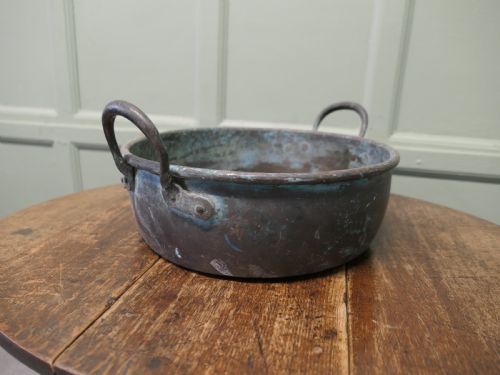
These pans rely primarily on heavy copper construction to ensure even heat distribution during long boiling processes. Many incorporate contrasting metal elements, featuring brass handles and iron fittings riveted securely to the heavy copper body.
Makers shaped the thick metal into deep, open bowls with reinforced rims, sometimes lining the interiors with tin to prevent direct contact between the copper and acidic ingredients.
Listings feature copper alongside brass, iron, and tin across the nineteenth and twentieth centuries.
What varies in quality
Quality rests on the weight of the metal and the solidity of the handles, with heavier specimens providing greater durability and substance. Superior examples display careful hand-beating and robust construction that marks out pieces by makers such as Hodges and Sons.
The finish of the rim and the method of attaching brass or iron handles distinguish high-grade kitchenware from standard utilitarian vessels. Depth and proportion also vary, separating simple jam pans from specialised cream setting pans.
Hodges and Sons
The Copper Preserve Bowl Glossary
- Preserve pan
- A wide, deep pan designed specifically for boiling fruit and sugar. It allows rapid evaporation while preventing scorching.
- Jam pan
- A heavy metal vessel used for boiling fruit preserves. These are typically deep with rounded bases to facilitate stirring.
- Cream setting pan
- A wide, shallow bowl used in dairies for holding milk to let cream rise to the surface. They provide a large surface area for cooling.
- George III
- The period from 1760 to 1820, spanning the reign of King George III. Pieces from this era show characteristic Georgian domestic craftsmanship.
Copper Preserve Bowl: Frequently Asked Questions
What is a copper preserve bowl used for?
These vessels were designed for boiling fruit with sugar to make jam and preserves. Their heavy copper construction ensures heat spreads evenly across the base.
Today they function both as practical cookware and as decorative items for farmhouse kitchens. Cooks value them for temperature control during boiling.
How do I date an old copper pan?
Dating relies on construction methods, handle attachments, and overall form. George III pieces generally display earlier hand-beating techniques compared to later Victorian items.
Maker marks and the style of the brass or iron handles also provide clues to the decade of manufacture. Nineteenth-century examples often weigh several kilograms and feature riveted handles.
Are these copper pans safe for modern cooking?
Many antique copper pans require a tin lining before use with acidic foods. Original linings can wear thin over decades of use and cleaning.
Buyers often use them for display or dry storage unless they have been professionally retinned. Check the interior condition carefully if you intend to cook with them.
What is the difference between a jam pan and a cream setting pan?
A jam pan is deep and rounded to hold boiling fruit and syrup safely during vigorous stirring. It is built to withstand high heat on a kitchen range.
A cream setting pan is wider and shallower, designed for dairies to let cream separate from milk. Each serves a distinct historical domestic purpose.