
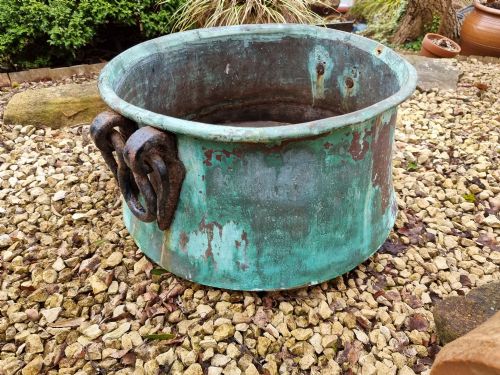


Heavy Copper Cauldron
A heavy copper cauldron is a substantial utilitarian vessel that brings warmth and texture to a fireside or garden.
Heavy Copper Cauldron
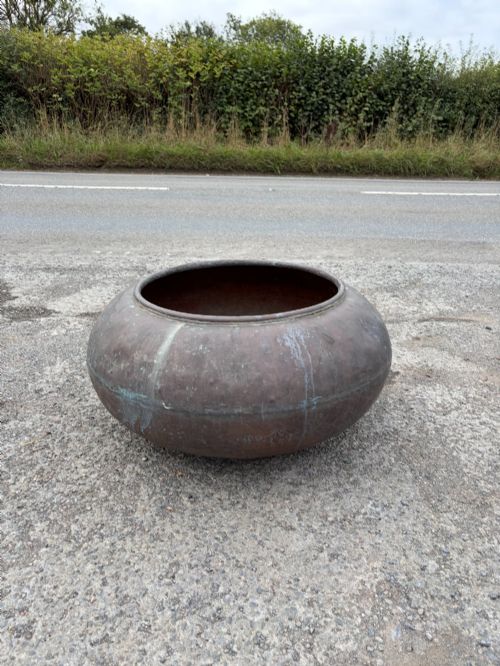
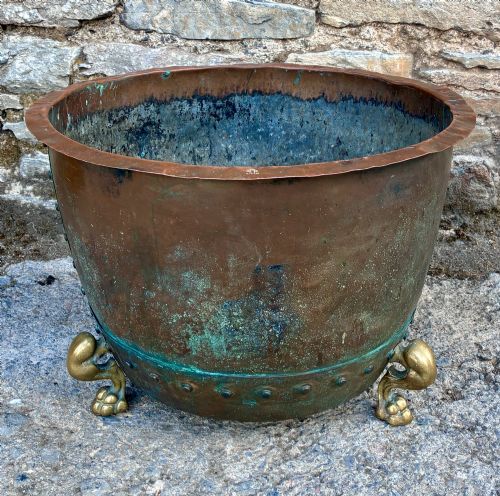
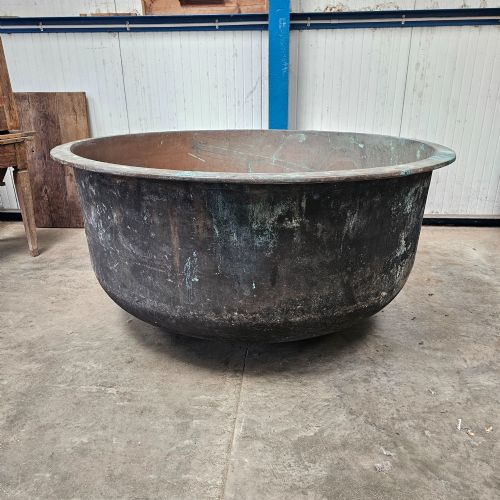
A heavy copper cauldron is a robust metal vessel originally utilised for cooking, boiling or washing, which now frequently serves as a log bin, planter or fireside accessory. These pieces range from Georgian and Victorian examples to French country vessels and later Art Deco dinanderie items.
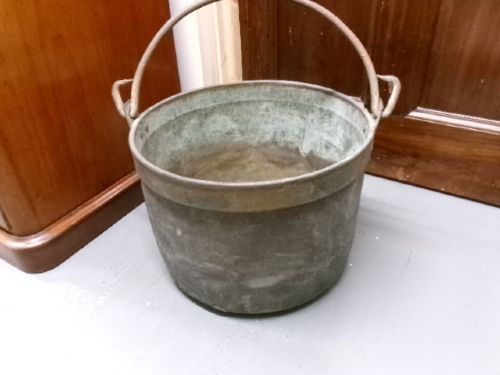
The heavy copper cauldron versions you are most likely to meet on this page date from the nineteenth century, often featuring iron swing handles, riveted seams and generous proportions suitable for holding logs or plants. Many show patination or verdigris finish gathered through decades of domestic or agricultural use.
What varies in quality
The distinction between standard utility items and superior examples lies in the weight of the metal gauge, the crispness of the hand-riveting and the integrity of the form. Thicker copper plates resist denting and provide a heavier, more stable structure.
Proportion and surface character also divide the range, with finer pieces displaying harmonious shaping and honest, undisturbed patination rather than over-polished finishes. Original handles, iron mounts and makers' touches elevate the presence of the vessel.
Many of these sturdy vessels survived centuries of boiling laundry only to retire as luxury log bins by the hearth.
The Heavy Copper Cauldron Glossary
- Cauldron
- A large metal pot with a wide mouth, typically used for boiling or heating over a fire. They often feature swing handles and heavy bases.
- Verdigris
- A green patina or crust of copper carbonate formed on copper, brass or bronze surfaces through natural weathering and oxidation.
- Dinanderie
- European brass and copper ware, particularly ornamental vessels and decorative objects produced in the early twentieth century. The term derives from the Belgian town of Dinant.
- Swing Handle
- A movable arched handle attached to opposite sides of a pot or cauldron, allowing the vessel to be lifted or suspended.
- Riveted
- Joined together using metal bolts or pins hammered flat to secure overlapping sheets of copper or iron.
Heavy Copper Cauldron: Frequently Asked Questions
How do I clean a copper cauldron?
Most buyers prefer to preserve the aged patina and verdigris rather than polish the metal to a bright shine.
Gentle washing with warm soapy water removes dust without disturbing the historic surface.
Can I use these outdoors as planters?
These robust vessels make excellent garden planters for flowers, shrubs or small trees.
Ensure proper drainage if planting directly inside the metal container, or use an inner pot.
What did they use cauldrons for?
Historic cauldrons served for boiling water, cooking communal meals, dyeing textiles or doing household laundry.
Their heavy construction allowed them to withstand direct heat from open fires and hearths.
How do I date a copper vessel?
Dating relies on construction methods, such as hand-beaten panels and iron rivets typical of nineteenth-century work.
Stylistic cues like Georgian proportions or later Art Deco dinanderie finishes also help place the period.