

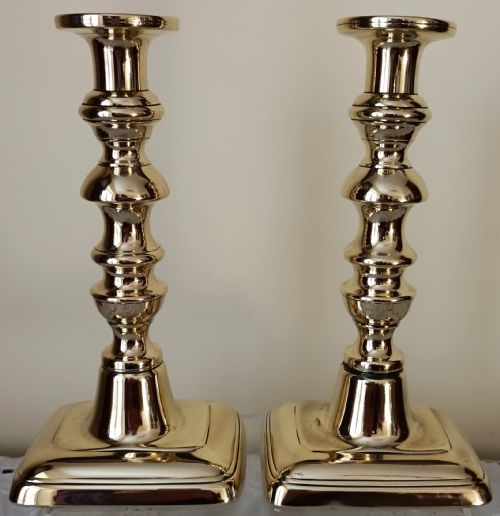
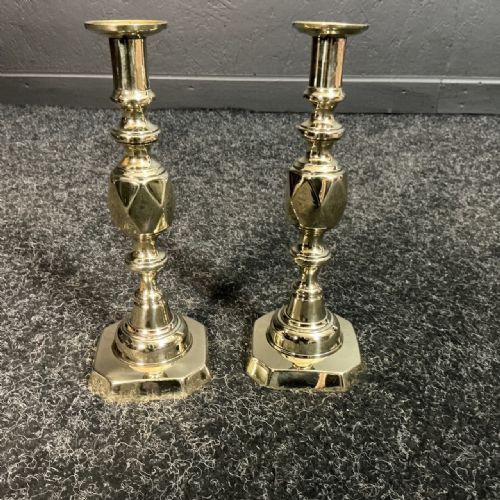


Heavy Brass Candle Stands
Heavy brass candle stands are substantial metal holders designed for domestic or ecclesiastical lighting, offering solid presence and period character.
Heavy Brass Candle Stands
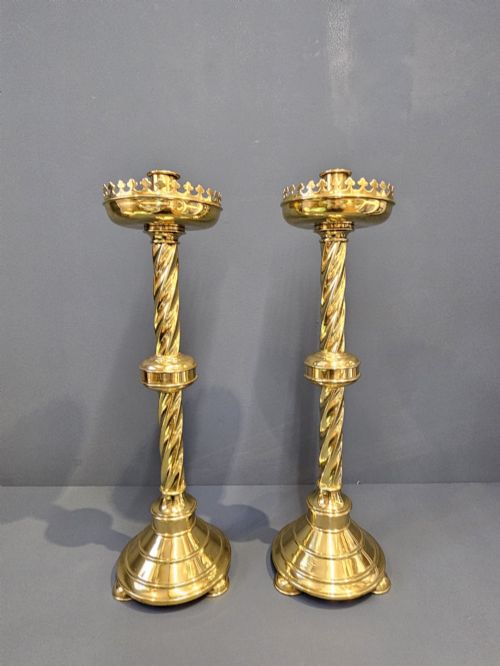
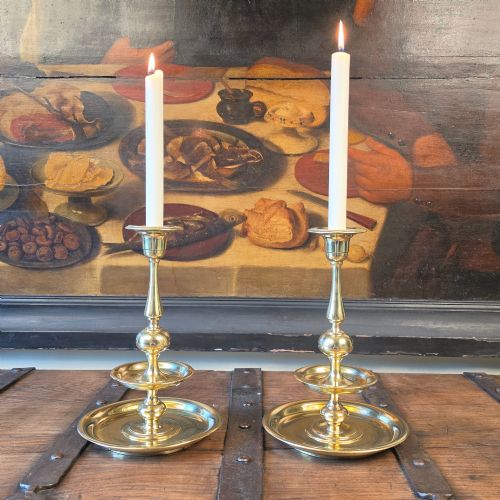
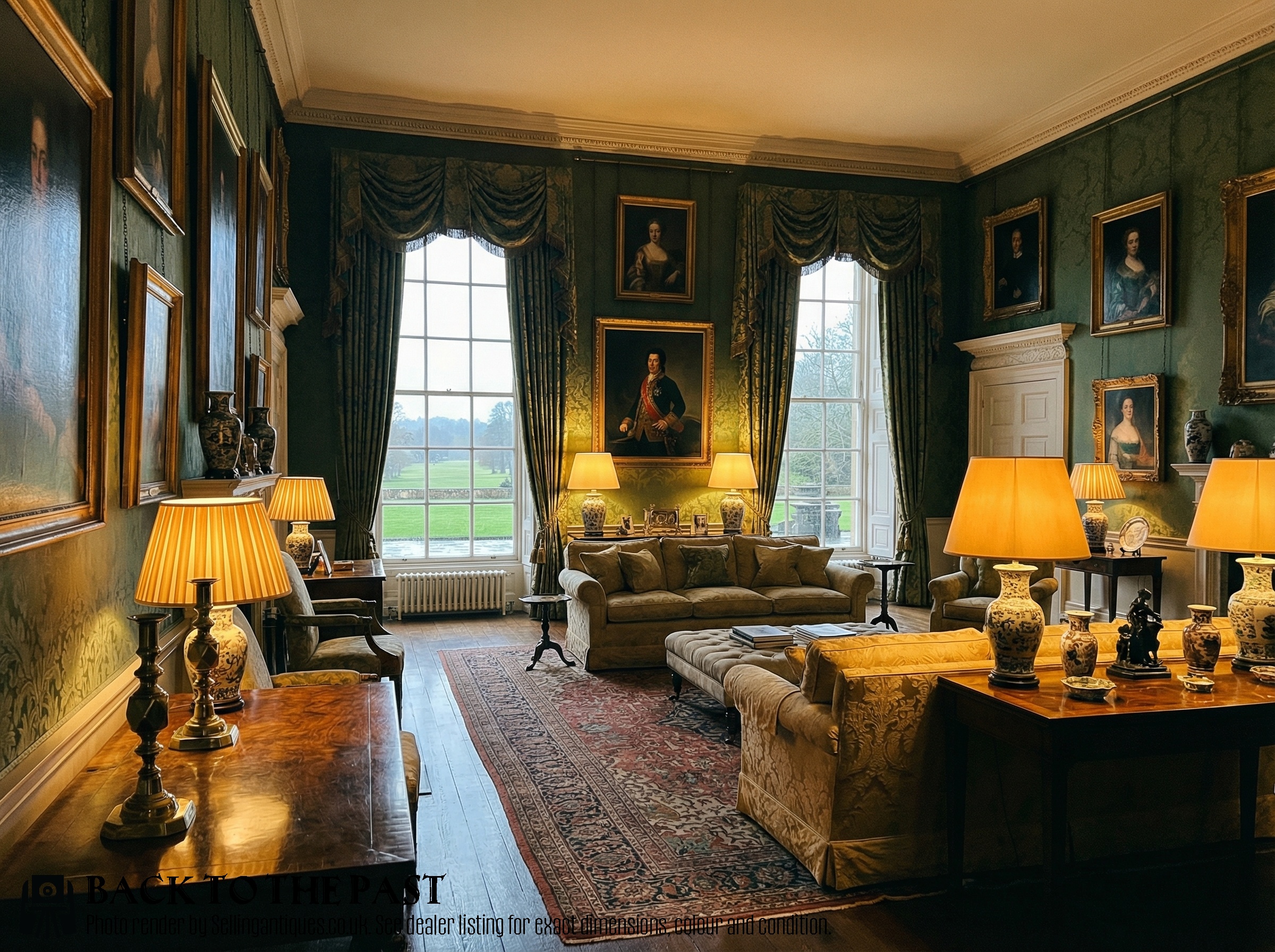
Heavy brass candle stands bring solid metal weight and structural presence to interiors, appearing frequently in Victorian and ecclesiastical forms. Buyers searching for heavy brass candle stands will encounter tall pairs designed for altars as well as domestic tabletop examples dating across the nineteenth century. These pieces range from simple turned shafts to elaborate Gothic Revival and Dutch Baroque designs.
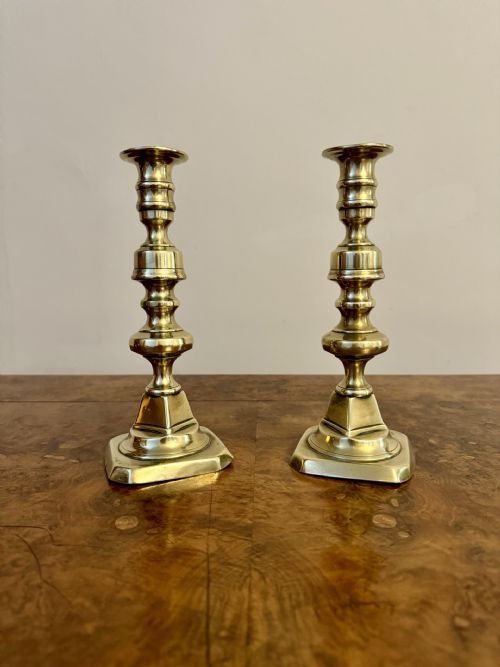
The selection includes specialised patterns such as the King of Diamonds, Ace of Diamonds, and beehive forms alongside traditional pricket candlesticks. Most examples date from the Victorian era and the turn of the twentieth century, constructed with generous proportions and robust metal thickness. Pairs dominate the offerings, providing balanced symmetry for mantelpieces or sideboards.
Assessing quality
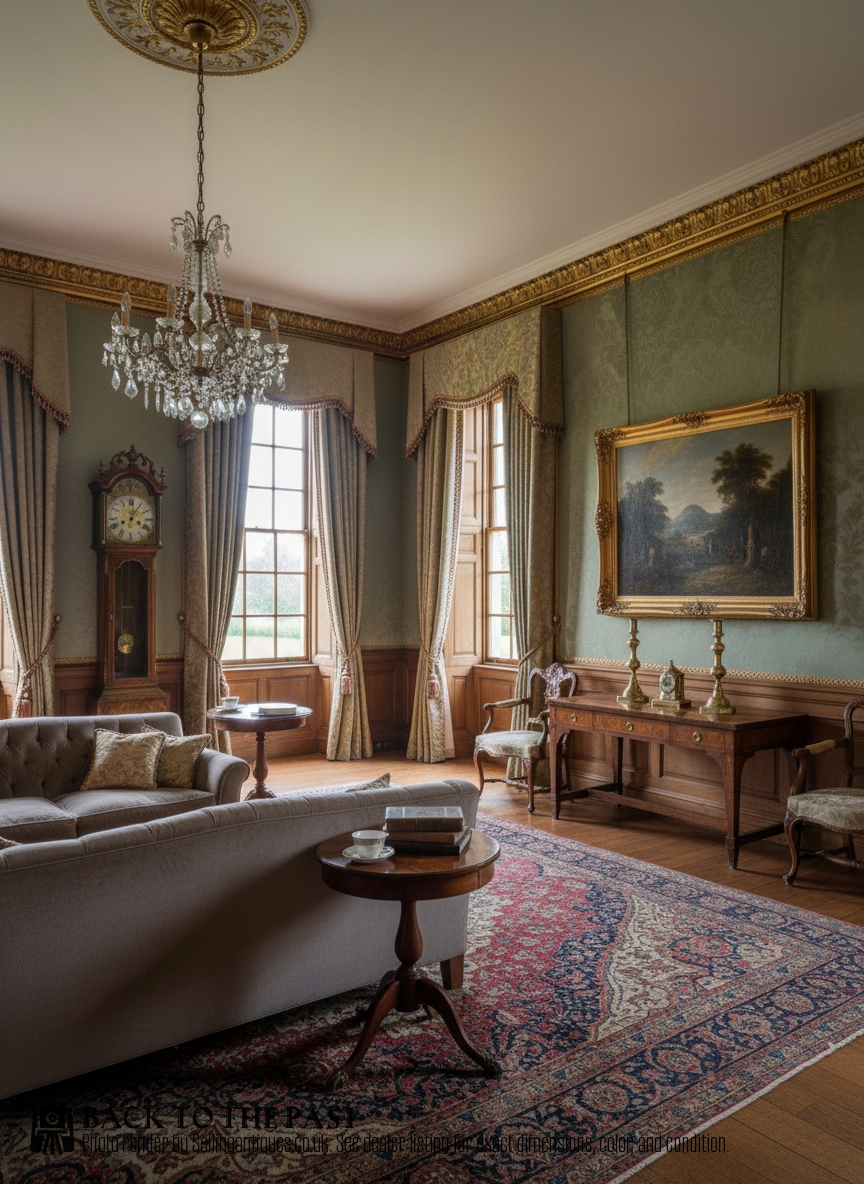
Quality rests in the crispness of the casting detail and the sheer physical heft of the metalwork. Superior examples display sharply defined facets on diamond patterns and neatly turned mouldings on knopped stems rather than soft or blurry contours.
Proportion and stability separate standard production from finer workshop output, particularly in church metalwork and named maker pieces. The thickness of the brass gauge and the integrity of the joins dictate the longevity and balance of each stand.
Card players can illuminate their tables with appropriately named King of Diamonds and Ace of Diamonds brass candlesticks.
J.T. & Co·James Clews·T Thomason & Co
The Heavy Brass Candle Stands Glossary
- Pricket
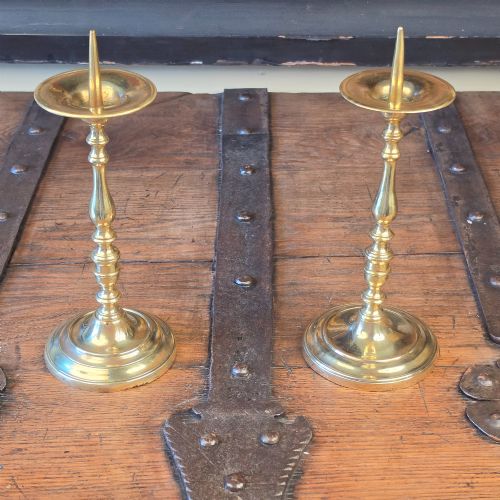
- A candlestick featuring a sharp metal spike at the top designed to impale the base of a wax candle. This form is common in church candlesticks and seventeenth-century style revivals.
- Knop
- A prominent rounded swelling or nodule on the stem of a candlestick. It provides a secure grip for moving the holder and adds decorative weight.
- Beehive
- A descriptor for candlesticks featuring tiered, rounded annular rings resembling an old-fashioned beehive shape on the stem. This style gained popularity during the Victorian period.
- Ecclesiastical
- Pertaining to the Christian church or clergy, describing items originally made for use in places of worship. These pieces are typically taller and heavier than domestic lighting.
- Gothic Revival
- An architectural and decorative style drawing inspiration from medieval design. It manifests in these candle stands through ecclesiastical motifs and architectural tracery.
Heavy Brass Candle Stands: Frequently Asked Questions
What is a pricket candlestick?
A pricket candlestick uses an upright metal spike instead of a socket to hold the candle in place. The wax candle is simply pressed down onto this sharp point.
This design appears frequently on church and altar pieces, as well as seventeenth-century style reproductions. It requires candles with a suitable base to sit securely on the spike.
How do I date heavy brass candle stands?
Dating relies on stylistic clues, casting methods, and proportion rather than marks alone. Victorian and nineteenth-century examples often feature heavy cast bases and distinct regional patterns.
Earlier seventeenth-century styles found here are typically nineteenth-century revival pieces made to mimic antique forms. Examining the construction joins and wear patterns helps determine the true age.
How should I clean antique brass?
Cleaning antique brass is usually best kept to a minimum to preserve the natural historic patina. A gentle dusting with a soft cloth removes surface grime without stripping the aged finish.
Avoid harsh chemical polishes that strip away the dark oxidation valued by collectors. Leaving the metal untouched maintains its authentic character and historical appearance.
Can I use modern candles in these stands?
Most antique candle holders accommodate standard dinner candles or tapers, though sizing can vary slightly. Socket diameters differ between domestic pieces and larger church candlesticks.
For pricket stands, candles may need a small hole drilled or pressed into the base to fit the spike securely. Measuring the socket or spike diameter before purchasing candles ensures a proper fit.