
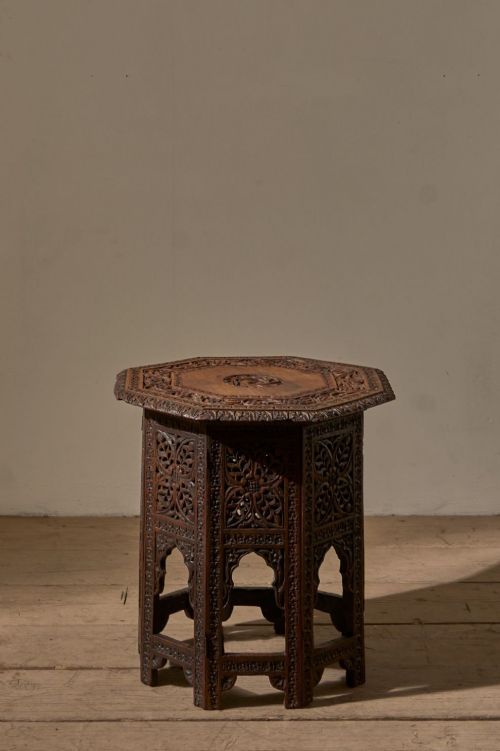


Hardwood Folding Table
A hardwood folding table offers practical portability and rich regional carving, spanning Anglo-Indian, Chinese, and Middle Eastern workshops from the Victorian era onwards.
Hardwood Folding Table
A hardwood folding table combines portable utility with intricate regional carving, functioning variously as an occasional table, coffee table, games table, or serving surface. When you search for a hardwood folding table, you encounter diverse forms ranging from octagonal tea tables to rectangular tray tables with removable folding bases.
The pieces on this page span the nineteenth century, the Victorian period, and the early twentieth century, originating from Anglo-Indian, Chinese Qing Dynasty, Japanese, and Moorish workshops. You are most likely to meet Indian and Chinese examples utilising dense timbers and collapsible X-frame or scissor-action bases designed for colonial life or compact living.
How they were made
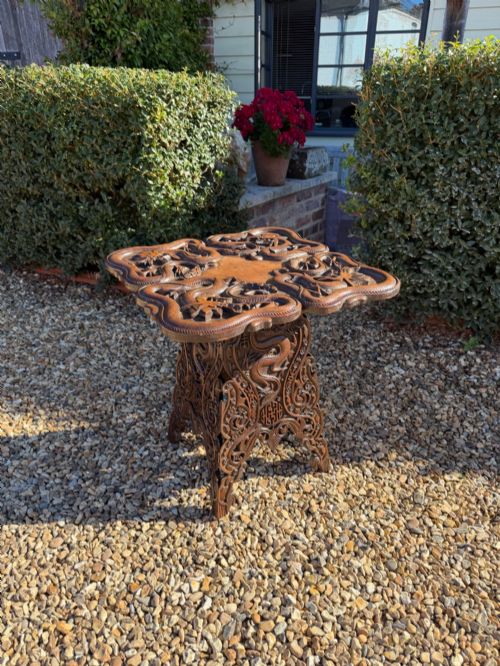
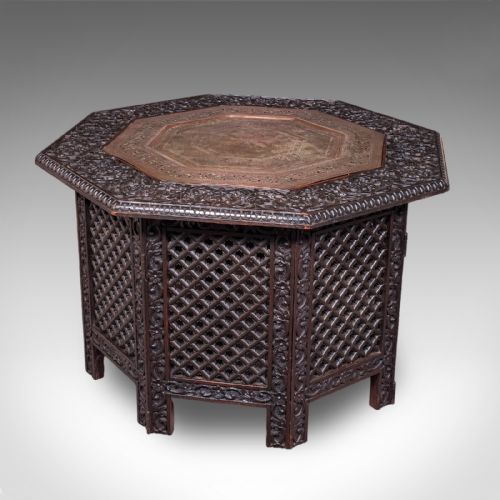
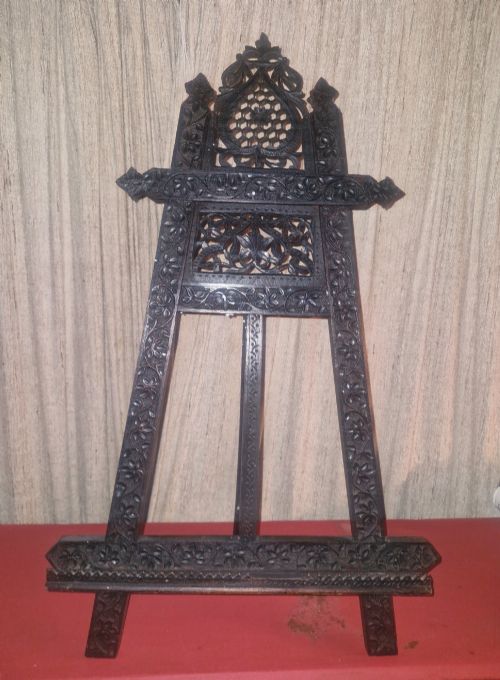
Craftsmen built these tables using dense tropical hardwoods such as teak, padauk, and hongmu, paired with contrasting decorative inlays of brass, copper, and bone. Carving was executed entirely by hand to create deeply undercut foliage, dragons, and geometric patterns across tops and folding supports.
Structural joints relied on pinned hinges and interlocking wooden frames that allowed the surfaces to collapse flat for transport. Lacquer and polish were applied to highlight the natural grain of the timber and protect the detailed relief work.
Listings feature periods from the Victorian era through the 1930s, alongside styles including Anglo-Indian, Chinese Export, and Qing Dynasty.
What varies in quality
Quality rests in the crispness of the hand-carved relief and the precision of the brass or bone inlay work. Superior examples display tightly fitted joinery on the folding mechanism that operates smoothly without excessive wobble.
The choice of dense, highly figured timbers like padauk or hongmu distinguishes finer workshop production from simpler utilitarian pieces. Preservation of the original inset metal trays and untouched surface patination further elevates an individual piece.
The Hardwood Folding Table Glossary
- Anglo-Indian
- Furniture made in India by local artisans for British colonial residents, combining traditional Indian carving with European forms. It frequently incorporates dense native hardwoods.
- Padauk wood
- A heavy, durable reddish-brown tropical hardwood prized for its stability and resistance to decay. It is common in colonial furniture production.
- Hongmu
- A traditional Chinese term for dense, red-toned hardwoods used in fine furniture making. It translates literally to red wood.
- Occasional table
- A small, light table designed for intermittent use around a room. These pieces often feature folding bases for ease of storage.
- Campaign furniture
- Portable furnishings built for travel and military use, engineered to dismantle or fold efficiently. Folding tables formed a standard part of this tradition.
Hardwood Folding Table: Frequently Asked Questions
How do I fold these tables?
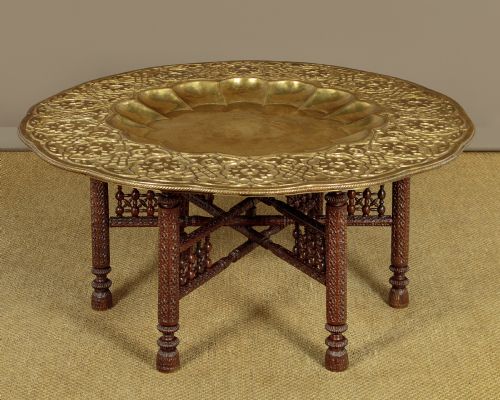
Most examples utilise an interlocking wooden X-frame that lifts away from the underside of the top, allowing the base to scissor shut flat. The tabletop then removes entirely for separate storage or transport.
Ensure any metal hinges or pins are free of obstruction before attempting to collapse the frame to prevent stressing the old timber.
Where were these tables made?
The listings show origins spanning British India, Qing Dynasty China, Japan, and the Middle East. Workshops in these regions produced portable furniture for export and colonial markets.
Anglo-Indian examples often feature deep floral carving, while Chinese pieces frequently display tray tops resting on collapsible bases.
What woods are commonly used?
Makers utilised dense tropical timbers including teak, padauk, and hongmu. These heavy woods provided the structural strength needed for folding frames and intricate carving.
Inlays of contrasting materials such as brass, copper, and bone were frequently set directly into the wooden surfaces.
How do I care for inlaid wood?
Dust the carved surfaces gently with a soft brush to prevent dirt accumulation in the recesses. Apply a neutral wax sparingly to nourish the hardwood without clouding metal or bone inlays.
Keep these tables away from direct heat sources and dramatic humidity shifts to protect the joints and prevent inlay lifting.