
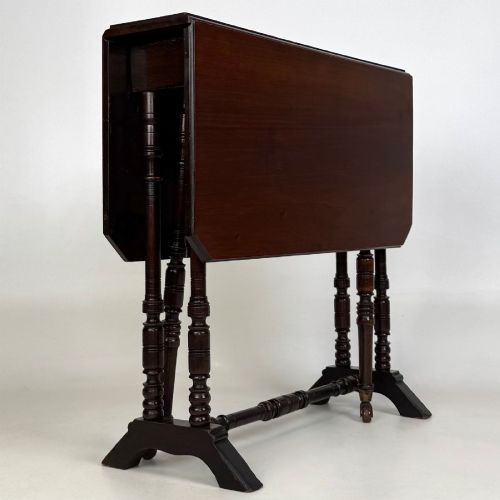
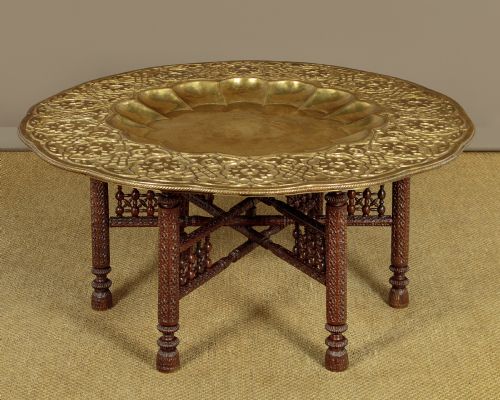
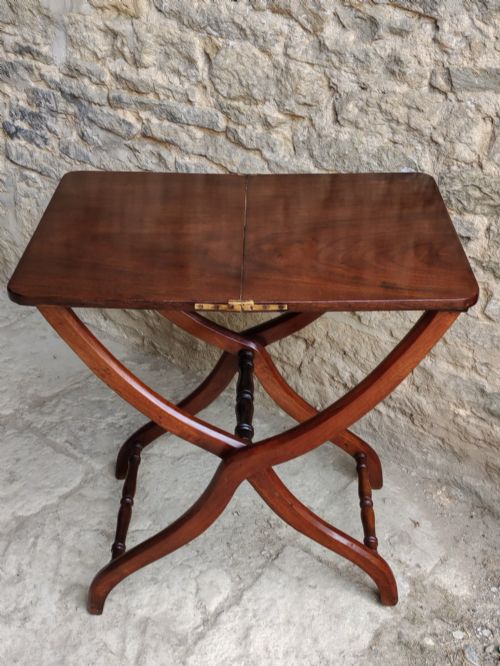


Folding Wooden Base Table
A folding wooden base table offers a practical, space-saving surface with historical character, combining clever hinges or trestles with rich timber character.
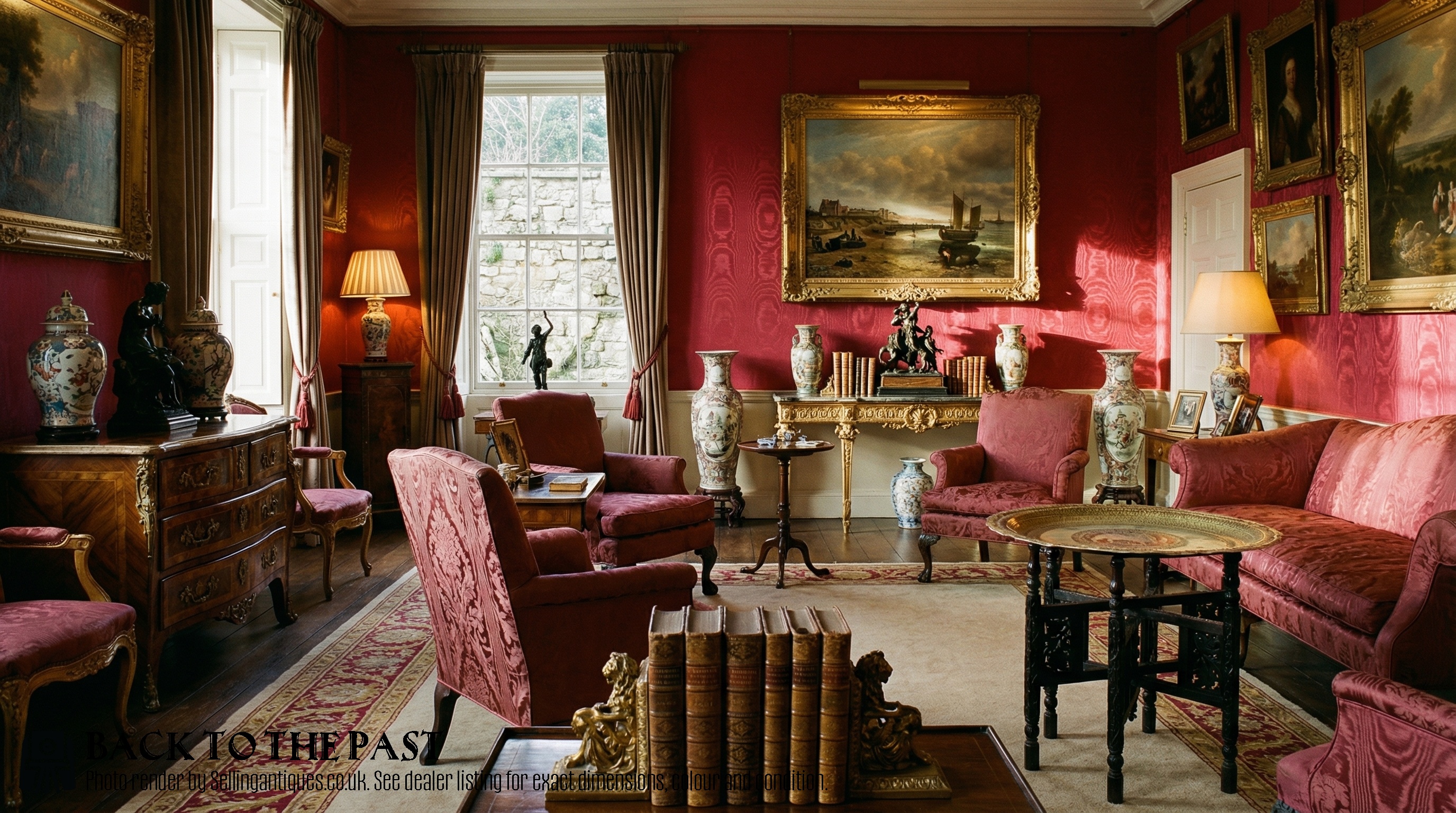
Folding Wooden Base Table
A folding wooden base table provides a portable surface that packs flat when not in use, suiting smaller rooms and flexible living spaces. When you search for a folding wooden base table, you encounter diverse forms ranging from tea tables and coffee tables to side tables and larger trestle designs.
The pieces on this page span several centuries, featuring Georgian, Regency, and 19th-century examples alongside specific regional styles like French Provincial and Anglo-Indian. Common configurations include turn-over tops, drop-leaf mechanisms, and collapsible supports paired with timber tops or removable metal trays.
How they were made
Cabinet makers utilised dense hardwoods such as mahogany, oak, teak, cherry, and rosewood to ensure the folding frames withstood repeated movement. Mahogany veneer and brass fittings appear frequently, providing structural reinforcement and decorative contrast.
Joinery methods focus on hinges, pivots, and folding trestle frames that allow the supports to collapse smoothly beneath the surface. Painted finishes and bleached treatments also occur, reflecting regional European workshop practices.
Listings feature woods including mahogany, oak, teak, cherry, and rosewood, alongside brass and mahogany veneer.
What varies in quality
The sophistication of the folding mechanism dictates the quality of a piece, with well-engineered hinges and stable locking joints separating superior examples from simpler designs. Smooth movement without wobble when open indicates precise initial construction.
Timber selection and surface finish define the visual merit, where finely grained rosewood or figured mahogany sit above utilitarian pine or basic secondary woods. Maker attribution, such as signed William Trotter pieces, elevates the standing of an item.
William Trotter
The Folding Wooden Base Table Glossary
- Tea table
- A small occasional table designed for serving tea, often featuring a fold-over top that doubles its surface area when opened.
- Trestle table
- A table supported by trestles, consisting of vertical supports connected by a horizontal beam, which often folds flat.
- Drop-leaf
- A table with hinged flaps on the sides that fold down to save space or lift up to extend the surface.
- Turn-over top
- A table top hinged to fold in half and swivel over the base, revealing a concealed well or doubling the display area.
- Tray top
- A removable metal or wooden tray resting upon a folding or collapsible stand.
Folding Wooden Base Table: Frequently Asked Questions
How do folding wooden base tables work?
These tables utilise hinges, pivots, or collapsible trestle frames that allow the legs to fold flat against the underside of the top. This mechanism enables easy storage and movement between rooms.
Such designs were historically favored for flexibility, allowing servants to clear rooms quickly or merchants to transport furniture easily.
Where were these tables used historically?
Historical examples served multiple domestic functions, from dining and tea service in Georgian reception rooms to administrative tasks in offices. Smaller folding formats suited bedrooms, libraries, and temporary entertaining spaces.
Regional variations also emerge from French provincial settings, Scandinavian workshops, and Chinese export production.
How do I care for antique timber folding tables?
Maintain timber surfaces by dusting regularly with a dry cloth and avoiding placement near direct heat sources or strong sunlight. Care should be taken when operating older folding mechanisms to avoid straining original hinges and wooden joints.
Applying occasional appropriate wax preserves the polish on hardwoods like mahogany, rosewood, and oak.
How do I identify the period of a table?
Dating relies on observing timber choices, construction techniques, and stylistic markers associated with specific eras like the Georgian period or the 19th century. Hardware type, such as brass screws and hinge styles, also offers clues to the date of manufacture.
Comparing the specific form against documented regional styles helps narrow down the origin and age.